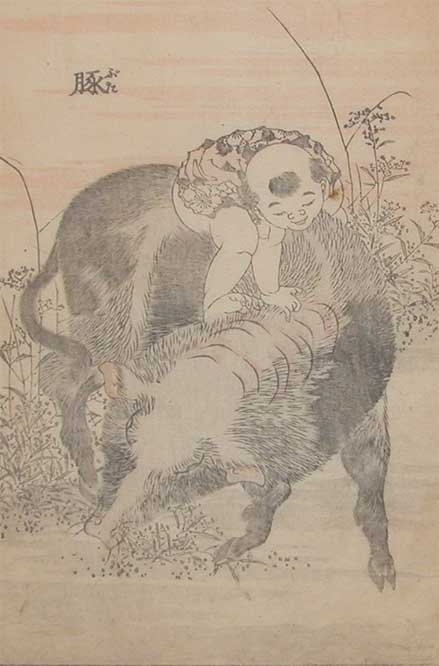
Boy On An Ox: A Window into Hokusai’s Vision of Tranquility
Katsushika Hokusai, a titan of Edo-period Japanese art and arguably the most recognizable face of *The Great Wave off Kanagawa*, transcends mere printmaking. He wasn't simply reproducing landscapes; he was channeling an ethos—a profound connection to nature and a contemplative awareness of mortality—into every brushstroke. This captivating depiction of “Boy On An Ox,” housed in Yale University Art Gallery, exemplifies Hokusai’s masterful approach to capturing fleeting beauty and conveying subtle emotional resonance.
- Subject Matter: The artwork portrays a boy perched atop a cow, holding onto its back with his legs. Alongside him is another figure—presumably an adult—creating a dynamic yet serene tableau within a rural setting. A bird adds to the visual richness of the composition.
- Style & Technique: Hokusai’s signature style—known as Hokusa-ga—is characterized by its deliberate simplification and tonal gradation. Observe how he eschews detailed rendering, opting instead for washes of color that suggest movement and atmosphere. The artist skillfully utilizes thin lines to delineate forms, prioritizing expressive qualities over photographic accuracy.
- Historical Context: Created during Hokusai’s prolific output—spanning nearly nine decades—this piece reflects the broader artistic currents of his time. The Edo period witnessed a flourishing of visual culture, fueled by urbanization and burgeoning commercial interests. Yet, amidst this dynamism, artists like Hokusai sought solace in observing and representing the natural world, imbuing their works with spiritual significance.
Symbolism: Mount Fuji as Embodiment of Eternity
The inclusion of Mount Fuji is paramount to understanding the artwork’s deeper meaning. Considered sacred by Buddhists and revered for its majestic presence, Fuji symbolizes permanence and transcendence—concepts central to Japanese philosophy. Hokusai's depiction isn't merely a landscape; it's an invitation to contemplate the cyclical nature of existence and the enduring beauty of the natural order. The boy gazing upwards embodies youthful optimism and aspiration, mirroring the mountain’s unwavering gaze upon the passing seasons.
Material & Craftsmanship: Silk Printing – A Delicate Dance Between Ink and Color
“Boy On An Ox” is executed on silk using a technique known as *yakugata*, which involves applying pigment to paper adhered to silk fabric. This method allows for exceptional tonal subtlety and luminosity—qualities that are particularly evident in Hokusai’s masterful use of color washes. The careful layering of ink and pigment creates an illusion of depth and texture, capturing the ephemeral qualities of light and shadow with remarkable precision. It's a testament to Hokusai’s technical prowess and his unwavering dedication to achieving artistic excellence.
Emotional Impact: Tranquility Amidst Impermanence
Ultimately, “Boy On An Ox” transcends its visual description; it evokes a profound sense of tranquility and contemplation. The artwork speaks to the human desire for connection with nature—a yearning for beauty that persists across cultures and eras. Hokusai’s ability to convey emotion through understated imagery underscores his enduring legacy as one of Japan's greatest artists, reminding us that true artistry lies in capturing not just what we see but also what we feel.