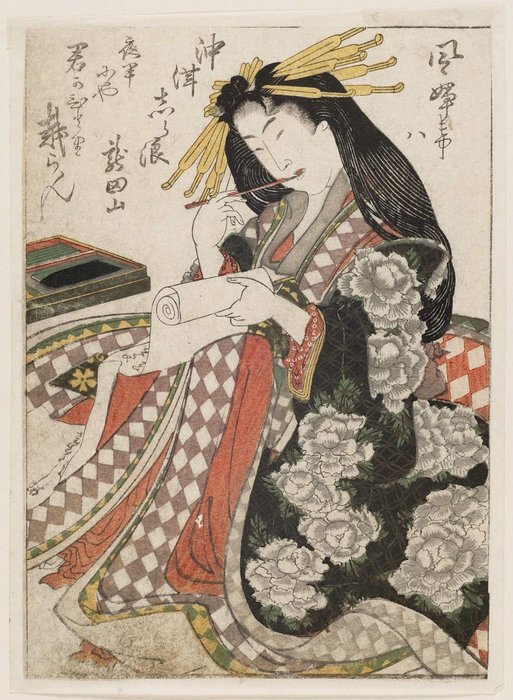
Discover 'Courtesan Writing,' a stunning ukiyo-e woodblock print by Katsushika Hokusai. Elegant lines, refined colors, and cultural storytelling capture the beauty and sophistication of Edo-period Japan. Perfect for art collectors.
Discover Katsushika Hokusai (1760-1849), Japan's ukiyo-e master! Explore 'The Great Wave,' landscapes, manga & woodblock prints. Influenced Impressionism & more!
Subject and Composition
This exquisite Japanese woodblock print captures a moment of quiet introspection, featuring a refined courtesan engaged in writing or reading. The central figure exudes grace and elegance, adorned in a beautifully patterned kimono with intricate floral motifs that symbolize beauty and transient life. Her delicate posture and contemplative expression invite viewers into a scene of intellectual and artistic pursuit, reflecting the cultural sophistication of Edo-period Japan. Surrounding her are subtle details—calligraphy, scrolls, and ornate hair accessories—that enrich the narrative and emphasize her high social status.
Artistic Style and Technique
Created in the ukiyo-e tradition, this artwork exemplifies the mastery of Japanese woodblock printing. The artist employs fine, flowing lines to define the contours of the figure and her attire, complemented by flat, yet carefully layered, areas of color that highlight the textures and patterns of textiles and accessories. The subdued color palette—earthy reds, blacks, whites, and touches of gold—evokes a sense of elegance and timeless beauty. The technique involves multiple carved woodblocks, each inked separately to achieve the harmonious balance of line and color characteristic of classic ukiyo-e prints. The craftsmanship results in a luminous, durable piece that captures the delicate nuances of traditional Japanese aesthetics.
Historical Context and Cultural Significance
Originating from the Edo period, this print reflects the ukiyo-e genre’s focus on the "floating world"—a realm of entertainment, beauty, and fleeting pleasures. Courtesans, often depicted in these artworks, symbolize both the allure and the ephemeral nature of life, beauty, and art. The scene’s emphasis on literary engagement highlights the cultural importance of education, refinement, and artistic expression among women of high social standing. Such prints served both as art and as a window into the sophisticated urban culture of 17th to 19th century Japan, resonating with collectors and connoisseurs who appreciate its historical depth.
Symbolism and Emotional Impact
Every element in this print is imbued with symbolic meaning—flowers representing fleeting beauty, the scroll signifying knowledge and artistic pursuit, and the courtesan herself embodying grace and cultural refinement. The serene expression and balanced composition evoke a sense of calm and introspection, inspiring viewers to reflect on the transient yet beautiful moments of life. This artwork’s emotional depth makes it a compelling centerpiece for interior spaces, offering a timeless connection to Japanese heritage and aesthetic ideals.
Perfect for Collectors and Interior Design
Whether displayed in a private collection or used to elevate an interior space, this high-quality reproduction brings a touch of Edo-period elegance and cultural richness. Its detailed craftsmanship and historical significance make it a prized addition for art lovers, collectors, and interior designers seeking authentic, inspiring pieces that blend tradition with timeless beauty. This print not only enhances any environment but also invites viewers to appreciate the artistry and storytelling of one of Japan’s most celebrated artistic eras.