Katsushika Hokusai
Tokyo
Japan
1760
1849
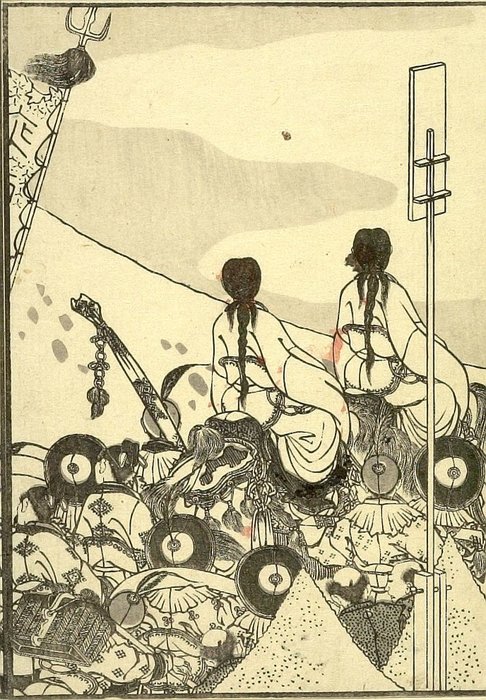
The image is a painting of two people sitting on the backs of horses in front of a crowd of people. The scene appears to be set in ancient times, as evidenced by the clothing and hairstyles of the individuals involved. One person is seated on the left side of the image, while the other is positioned more towards the center. There are several other peop
A Vision of Imperial Power Amidst Nature’s Majesty
Katsushika Hokusai's *Fuji And Foreign Embassy*, part of his monumental *One Hundred Views of Mount Fuji* series (Fugaku hyakkei), transcends mere landscape depiction; it embodies a complex interplay between artistic innovation and political commentary. Completed circa 1835-1847 during the Edo period, this woodblock print captures a pivotal moment in Japanese history – the arrival of representatives from Western nations seeking diplomatic relations with the Tokugawa shogunate.
- Subject Matter: The composition centers around two figures seated atop horseback, positioned before a bustling crowd. This juxtaposition immediately establishes a hierarchy—the horsemen representing authority and governance contrasted against the multitude below, symbolizing the populace awaiting imperial decree.
- Style & Technique: Hokusai’s signature style is evident in his masterful use of Prussian blue pigment – an unprecedented color introduced into Japanese printmaking through European trade routes. This bold hue dominates the sky, mirroring the grandeur and ambition of the shogunate's engagement with the outside world. The meticulous detail achieved through woodblock printing showcases Hokusai’s unparalleled skill in capturing atmospheric perspective and conveying emotion.
Symbolism: Echoes of Imperial Legitimacy
Beyond its visual splendor, *Fuji And Foreign Embassy* carries significant symbolic weight. Mount Fuji itself—a sacred symbol representing stability and divine protection—looms majestically in the background, reinforcing the shogunate’s claim to spiritual authority. The presence of two umbrellas adds another layer of interpretation; they symbolize protection from inclement weather but also represent the shogun's patronage and diplomatic endeavors.
- Color Palette: The dominant Prussian blue underscores the importance of this diplomatic mission, highlighting the ambition of Japan to assert its influence on the global stage.
- Compositional Arrangement: The positioning of the horsemen and crowd emphasizes the power dynamic at play—the shogun’s representatives commanding respect amidst a sea of onlookers eager for recognition.
Influence & Legacy
*Fuji And Foreign Embassy* stands as a testament to Hokusai's artistic genius and his ability to fuse traditional Japanese aesthetics with Western influences. Its bold color palette and innovative perspective captivated audiences during its time and profoundly impacted subsequent generations of artists, notably Impressionists like Claude Monet who sought inspiration in Hokusai’s masterful depiction of nature.
This print exemplifies the spirit of *Fugaku hyakkei*, a series that revolutionized landscape painting by prioritizing atmospheric effects over realistic representation. It remains an enduring emblem of Japan's cultural heritage and continues to inspire admiration for its artistic brilliance and historical significance.