Fuji The Day After Snow: A Masterpiece of Tranquility and Resilience
Katsushika Hokusai’s “Fuji The Day After Snow,” created circa 1830–32 during his monumental *Thirty-Six Views of Mount Fuji* series, transcends mere landscape depiction; it embodies the spirit of Edo Japan—a profound meditation on beauty amidst hardship and a testament to enduring observation.
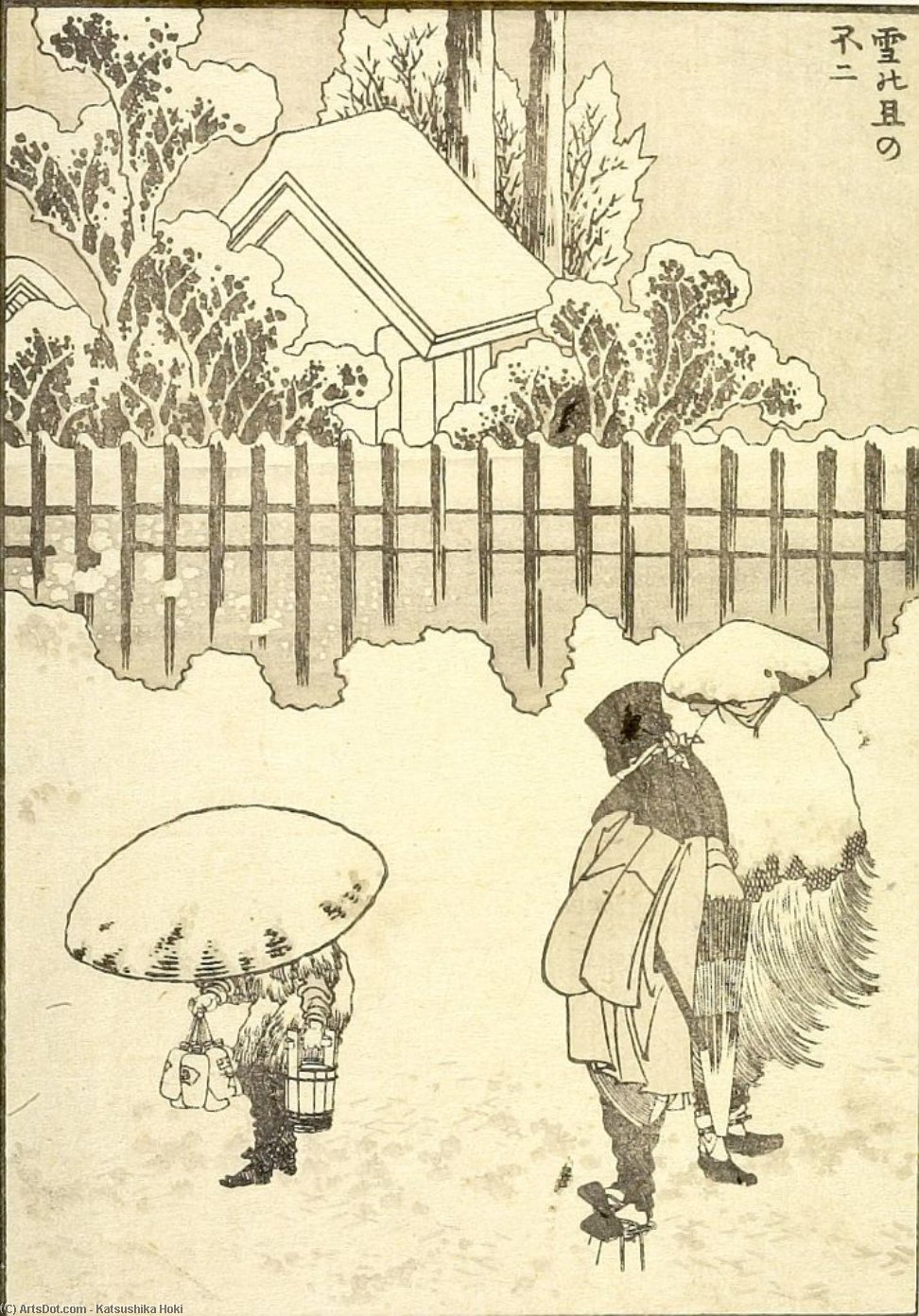
The print captures a moment immediately following a snowfall, presenting a serene vista dominated by Mount Fuji’s majestic peak shrouded in pristine white. Unlike many depictions of Fuji emphasizing its grandeur, Hokusai focuses on the aftermath – the quiet labor of clearing snow from paths and rooftops. This deliberate choice underscores a core theme: human perseverance facing challenging natural forces.
Stylistically, “Fuji The Day After Snow” exemplifies the hallmarks of Ukiyo-e artistry. Characteristic flat planes of color—primarily muted browns, greys, and off-whites—create an atmosphere of subdued elegance. Bold outlines delineate architectural elements like a traditional Japanese house and wooden fences, establishing a stable compositional framework. Geometric shapes – rectangles for buildings and rounded forms for figures – contribute to the print’s visual clarity and reinforce its formal precision.
The technique itself is remarkable. Hokusai employed woodblock printing—a painstaking process involving carving intricate designs into blocks of cedar and applying ink with meticulous care—to achieve a distinctive grainy texture that imbues the image with palpable materiality. This textural quality isn’t merely decorative; it actively communicates the physicality of winter conditions, mirroring the arduous task undertaken by those attempting to maintain daily life.
Beyond its aesthetic qualities, “Fuji The Day After Snow” resonates deeply with symbolic significance. Mount Fuji itself represents spiritual purity and permanence—a beacon of stability amidst earthly flux. The depiction of figures diligently removing snow symbolizes resilience and adaptability – the ability to thrive despite adversity. Hokusai’s masterful composition invites contemplation on the relationship between humanity and nature, prompting viewers to appreciate both beauty and effort.
This artwork's influence extends far beyond its time. It served as a crucial inspiration for Impressionist painters like Claude Monet, who sought to capture fleeting moments of light and atmosphere—a testament to Hokusai’s enduring legacy as one of Japan’s greatest artistic innovators.