Katsushika Hokusai
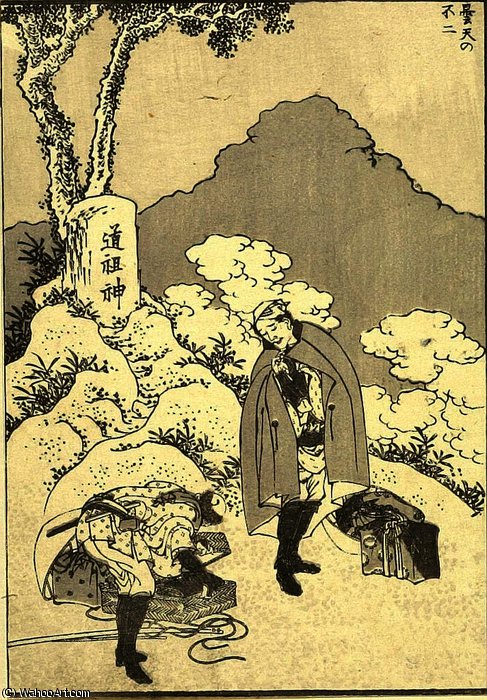
Admire Katsushika Hokusai’s iconic 'Fuji under Clouds,' capturing the majesty of Mount Fuji enveloped in atmospheric clouds—a masterpiece of Edo-period Japanese art.
Discover Katsushika Hokusai (1760-1849), Japan's ukiyo-e master! Explore 'The Great Wave,' landscapes, manga & woodblock prints. Influenced Impressionism & more!
A Moment Frozen in Time: Katsushika Hokusai’s *Fuji Under Clouds*
Katsushika Hokusai, a titan of Edo-period Japanese art, transcends mere representation; he captures the very essence of impermanence and grandeur. This breathtaking landscape print, part of his monumental *Thirty-Six Views of Mount Fuji*, isn't simply a depiction of a mountain—it’s an embodiment of Japan’s spiritual heart during a transformative era. Born in Tokyo around 1760, Hokusai’s artistic journey began long before he achieved international fame, fueled by an unwavering dedication to mastering the art of *ukiyo-e*, woodblock printing that revolutionized visual culture. His father, Nakajima Ise, recognized this innate talent and nurtured it, providing him with a foundation for a career marked by prolific creativity and stylistic experimentation.
The Style of Sublime Impressionism
Hokusai’s approach to *Fuji Under Clouds* exemplifies the burgeoning “sublime impressionism” that characterized his time. Unlike earlier landscape paintings focused on meticulous detail, Hokusai prioritized capturing atmospheric conditions—specifically, the dramatic interplay between sunlight and swirling clouds—creating an illusionistic effect that prioritizes feeling over precise observation. This technique is brilliantly executed through a masterful use of Prussian blue pigment, imported from Europe during this period, which dramatically enhances the depth and luminosity of the mountainscape. The artist skillfully employs hatching and stippling to convey texture and movement, mirroring the turbulent energy of the storm itself.
Historical Context: Edo Japan’s Spiritual Awakening
The print emerged against a backdrop of significant cultural shifts in Edo Japan (1615–1868). Confucian ideals dominated societal norms, yet there was also a growing interest in Buddhism and Shintoism—beliefs that emphasized harmony with nature and contemplation. Mount Fuji, revered as sacred by both faiths, served as a focal point for artistic expression reflecting these spiritual sensibilities. The print’s composition deliberately evokes the Buddhist concept of *mujo*, “dry landscape,” emphasizing emptiness and transcendence amidst the overwhelming beauty of the natural world. It speaks to a desire to find solace and inspiration in confronting the sublime power of nature.
Symbolism: Echoes of Impermanence
Beyond its aesthetic qualities, *Fuji Under Clouds* is laden with symbolic meaning. The towering mountain represents permanence—a steadfast presence against which fleeting moments of beauty and vulnerability are contrasted. The clouds symbolize change, reminding viewers that all things pass away, yet retaining an enduring grandeur. The two figures in the foreground, dressed in traditional attire, subtly underscore humanity’s insignificance compared to the majesty of Fuji, prompting reflection on our place within the cosmos. They stand as witnesses to this ephemeral spectacle, embodying resilience and contemplation.
Emotional Impact: A Vision of Tranquility Amidst Chaos
Ultimately, *Fuji Under Clouds* transcends mere visual representation; it evokes a profound emotional response. The print’s serene depiction of Fuji juxtaposed with the turbulent clouds creates a captivating tension that captures the paradoxical nature of existence. It invites viewers to contemplate beauty alongside impermanence, fostering a sense of awe and wonder—a feeling deeply rooted in Japanese artistic tradition. Reproductions of this iconic masterpiece offer an opportunity to bring a timeless vision of Japan’s spiritual landscape into any interior space, connecting us to centuries of artistic contemplation.