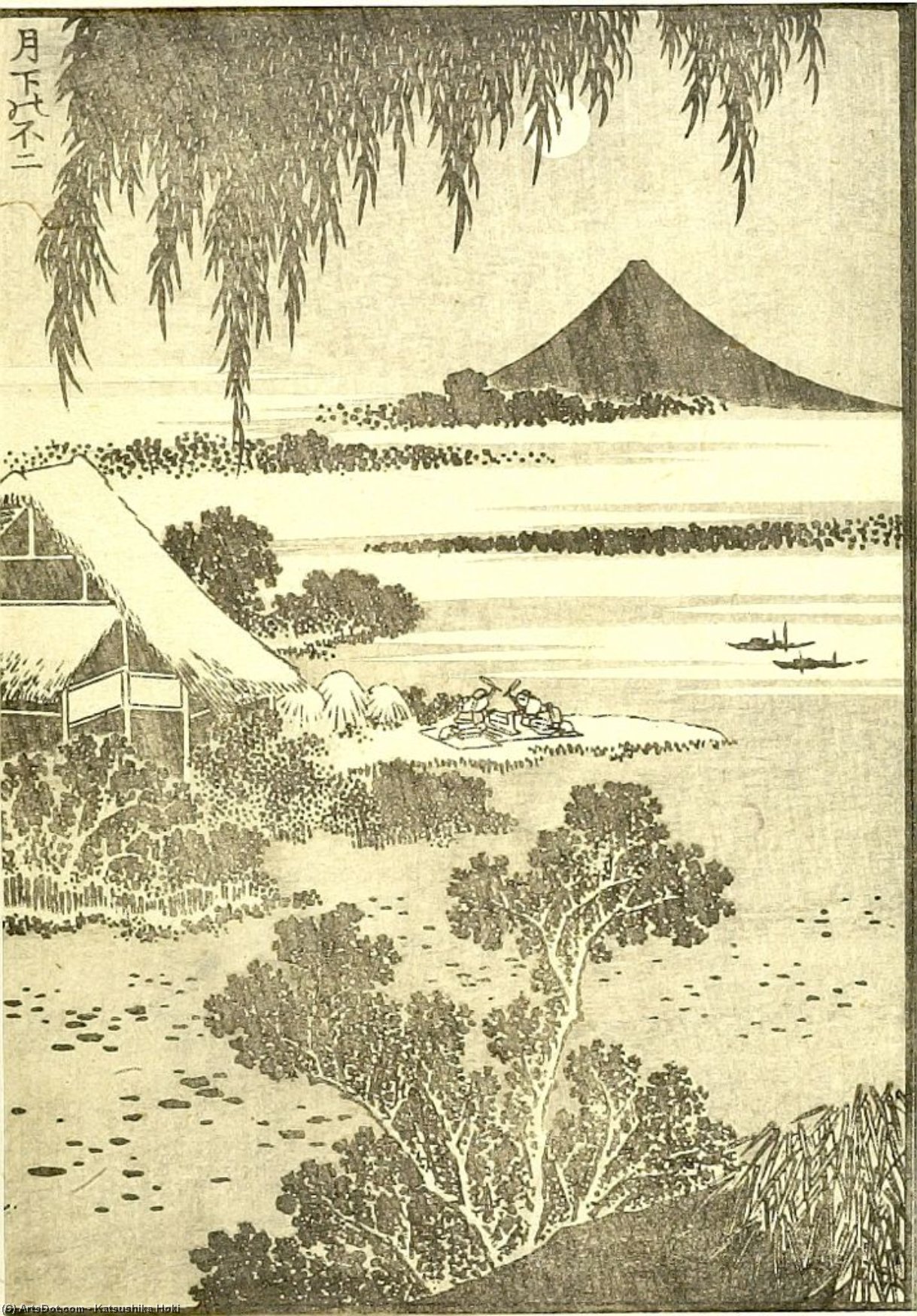
Discover Katsushika Hokusai’s ‘Fuji Under The Moon,’ a stunning monochrome woodblock print showcasing Mount Fuji's beauty. Explore Ukiyo-e art & Japanese landscape mastery.
Discover Katsushika Hokusai (1760-1849), Japan's ukiyo-e master! Explore 'The Great Wave,' landscapes, manga & woodblock prints. Influenced Impressionism & more!
A Silent Majesty: Exploring Katsushika Hokusai’s ‘Fuji Under The Moon’
Katsushika Hokusai, a titan of Japanese art whose name echoes through the annals of artistic history alongside “The Great Wave,” wasn't merely a printmaker; he was an obsessive innovator, driven by a lifelong quest for perfection and a profound connection to the natural world. Born in Edo (modern Tokyo) around 1760, his journey began humbly – as the son of a mirror maker – yet blossomed into a career that would redefine ukiyo-e aesthetics and solidify his place among Japan’s greatest artistic figures. This relentless dedication wasn't simply about mastering technique; it was fueled by an unwavering belief in capturing the essence of beauty itself, a conviction that permeated every brushstroke and informed his enduring legacy.
The Essence of Landscape: Composition and Technique
‘Fuji Under The Moon,’ like many of Hokusai’s celebrated works, exemplifies the core tenets of ukiyo-e – a style characterized by bold lines, flattened perspective, and masterful use of tonal gradation achieved through meticulous hatching and crosshatching. This particular print depicts Mount Fuji dominating a tranquil lake scene under a luminous moonlit sky. The artist skillfully employs layering to create depth, subtly diminishing the size of distant elements to convey a sense of atmospheric recession. Foreground trees and foliage are rendered with dense hatching, providing textural richness and anchoring the composition while guiding the viewer’s eye upwards towards the majestic mountain peak. The deliberate placement of huts along the shoreline adds a human element, grounding the sublime grandeur of Fuji in a relatable context.
Symbolism Beneath the Surface: Mountain and Moon
Beyond its visual beauty lies a rich tapestry of symbolism deeply rooted in Japanese culture. Mount Fuji, revered as sacred and representing permanence and spiritual strength, stands as an unwavering beacon against the ephemeral backdrop of the moonlit lake. The moon itself symbolizes illumination, tranquility, and cyclical renewal – mirroring the serene stillness of the landscape depicted. These elements converge to evoke a profound contemplation on nature’s enduring power and beauty, inviting viewers to consider themes of resilience and harmony. Hokusai's masterful execution captures not just what he saw but also what he felt—a reverence for the natural world that transcends time.
A Legacy Etched in Ink: Influence Beyond Japan
Hokusai’s influence extended far beyond the borders of Japan, captivating artists across Europe during the Impressionist movement. The flattened perspective and tonal harmonies of ‘Fuji Under The Moon,’ alongside countless other prints, served as inspiration for painters like Claude Monet and Edgar Degas, who sought to emulate Hokusai's ability to convey atmosphere and emotion with remarkable precision. This enduring fascination testifies to the universality of his artistic vision—a testament to a single artist’s capacity to capture the sublime beauty of nature and inspire generations of creative minds.
Bringing ‘Fuji Under The Moon’ Home: Reproduction Considerations
A high-quality reproduction of Katsushika Hokusai's ‘Fuji Under The Moon’ offers an exceptional opportunity to experience this iconic masterpiece firsthand. ArtsDot.com specializes in meticulously crafted reproductions utilizing archival inks and premium canvas or paper substrates, ensuring that the artwork’s original vibrancy and textural nuances are faithfully preserved. Consider framing options that complement the print’s understated elegance—a simple wooden frame can enhance its natural beauty and create a focal point within any interior space.