A Window into Edo Period Japan: Exploring Katsushika Hokusai’s Jitokuan Hanasaki-ô
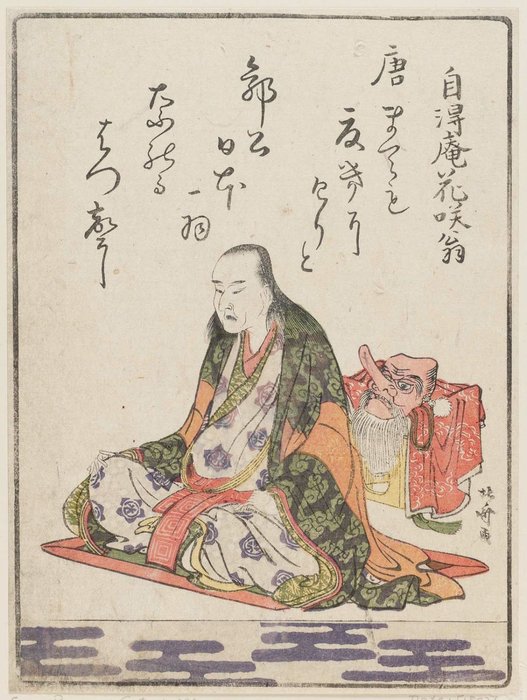
The painting *Jitokuan Hanasaki-ô*, attributed to the legendary Katsushika Hokusai, transcends mere visual representation; it's a poignant snapshot of daily life during the Edo period (1603–1868), encapsulating both artistic innovation and profound cultural significance. Produced sometime around 1830-1832, this artwork offers a glimpse into the social fabric of Japan’s Tokugawa shogunate—a time characterized by stability, economic prosperity, and a burgeoning interest in Western influences. While Hokusai is undeniably celebrated for his monumental *Thirty Six Views of Mount Fuji*, *Jitokuan Hanasaki-ô* stands apart as a remarkably intimate portrait capturing the subtleties of human interaction within a broader societal framework.
- Subject Matter: The central figure—a man seated calmly on the ground—is accompanied by several others, creating a dynamic tableau that speaks to the importance of communal life during this era.
- Style and Technique: Hokusai’s signature style is evident in his masterful use of Prussian blue pigment – an unprecedented introduction into Japanese art brought about by trade with Europe. This bold color choice immediately establishes a visual distinction, highlighting the painting's modernity within its historical context. The artist employs meticulous detail to depict clothing textures and facial expressions, demonstrating a dedication to realism that contrasts with the stylized conventions prevalent in other Edo prints.
Symbolism Beyond Surface Appearance
Beyond its immediate depiction of individuals, *Jitokuan Hanasaki-ô* is laden with symbolic resonance. The man’s posture—legs crossed and gaze directed inward—suggests contemplation and perhaps a quiet acceptance of fate – themes frequently explored in Japanese Buddhist art. Furthermore, the presence of a handbag hints at the burgeoning role of women in society during this period, reflecting changing social norms and aspirations. The inclusion of other figures adds to the narrative complexity, inviting viewers to consider relationships and interactions within the community.
- Color Palette: Primarily dominated by Prussian blue, accented with earthy tones—browns and ochres—the color palette contributes to a sense of serenity and groundedness. The blues evoke associations with heaven and spirituality, aligning with prevailing artistic sensibilities of the time.
- Composition: Hokusai’s compositional choices prioritize balance and harmony, mirroring the aesthetic ideals of Edo art. The positioning of figures creates visual interest while maintaining an overall sense of calm and composure.
Emotional Impact and Legacy
Ultimately, *Jitokuan Hanasaki-ô* resonates with viewers on a deeply emotional level. It’s not merely a depiction of a scene; it's an invitation to contemplate the human condition—to consider themes of solitude, contemplation, and connection within a larger social context. Like many Edo prints, this artwork captures a fleeting moment in time, preserving a fragment of Japanese culture for posterity. Reproductions offer a beautiful way to bring this evocative image into contemporary homes, allowing admirers to appreciate Hokusai’s genius and the enduring power of his artistic vision.