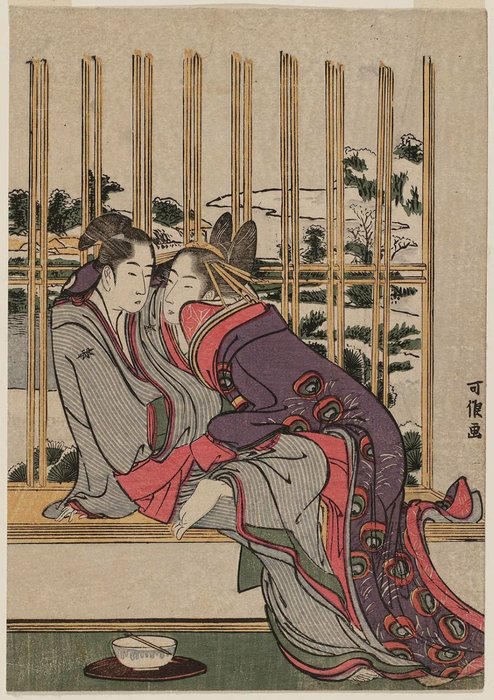
This evocative woodblock print by Katsushika Hokusai depicts two women sharing a quiet intimacy on a bench, symbolizing enduring affection. Inspired by the Eight Views of Tragic Lovers series, it showcases Hokusai's signature style—detailed observation and expressive composition—reflecting his profound influence on Western art movements like Impressionism.
Delve into the poignant beauty of Katsus
A Moment Frozen in Time: Exploring Katsushika Hokusai’s “Lingering Snow for Azuma and Yohei”
Katsushika Hokusai, a titan of Edo-period Japanese art, transcends mere printmaking; he captured the ephemeral beauty of nature with an unparalleled sensitivity that continues to inspire artists and collectors alike. "Lingering Snow for Azuma and Yohei," part of his monumental series “Eight Views of Tragic Lovers,” exemplifies this mastery—a deceptively simple composition brimming with layered meaning and reflecting the profound influence of Romanticism on Western art.
- Subject Matter: The artwork depicts two women seated together on a bench beneath a snowfall landscape. Their embrace speaks volumes about companionship and intimacy, capturing a tender moment amidst the stark grandeur of winter.
- Style & Technique: Executed in Hokusai’s signature woodblock print style—known for its bold outlines and vibrant colors achieved through Prussian blue pigment—the piece adheres to the conventions of *hokkei*, or “idyllic landscape,” emphasizing atmospheric perspective and subtle tonal variations. The artist skillfully renders the snow-covered hillside, conveying a sense of stillness and tranquility.
The historical context is crucial to appreciating "Lingering Snow." Produced in 1798 during Hokusai’s prolific output—a period marked by experimentation and stylistic shifts—the print reflects the burgeoning interest in European Romanticism within Japan. Artists like Hiroshige were captivated by Hokusai's ability to evoke emotion through landscape imagery, mirroring the Romantic preoccupation with sublime beauty and confronting mortality.
- Symbolism: The snow itself symbolizes purity, renewal, and contemplation—themes central to Japanese Buddhist philosophy. Furthermore, the embrace of the two women represents resilience and enduring affection, suggesting a steadfast connection amidst life’s challenges.
- Emotional Impact: Hokusai's masterful use of color and composition creates an immersive experience for the viewer. The muted blues and whites dominate the palette, fostering a mood of serene melancholy—a feeling that resonates deeply with the Romantic tradition’s exploration of emotion and imagination.
"Lingering Snow for Azuma and Yohei" isn't merely a depiction of a winter scene; it’s a distillation of artistic vision, philosophical contemplation, and emotional resonance—a testament to Hokusai’s enduring legacy as one of Japan’s greatest artists.