A Window into Edo Life: Exploring Katsushika Hokusai’s Maisaka
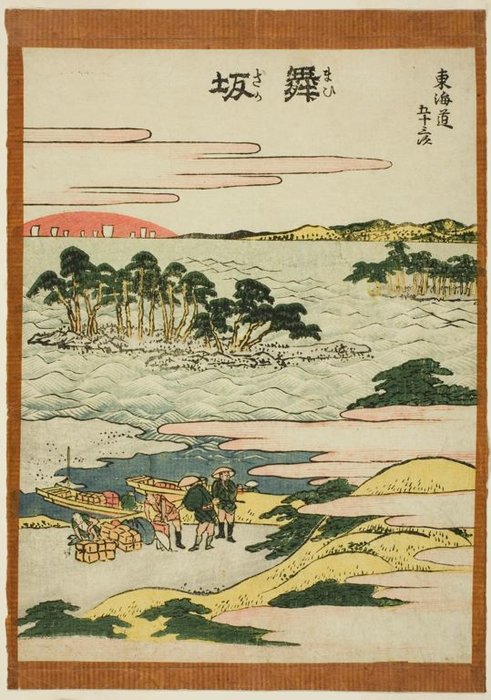
The watercolor painting *Maisaka*, part of Hokusai's celebrated *Fifty-Three Stations of the Tôkaidô Road*, transcends mere depiction; it captures a fleeting moment in Japanese history and embodies the spirit of the Edo period. Created around 1830-32, this artwork offers a captivating glimpse into daily life along Japan’s major highway connecting Tokyo and Kyoto – a journey undertaken by merchants, pilgrims, and travelers alike. The scene unfolds on a tranquil ocean vista, dominated by several boats laden with cargo, skillfully rendered in Hokusai's signature Prussian blue pigment—a revolutionary color introduced to Japanese watercolor painting during this era.
- Subject Matter: Maisaka portrays a bustling harbor scene, showcasing the commercial activity vital to Edo’s economy. The boats represent not just transportation but also connection and exchange – symbols of prosperity and ambition characteristic of the time.
- Style & Technique: Hokusai's approach is distinctly Impressionistic, prioritizing atmospheric perspective and capturing the immediacy of observation rather than striving for meticulous realism. He employs loose brushstrokes and layered washes to convey movement and luminosity, particularly evident in the depiction of the waves and reflections on the water surface.
The inclusion of a dog adds an element of domesticity to this grand landscape, subtly reminding viewers of the human presence within the natural world. Dogs were common pets during Edo times and often symbolized loyalty and companionship – qualities valued by Japanese society. Furthermore, Hokusai’s masterful use of Prussian blue isn't merely aesthetically pleasing; it reflects the influence of European scientific advancements in color theory, demonstrating Hokusai’s openness to new ideas and techniques.
Historical Context: The Tôkaidô Road was a crucial artery for trade and communication during Edo Japan, facilitating economic growth and cultural exchange. Hokusai's artistic endeavors coincided with this period of dynamism, capturing the essence of Japanese society at its zenith. His work serves as an invaluable record of visual culture and offers insights into the values and aspirations of his contemporaries.
Emotional Impact: *Maisaka* evokes a sense of serenity mingled with activity—a contemplative appreciation for beauty alongside the realities of everyday life. The expansive ocean horizon inspires awe and wonder, while the boats’ movement conveys dynamism and vitality. Ultimately, Hokusai's painting invites viewers to contemplate the relationship between humanity and nature, prompting reflection on themes of perseverance, ambition, and the enduring power of observation. It remains a testament to Hokusai’s artistic genius and his ability to transform simple landscapes into profound expressions of emotion.