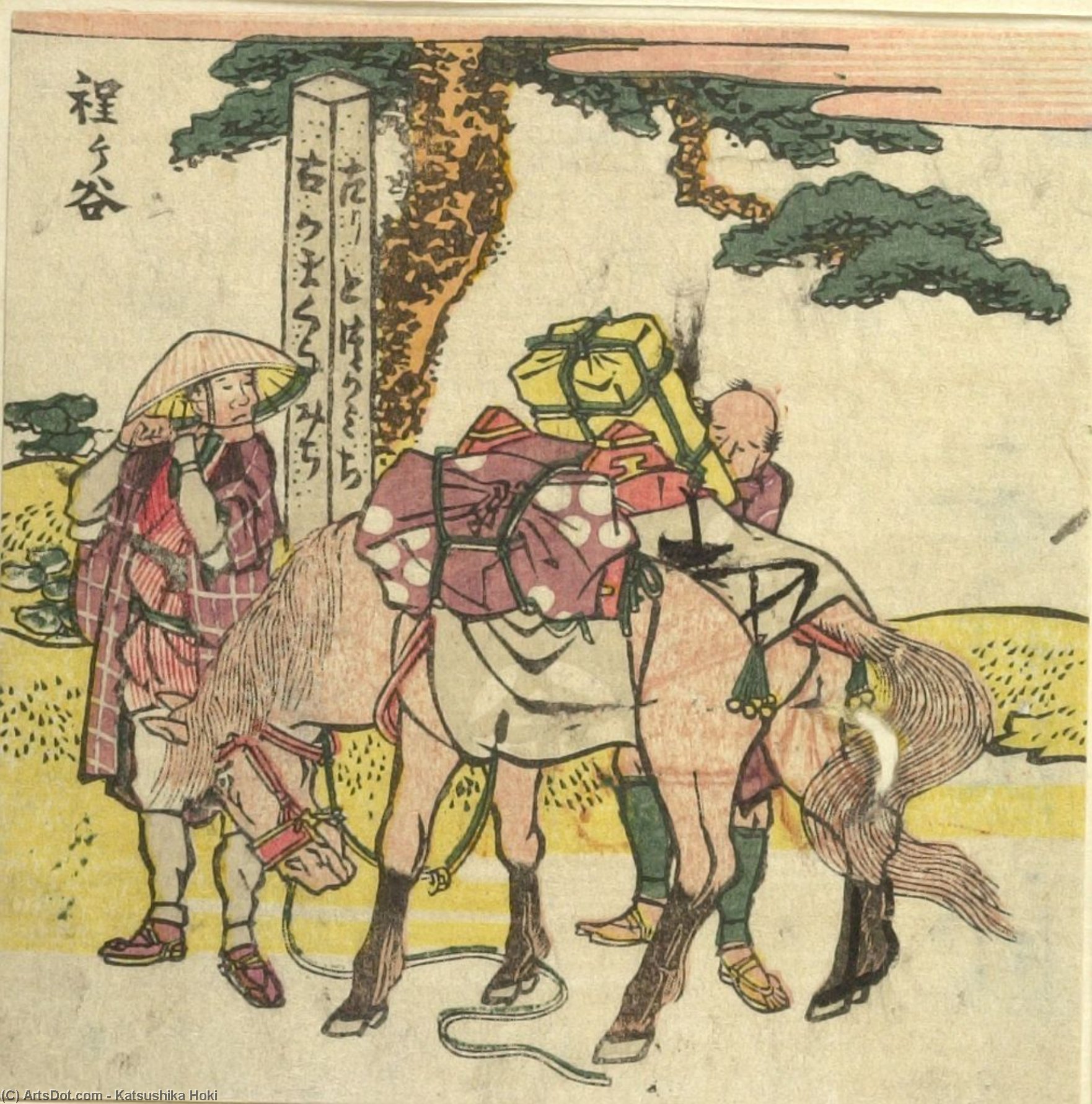
“Men Loading A Horse” by Katsushika Hokusai exemplifies Zen Buddhist principles of simplicity and contemplation through masterful *ukiyo-e* technique, capturing Mount Fuji’s majesty and symbolizing harmonious human interaction with nature.
Discover Katsushika Hokusai (1760-1849), Japan's ukiyo-e master! Explore 'The Great Wave,' landscapes, manga & woodblock prints. Influenced Impressionism & more!
A Symphony of Movement and Tranquility: Decoding Katsushika Hokusai’s “Men Loading A Horse”
The artwork "Men Loading A Horse," attributed to the legendary Edo-period artist Katsushika Hokusai (1760-1849), transcends mere depiction; it embodies a profound meditation on human endeavor and the harmonious relationship between man and nature—themes central to Japanese artistic sensibilities during the Meiji Restoration. This monumental woodblock print, part of Hokusai’s celebrated *Thirty Six Views of Mount Fuji*, isn't simply a picturesque landscape scene; it’s a carefully constructed visual narrative brimming with symbolic resonance.
The Landscape Canvas: Mount Fuji and Its Significance
Hokusai’s artistic vision was profoundly influenced by Zen Buddhism, which championed simplicity and contemplation as paths to enlightenment. The towering presence of Mount Fuji dominates the composition—a sacred symbol representing stability, longevity, and spiritual aspiration—serving as a backdrop against which the human activity unfolds. Unlike many Western landscapes that prioritize grandeur and dramatic vistas, Hokusai’s approach prioritizes capturing the essence of the mountain's spirit rather than its literal form. The deliberate cropping emphasizes Fuji’s majesty, subtly directing the viewer’s gaze upwards towards the divine realm.
Technique and Craftsmanship: Mastering Ukiyo-e Aesthetics
The print itself exemplifies the mastery of *ukiyo-e*, Japan’s woodblock printing tradition—a technique renowned for its vibrant colors achieved through layering multiple blocks of pigment onto paper. Hokusai employed a meticulous process involving skilled artisans who painstakingly carved intricate designs into wooden planks, transferring them to paper using ink and pressure rollers. The resulting image possesses remarkable tonal gradation, capturing the subtle nuances of light and shadow with astonishing precision. Notice particularly the masterful rendering of the horse’s musculature and the textured surface of its saddlebags—evidence of Hokusai's dedication to anatomical accuracy within a stylized framework.
Narrative Layers: Labor and Harmony Amidst Natural Beauty
Beyond its aesthetic qualities, “Men Loading A Horse” communicates a compelling narrative about human interaction with the natural world. Three men laboriously load a horse with luggage – a task requiring considerable effort and coordination—yet they do so amidst the serene beauty of Fuji’s slopes. This juxtaposition underscores a core Japanese belief: that productive activity can coexist peacefully with contemplation and appreciation for nature's grandeur. The figures are positioned strategically within the frame, creating a dynamic interplay between human exertion and visual serenity. Their postures convey determination and purpose, mirroring the mountain’s steadfast resilience.
Symbolism Beyond Representation
The horse itself carries symbolic weight—representing strength, fertility, and nobility—while the luggage symbolizes worldly concerns juxtaposed against spiritual aspiration. The artist's deliberate choice of color palette – predominantly blues and greens – reinforces this connection to nature, evoking feelings of tranquility and rejuvenation. Furthermore, Hokusai’s compositional arrangement subtly references Buddhist iconography, hinting at a deeper philosophical underpinning that elevates the print beyond mere visual pleasure.
Emotional Resonance: Capturing the Sublime
Ultimately, “Men Loading A Horse” succeeds in conveying a profound emotional experience—a sense of *wabi-sabi*, embracing imperfection and accepting the transient beauty inherent in all things. The slightly asymmetrical composition contributes to this feeling of understated elegance, inviting viewers to linger on the image and contemplate its evocative atmosphere. It’s a print that speaks not just to the eye but also to the soul—a testament to Hokusai's unparalleled ability to capture the sublime essence of Japanese landscape art and its enduring power to inspire contemplation.