A Vision of Resolve Amidst Nature’s Majesty: Decoding Minamoto No Toru
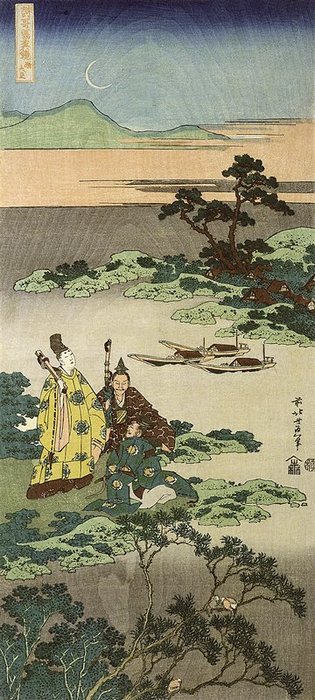
The painting, titled *Minamoto No Toru*, presents a striking juxtaposition between human determination and the overwhelming grandeur of Japan's mountainous landscape. Executed by Katsushika Hokusai during his prolific artistic period—likely around 1830—this woodblock print embodies the spirit of Edo-period aesthetics and reflects a fascination with samurai ideals intertwined with an appreciation for the natural world. The scene depicts two figures, presumably warriors, standing before Mount Fuji, its iconic snow-capped peak dominating the horizon. One man holds a bow and arrow, symbolizing readiness for combat and unwavering vigilance, while the other grips a sword—a symbol of honor, courage, and martial prowess—demonstrating steadfastness in defense of his beliefs. Scattered throughout the composition are birds, meticulously rendered with delicate linework, adding to the serene yet purposeful atmosphere. Their presence speaks to themes of freedom, observation, and harmony with the environment – concepts central to Japanese artistic philosophy.
- Style: Ukiyo-e (浮世絵) – This genre flourished during Edo Japan, prioritizing woodblock printing as a technique for disseminating images widely across society. It’s characterized by bold outlines, vibrant colors achieved through layering pigments onto treated paper, and masterful use of perspective to convey depth.
- Technique: Hokusai's meticulous attention to detail is evident in the precise rendering of Mount Fuji and the birds. The artist skillfully employed Prussian blue pigment—a revolutionary color imported from Europe—to capture the ethereal beauty of the mountain’s snowscape, pushing the boundaries of traditional Japanese pigments.
- Historical Context: Produced during a time of significant social upheaval – the Bakumatsu era – *Minamoto No Toru* subtly conveys resilience and fortitude amidst uncertainty. Samurai culture emphasized discipline, honor, and unwavering loyalty to duty—values powerfully represented in the posture and armament of the figures depicted.
Symbolism Beyond Landscape: Exploring Deeper Meanings
The mountain itself is more than just a scenic backdrop; it represents eternity and spiritual significance within Shinto beliefs – Japan’s indigenous religion. Its imposing presence serves as a reminder of the impermanence of human life against the backdrop of timeless natural forces. The inclusion of birds symbolizes aspiration, freedom from constraint, and an awareness of the interconnectedness between humanity and nature—a core element of Zen Buddhism's influence on Japanese art. Furthermore, the positioning of the figures facing Mount Fuji suggests a deliberate act of contemplation and acceptance of fate – acknowledging the power of the natural world while maintaining inner resolve.
Emotional Resonance: Capturing Tranquility Amidst Strength
Despite the depiction of armed warriors, *Minamoto No Toru* exudes an unexpected sense of calm. The artist’s masterful use of color and linework creates a harmonious balance between visual dynamism and meditative stillness. The print invites viewers to contemplate the relationship between human ambition and natural beauty—a timeless theme that continues to inspire artists and designers today. It speaks to the enduring fascination with samurai ideals – courage, honor, and unwavering dedication – combined with an appreciation for Japan’s breathtaking landscapes.
A Legacy Enduring Through Reproduction
Today, high-quality reproductions of *Minamoto No Toru* offer a captivating glimpse into the artistic genius of Katsushika Hokusai and the cultural values of Edo Japan. ArtsDot.com presents meticulously crafted prints that faithfully capture the original artwork's vibrancy and nuance—allowing collectors and interior designers alike to experience the profound beauty and symbolic depth of this iconic masterpiece.