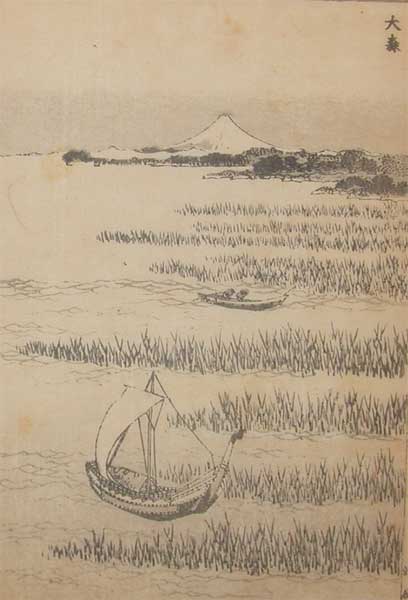
Omori: A Symphony of Tranquility Captured in Ink
Katsushika Hokusai’s *Omori* stands as a testament to the enduring power of Japanese landscape painting—specifically, *hokusa*, or “mountain prints”—a genre that flourished during Edo period Japan (1603-1868). More than just a depiction of Mount Fuji, this artwork embodies a profound meditation on impermanence and beauty found within nature’s cyclical rhythms. Created around 1830-32, it exemplifies Hokusai's masterful command of *ukiyo-e*, woodblock printing techniques that revolutionized visual art and disseminated images widely throughout society.
- Subject Matter: The print portrays a serene vista featuring Mount Fuji dominating the horizon amidst lush greenery. A river winds its way through the lower portion of the composition, reflecting the mountain’s majesty.
- Style & Technique: Hokusai employed *hokusa*, utilizing Prussian blue pigment—a revolutionary import from Europe—to achieve unparalleled tonal depth and luminosity. The artist meticulously carved a woodblock matrix with astonishing precision, ensuring that each line captures subtle nuances of light and shadow. This painstaking process resulted in prints characterized by exceptional detail and textural richness.
- Historical Context: *Omori* emerged during a period of significant artistic experimentation and cultural exchange. Hokusai’s fascination with Western pigments and printing methods reflects the broader intellectual currents of his time, demonstrating Japan's openness to new ideas and influences. The print served as part of Hokusai’s ambitious series “Thirty-Six Views of Mount Fuji,” intended to capture the mountain in diverse weather conditions—a bold departure from traditional depictions focused solely on idealized representations.
Symbolism: Beyond its aesthetic beauty, *Omori* carries symbolic weight. The towering Mount Fuji represents stability and permanence amidst the ephemeral nature of earthly existence – a core concept within Buddhist philosophy prevalent during Hokusai’s era. The flowing river symbolizes the passage of time and the continuous renewal of life, mirroring the cyclical patterns observed in the natural world.
Emotional Impact: Viewing *Omori* evokes a feeling of contemplative calm—a desire to absorb the grandeur of nature and appreciate its fleeting splendor. Hokusai’s masterful rendering captures not only visual accuracy but also an emotional resonance that transcends time, inviting viewers to contemplate the beauty and fragility of existence.
Further Exploration: To delve deeper into Hokusai's artistic legacy, consider examining his other celebrated works, including “The Great Wave off Kanagawa” and numerous landscapes depicting coastal scenes. These prints continue to inspire artists and collectors alike, cementing Hokusai’s place as one of Japan’s greatest masters.