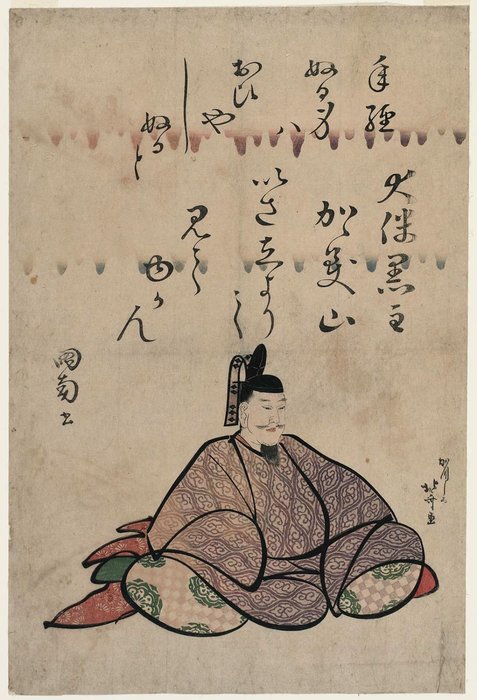
Ôtomo No Kuronushi: A Meditation on Tranquility Amidst Turbulent Waters
Katsushika Hokusai’s *Ôtomo No Kuronushi*, part of his celebrated “Six Immortal Poets” series (Rokkasen), transcends mere visual representation; it embodies a profound philosophical contemplation captured in the masterful strokes of Prussian blue ink on paper. Created circa 1810 during Hokusai's prolific output, this print isn’t simply a depiction of a fisherman—it’s an emblem of resilience and acceptance within the face of adversity.
- Subject Matter: The image portrays Otomo Kuronushi, a renowned poet from Nara period (710-794), seated calmly on the ground. His crossed legs symbolize stability and introspection, contrasting sharply with the tumultuous sea surrounding him.
- Style & Technique: Hokusai’s signature style—known for its bold simplification and expressive use of perspective—is evident in this print. The artist employs a technique called *hokuyo-ga*, or “perspective mountain view,” which dramatically compresses the horizon line, creating an illusion of depth that draws the viewer into the scene.
- Historical Context: Produced during Edo period Japan, *Ôtomo No Kuronushi* reflects the prevailing aesthetic sensibilities of the time—a fascination with nature and a desire to capture its grandeur while simultaneously conveying a sense of serenity. The series itself was conceived as a tribute to six influential poets who had perished prematurely, aiming to honor their memory through artistic expression.
The fisherman’s posture speaks volumes about the human condition—a quiet acceptance of life's inevitable challenges. Despite the overwhelming force of the crashing waves depicted in the background – a powerful symbol of chaos and change – Kuronushi remains steadfast, embodying an ideal of inner peace achieved through mindful observation.
The use of Prussian blue pigment is particularly noteworthy. This vibrant hue, imported from Europe during Hokusai’s lifetime, represents innovation and aspiration within Japanese art. Its boldness underscores the print's ambition to convey not just what is seen but also what is felt—a quiet contemplation of beauty amidst turbulent circumstances.
- Symbolism: The sea symbolizes life’s unpredictable currents, while Kuronushi’s stillness represents inner fortitude and spiritual equilibrium.
- Emotional Impact: *Ôtomo No Kuronushi* invites viewers to pause and consider the importance of maintaining composure in times of difficulty—a timeless message conveyed with breathtaking artistic precision.
This reproduction captures the essence of Hokusai’s genius, allowing admirers to experience the profound beauty and contemplative spirit of this iconic artwork.