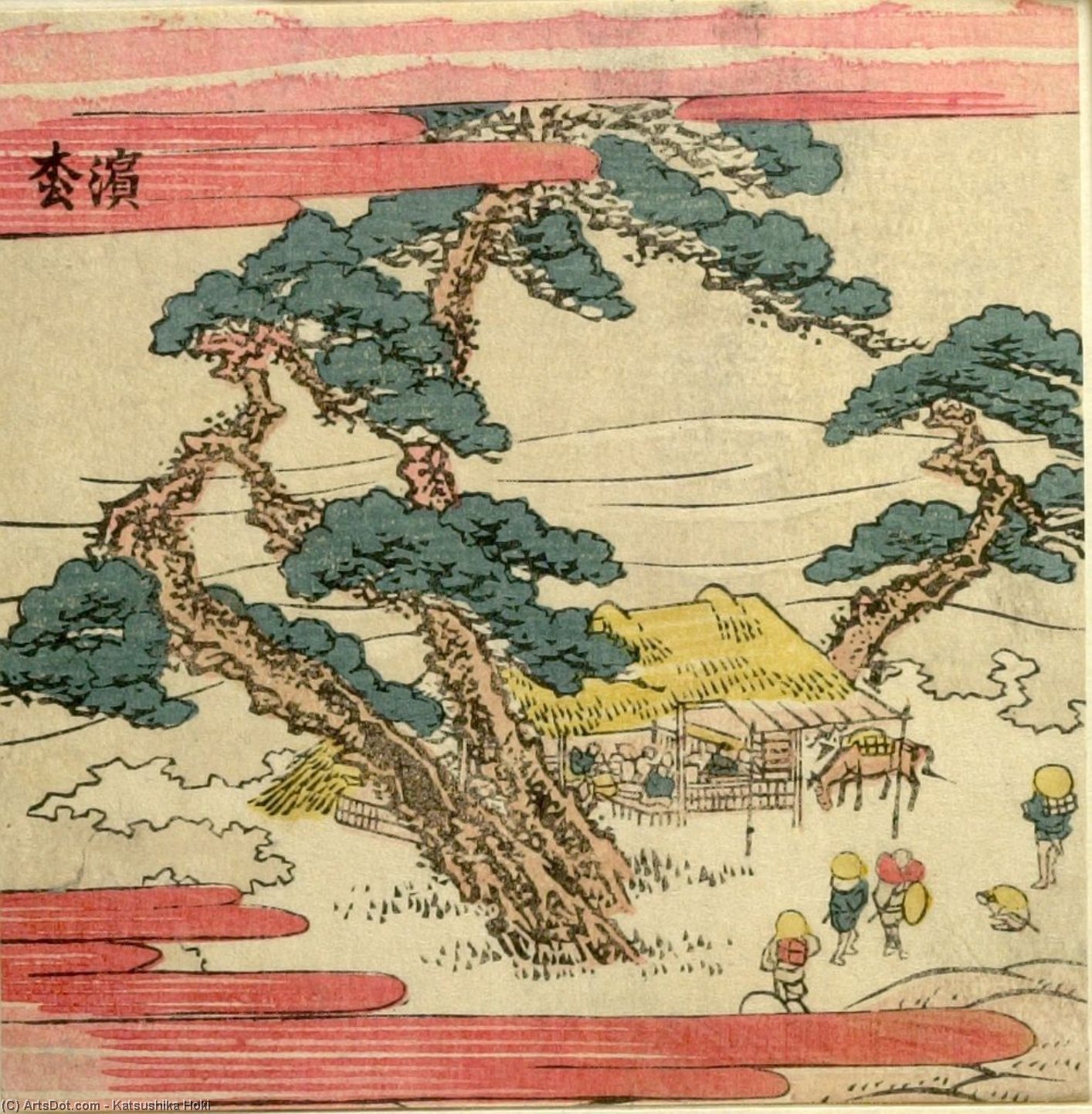
Restaurant – A Tranquil Reflection of Edo Japan
Katsushika Hokusai’s “Restaurant,” rendered in exquisite detail as a traditional Japanese woodblock print (Ukiyo-e), transcends mere depiction; it embodies the spirit of Edo period Japan—a time defined by serene landscapes and understated elegance. This artwork isn't simply a visual record of a rural scene; it’s an invitation to contemplate the beauty inherent in simplicity and the enduring connection between humanity and nature.
- Subject Matter: The print portrays a humble eatery nestled beneath the towering presence of a venerable pine tree. Details include thatched roofs, lanterns casting gentle light, and figures engaged in everyday activities – fishermen preparing their catch and villagers enjoying a meal.
- Style & Technique: Characteristic of Hokusai’s masterful Ukiyo-e style, “Restaurant” employs bold outlines and flat planes of color to create a striking visual impact. The artist skillfully utilizes perspective—though flattened—to convey depth through layering and overlapping elements, prioritizing mood over precise spatial accuracy.
- Material & Process: Crafted with meticulous precision, the print utilizes finely carved woodblocks inked with pigment and pressed onto Japanese paper using a complex printing process. This technique lends itself to capturing subtle textures – particularly in the bark of the pine tree – adding another layer of sensory experience.
Symbolism: The pine tree holds profound significance in Japanese culture, representing longevity, resilience, and steadfastness—qualities mirrored in its imposing stature within the composition. It serves as a visual anchor, grounding the scene while simultaneously elevating it to a realm of contemplative beauty. Similarly, the depiction of villagers engaged in daily life speaks to the values of Edo society – harmony, industriousness, and appreciation for the natural world.
Emotional Impact: “Restaurant” evokes a palpable sense of tranquility and peace. The diffused lighting suggests an overcast day or early morning light, fostering an atmosphere conducive to reflection. The artist’s deliberate use of color—primarily blues, greens, reds, and browns—further enhances the artwork's emotive power, transporting viewers back to a bygone era and reminding them of the timeless allure of unspoiled landscapes.
- Historical Context: Produced during Hokusai’s prolific output in his later years (approximately 1830-1849), “Restaurant” reflects the broader artistic trends of the Edo period—a fascination with natural beauty and a desire to capture fleeting moments of everyday life. It stands alongside other celebrated Ukiyo-e prints from this era, cementing Hokusai’s legacy as one of Japan's greatest artists.
Further Exploration: To delve deeper into the artistic genius of Katsushika Hokusai and appreciate the enduring influence of “Restaurant” on Western art movements like Impressionism, explore resources such as Restaurant and Katsushika Hokusai. Discover more about his groundbreaking techniques and the profound impact of his vision on artistic expression.