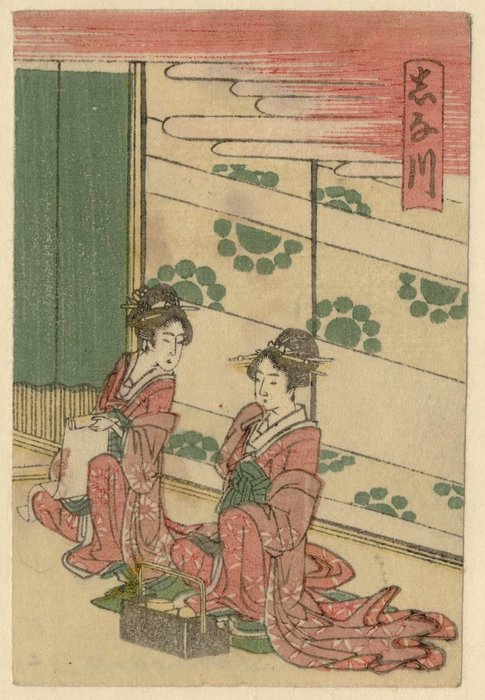
Experience 'Shinagawa' by Katsushika Hokusai – a stunning 1830s woodblock print depicting women in traditional attire. Explore this iconic Edo-period masterpiece.
Discover Katsushika Hokusai (1760-1849), Japan's ukiyo-e master! Explore 'The Great Wave,' landscapes, manga & woodblock prints. Influenced Impressionism & more!
A Moment of Edo-Period Grace: Katsushika Hokusai’s *Shinagawa*
This captivating woodblock print, *Shinagawa*, by the celebrated Japanese artist Katsushika Hokusai (1760–1849), offers a serene glimpse into everyday life during the Edo period. Part of Hokusai's extensive series exploring views along the Tōkaidō road – the vital artery connecting Edo (modern Tokyo) with Kyoto – this particular print focuses on the post town of Shinagawa, a popular resting place for travelers.
Subject and Composition
The scene depicts two women, elegantly dressed in traditional Japanese attire, seated intimately together. A third figure is partially visible to the left, suggesting a larger social gathering. They appear engaged in quiet conversation or shared companionship, their postures relaxed and natural. The composition is carefully balanced; the figures are positioned against a backdrop of potted plants – a common decorative element in Edo-period homes – which adds depth and visual interest. A small bowl placed between them hints at refreshments, further emphasizing the convivial atmosphere.
Style and Technique: Ukiyo-e Mastery
*Shinagawa* is a prime example of *ukiyo-e*, meaning “pictures of the floating world.” This artistic movement flourished during the Edo period, capturing scenes from daily life, landscapes, and popular culture. Hokusai was a master of this technique, renowned for his innovative use of color, line, and composition. The print utilizes woodblock carving and printing – a complex process involving multiple blocks, each representing a different color layer. Hokusai’s skill lies in achieving subtle gradations of tone and texture through meticulous carving and precise registration. The result is a vibrant and dynamic image that belies the limitations of the medium.
Historical Context & The Tōkaidō Series
The Tōkaidō road held significant cultural importance, representing not only physical travel but also social exchange and artistic inspiration. Hokusai’s series, *Thirty-six Views of Mount Fuji* (of which many depictions are set along the Tokaido), elevated landscape painting to new heights and cemented his reputation as one of Japan's greatest artists. Shinagawa, being a key stop on this route, was frequently depicted by Hokusai, often with Mount Fuji subtly appearing in the background – a symbol of national identity and spiritual significance. These prints weren’t merely artistic endeavors; they were affordable art for the burgeoning merchant class.
Symbolism & Emotional Resonance
While seemingly straightforward, *Shinagawa* carries subtle symbolic weight. The potted plants represent cultivated beauty and domestic tranquility. The women themselves embody grace and refinement – ideals valued in Edo society. More broadly, the print evokes a sense of peacefulness and connection, offering a respite from the bustling world outside. Hokusai’s ability to capture such nuanced emotions is what makes his work so enduringly appealing.
For Collectors & Interior Design
A reproduction of *Shinagawa* brings a touch of Edo-period elegance and tranquility to any space. Its muted color palette and harmonious composition make it versatile for various interior styles, from traditional Japanese aesthetics to contemporary minimalist designs. The print’s historical significance and artistic merit also make it a valuable addition to any art collection. Consider pairing it with natural wood tones and simple furnishings to enhance its serene atmosphere.