Katsushika Hokusai (葛飾 北斎; c. 31 October 1760 – 10 May 1849), known mononymously as Hokusai, was a Japanese ukiyo-e artist of the Edo period, active as a painter and printmaker. His woodblock print series Thirty-Six Views of Mount Fuji includes the iconic print The Great Wave off Kanagawa. Hokusai was instrumental in developing ukiyo-e from a style of portraiture largely focused on courtesans and
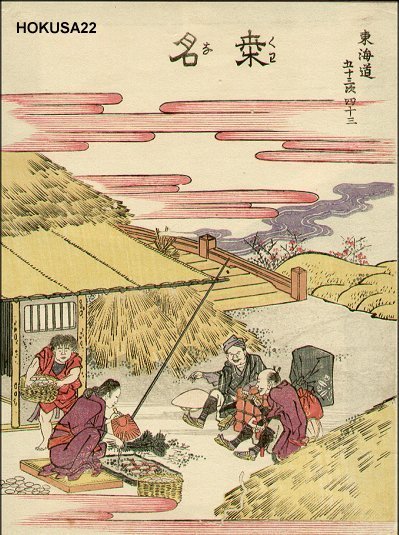
A Window into Edo Life: Katsushika Hokusai’s “Kuwana”
Katsushika Hokusai's "Station 43," part of his monumental series depicting the Fifty-three Stations of the Tôkaidô Road – a vital artery connecting Edo (Tokyo) and Kyoto – transcends mere landscape painting; it embodies the spirit of Japan’s vibrant cultural heritage during the Edo period. Completed in 1804, this woodblock print offers an arresting glimpse into daily life along this historic route, capturing not just scenery but also the essence of human interaction.
The Artistic Vision: Hokusai's Mastery of Ukiyo-e Technique
- Style: Hokusai’s signature style is unmistakably *hokusa*, characterized by its bold outlines and dramatic use of color. Unlike many contemporary artists who favored softer palettes, Hokusai employed a vibrant palette—primarily blues and greens—to convey the dynamism of Mount Fuji dominating the horizon.
- Technique: The print’s remarkable detail is achieved through meticulous carving onto woodblocks followed by multiple layers of ink application using *yakuguchi* (thick ink) and *sumitomo* (thin ink). This technique allows for nuanced tonal gradations, creating a palpable sense of depth and atmosphere.
- Composition: The print’s composition is masterful—a sweeping panorama framed by stylized cypress trees and punctuated by figures engaged in seemingly mundane activities. Hokusai skillfully utilizes perspective to draw the viewer into the scene, emphasizing the grandeur of Mount Fuji against the backdrop of a bustling village.
Symbolism Within the Landscape
More than just depicting a mountain vista, “Kuwana” carries profound symbolic weight. Mount Fuji itself represents stability and permanence—a cornerstone of Japanese cosmology—contrasting sharply with the fleeting nature of human existence represented by the villagers below. The cypress trees, traditionally associated with longevity and mourning, further reinforce this thematic duality. The inclusion of figures carrying baskets suggests a connection to agriculture and sustenance, reflecting the importance of rural life in Edo society.
Emotional Resonance: Capturing Transient Beauty
"Station 43" resonates deeply with viewers due to its ability to evoke a feeling of serenity amidst activity. Hokusai’s masterful rendering captures the ephemeral beauty of nature—the misty haze clinging to Mount Fuji—while simultaneously conveying the warmth and vitality of human community. It serves as a poignant reminder that even in moments of everyday life, there exists an enduring connection to the sublime.
A Legacy Enduring Through Reproduction
ArtsDot’s high-quality reproductions allow you to experience the breathtaking artistry of Katsushika Hokusai's “Kuwana” firsthand. Bringing this iconic image into your home or workspace elevates décor and connects you to a pivotal moment in Japanese art history.