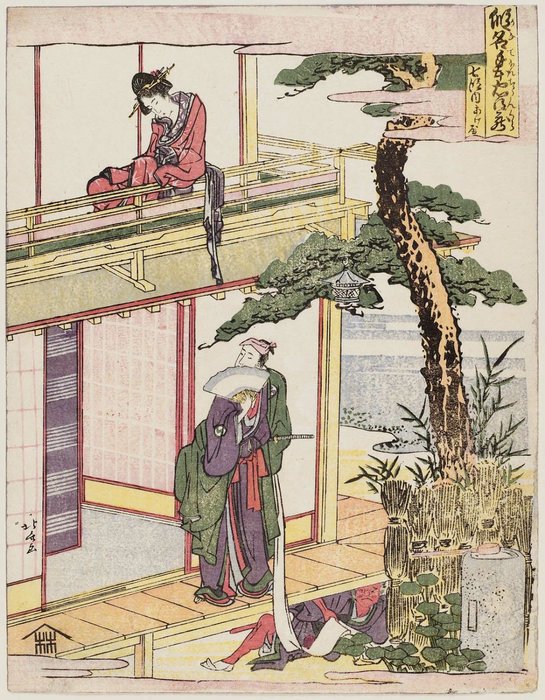
Discover Katsushika Hokusai’s ‘The Teahouse,’ a poignant Ukiyo-e woodblock print. Explore its layered composition, muted colors & melancholic beauty. A timeless masterpiece of Japanese art.
Discover Katsushika Hokusai (1760-1849), Japan's ukiyo-e master! Explore 'The Great Wave,' landscapes, manga & woodblock prints. Influenced Impressionism & more!
A Moment of Reflection: Decoding Katsushika Hokusai’s ‘The Teahouse’
Katsushika Hokusai, a name that resonates with the very soul of Japanese art and inextricably linked to the iconic *Great Wave off Kanagawa*, transcends mere printmaking; he embodies an artistic spirit driven by relentless curiosity and a profound understanding of human emotion. Born in Edo (modern-day Tokyo) around 1760, his life unfolded as a continuous exploration of visual expression, marked by shifting artistic identities—a deliberate rejection of convention that cemented his place among Japan’s greatest masters. From humble beginnings as the son of a mirror maker, Hokusai's formative years instilled in him an unwavering dedication to craft, propelling him toward a career spanning nearly nine decades and leaving behind a legacy that continues to captivate audiences globally. His father recognized this innate talent, providing encouragement that nurtured a passion for drawing which blossomed into an extraordinary artistic journey.
The Essence of Ukiyo-e: Composition and Technique
‘The Teahouse,’ created sometime between 1830 and 1832 during Hokusai’s prolific output, exemplifies the core principles of Ukiyo-e—woodblock printing—a technique that revolutionized Japanese art. The print's masterful composition utilizes dramatic diagonals established by balconies overlooking a tranquil waterway, guiding the viewer’s gaze across the scene with purposeful precision. Thick outlines define shapes and forms, prioritizing clarity of visual impact over meticulous realism – a hallmark of Ukiyo-e aesthetics. Multiple blocks carved with varying shades of ink are meticulously layered to achieve stunning color gradations, demonstrating an unparalleled level of artistic skill. This painstaking process ensured that every detail contributed to the overall mood and narrative. The wood itself—typically cedar—was carefully selected for its durability and ability to withstand repeated impressions during printing.
Symbolism Within Silence: Setting and Narrative
Beyond its technical brilliance, ‘The Teahouse’ is laden with symbolic significance reflecting Japanese cultural values. The balcony overlooking water – a motif frequently employed in Hokusai's landscapes – represents detachment and contemplation; it suggests an observer distanced from immediate surroundings, absorbed in internal reflection. The figures depicted—a woman seated gracefully on the balcony and a man kneeling respectfully below—represent idealized beauty and humility respectively. While the narrative remains subtly ambiguous, hinting at perhaps a poignant farewell or moment of melancholy, the scene speaks powerfully to themes of solitude and introspection – emotions deeply ingrained within Japanese artistic tradition.
A Legacy Enduring Time: Influence Beyond Japan
‘The Teahouse’'s understated elegance and masterful use of color and line profoundly impacted Western artists during the Impressionist movement, notably Claude Monet and Edgar Degas. Their fascination with capturing fleeting moments of light and atmosphere mirrored Hokusai’s focus on conveying emotion through visual representation—a pioneering approach that foreshadowed many developments in modern art. The print's enduring appeal lies not only in its aesthetic beauty but also in its ability to evoke a sense of serenity and contemplation, qualities valued across cultures throughout history. Its reproduction offers an exceptional opportunity to experience the sublime artistry of Katsushika Hokusai and immerse oneself in the rich tapestry of Japanese artistic heritage.