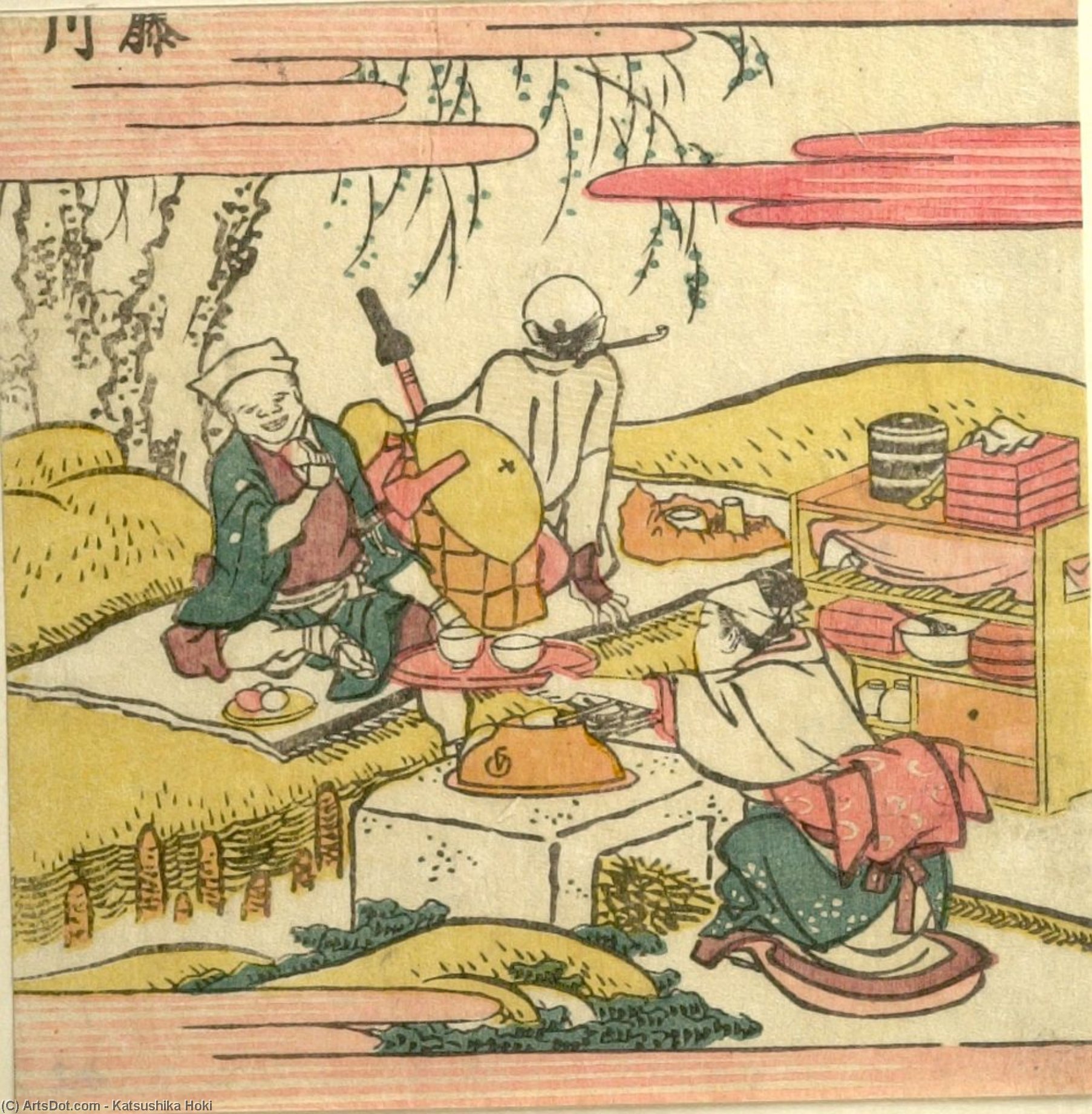
A Moment of Shared Intimacy: Katsushika Hokusai’s “Two Men Drinking Tea”
Katsushika Hokusai's "Two Men Drinking Tea," a captivating woodblock print from his renowned “Fifty-Three Stations of the Tōkaidō,” offers more than just a depiction of a simple afternoon pastime. It’s a subtle, exquisitely rendered tableau brimming with social commentary and an undeniable sense of quiet contemplation—a window into Edo period Japan that continues to resonate with modern viewers. The print, created around 1810 during Hokusai's prolific career, exemplifies his mastery of *ukiyo-e*, the art of “pictures of the floating world,” a genre known for its vibrant colors, dynamic compositions, and often intimate portrayals of everyday life.
The scene unfolds on a grassy bank beside a stream, bathed in the soft light of late afternoon. Two men, dressed in the modest attire of traveling merchants, are seated comfortably before a low table laden with bowls of food and steaming cups of tea. One man, identified as Fujikawa (a common name for travelers), gestures towards his companion, while the other, seemingly more reserved, leans forward attentively. The composition is remarkably balanced—the figures are positioned to draw the eye naturally across the scene, creating a sense of harmonious interaction. Hokusai’s signature use of bold outlines and carefully layered colors – primarily blues, greens, and browns – imbues the print with an immediate visual impact, yet simultaneously allows for subtle gradations of tone that capture the nuances of light and shadow.
The Layers of Meaning: Social Commentary and Tradition
Beyond its aesthetic appeal, “Two Men Drinking Tea” is rich in social and cultural significance. The Tōkaidō was a vital artery connecting Edo (modern-day Tokyo) with Kyoto, facilitating trade and travel across Japan. Hokusai’s series of prints documenting this route offered a glimpse into the lives of ordinary people—merchants, travelers, farmers—and subtly critiqued the rigid social hierarchies of the time. The inclusion of a samurai figure in the scene is particularly noteworthy; his presence suggests an acknowledgement of the warrior class's continued influence despite the rise of the merchant class during the Edo period.
The act of sharing tea itself held profound symbolic weight. It was a gesture of hospitality, friendship, and respect—a way to establish connections and foster goodwill. The careful arrangement of the bowls and cups on the table reflects this ritualistic importance, emphasizing the deliberate nature of the encounter. Hokusai’s depiction captures not just a moment in time but also a carefully constructed social interaction, inviting viewers to consider the unspoken rules and expectations that governed Edo society.
Hokusai's Technique: A Masterclass in Woodblock Printing
“Two Men Drinking Tea” is a testament to Hokusai’s unparalleled skill as a woodblock printer. The print was created using *kawanami-e*, a technique known for its delicate lines and vibrant colors achieved through multiple blocks of carved wood. Each block—representing the figures, the landscape, the table, and the utensils—was meticulously prepared and inked separately, allowing for precise control over color and detail. This painstaking process resulted in an image that is both visually stunning and remarkably detailed, showcasing Hokusai’s mastery of perspective, composition, and tonal variation.
The use of Prussian blue pigment, imported from Europe during this period, is particularly striking—a testament to the influence of Western art on Japanese aesthetics. The color adds a subtle richness and depth to the print, enhancing its overall visual impact. Hokusai’s ability to seamlessly integrate these diverse elements into a cohesive composition demonstrates his exceptional artistic vision and technical expertise.
A Legacy of Beauty: Emotional Resonance and Timeless Appeal
“Two Men Drinking Tea” transcends its historical context to offer a timeless portrayal of human connection and quiet contemplation. The scene’s inherent simplicity—two men sharing a moment of respite amidst the bustle of travel—evokes a sense of warmth, intimacy, and serenity. It's a reminder that even in the midst of a rapidly changing world, certain rituals and traditions continue to hold value.
Reproductions of this iconic print are highly sought after by collectors and interior designers alike, offering a chance to bring a touch of Edo-period elegance into any space. The print’s subtle beauty, combined with its rich historical and cultural significance, makes it a truly exceptional work of art—a testament to the enduring legacy of Katsushika Hokusai.