A Window Into Edo Japan: Unveiling Katsushika Hokusai’s “Untitled (D2X86B)”
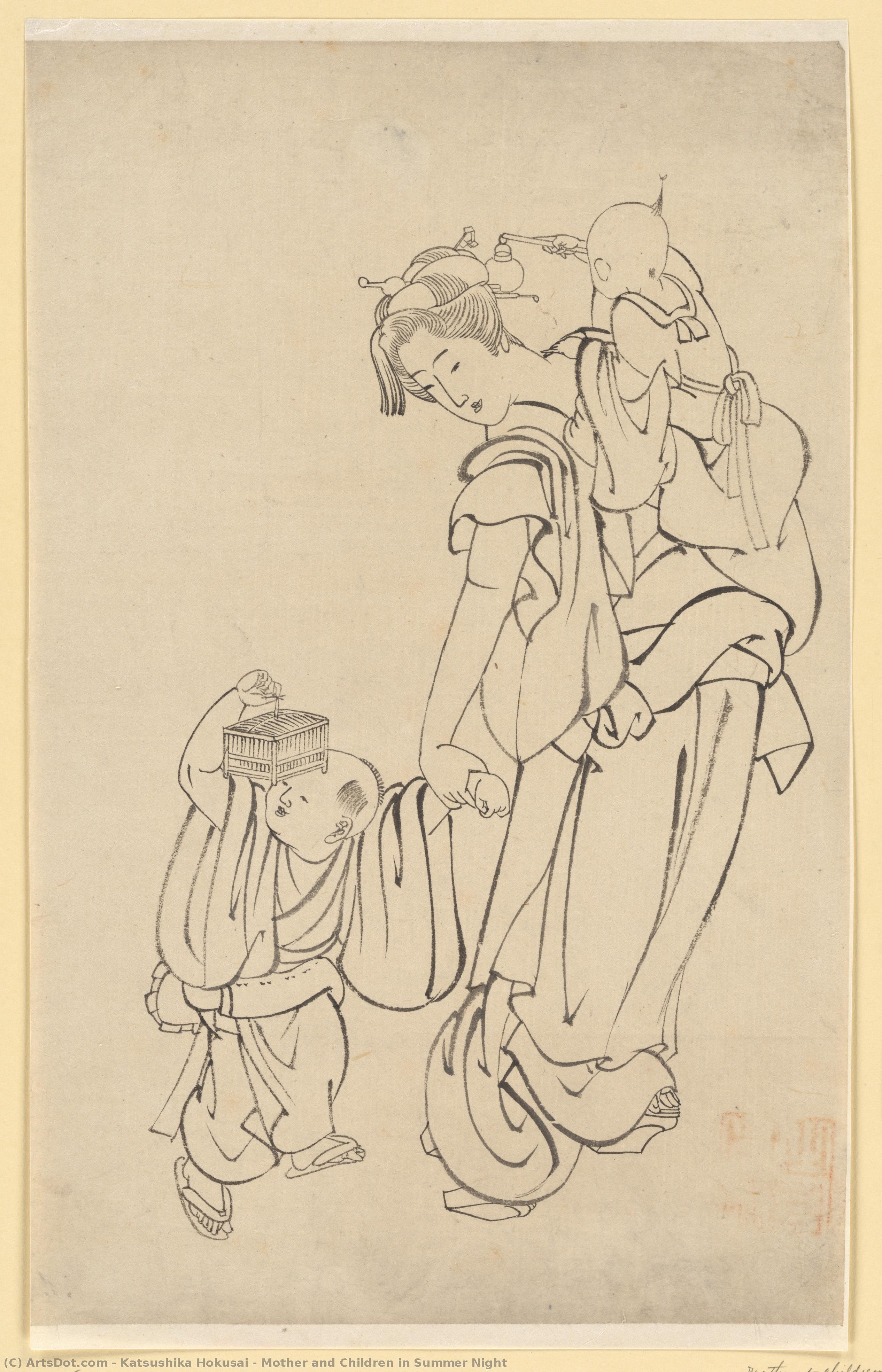
This exquisite black and white ink drawing, titled simply "Untitled (D2X86B)," offers a captivating glimpse into the serene beauty of Edo-period Japan – specifically, the artistic sensibilities championed by Katsushika Hokusai. More than just a depiction of familial harmony, it embodies the very essence of Ukiyo-e aesthetics: flowing lines, simplified forms, and an unwavering focus on capturing movement with remarkable precision. As a cornerstone of Japanese art history, Hokusai’s influence extends far beyond his iconic *Thirty Six Views of Mount Fuji*, demonstrating a mastery that permeated across diverse artistic mediums.
- Composition & Technique: The drawing's vertical orientation immediately establishes a sense of stability and grandeur, mirroring the compositional principles prevalent in Ukiyo-e prints. Hokusai’s meticulous line work—characterized by varying pressures to achieve tonal gradations—is paramount. Dense lines delineate clothing folds and hair textures, while looser strokes convey dynamism within the figures' postures. This technique skillfully suggests depth through layering and overlapping lines, mirroring the illusionistic methods employed in woodblock printing.
- Subject Matter & Symbolism: At its core, “Untitled (D2X86B)” portrays a tender scene of motherhood – a motif deeply rooted in Japanese culture. The depiction of a woman carrying her child alongside another child symbolizes familial unity and the continuation of life’s cycle—themes frequently explored in Ukiyo-e art to convey values of compassion and respect for tradition.
- Style & Influence: Strongly reminiscent of woodblock prints, this drawing exemplifies Hokusai's distinctive style. The flattened perspective, characteristic of Ukiyo-e, prioritizes conveying emotion and gesture over strict spatial realism. Notably, the artist’s approach foreshadowed developments in Impressionism decades later, demonstrating his profound impact on Western artistic sensibilities.
- Material & Context: Executed with ink on washi paper—a traditional Japanese material renowned for its texture and luminosity—the drawing speaks to Hokusai's dedication to preserving established artistic traditions. Created during the Edo period (1603-1868), a time of relative peace and prosperity under Tokugawa rule, “Untitled (D2X86B)” reflects the cultural values of the era.
Consider commissioning a hand-painted reproduction of this masterpiece to infuse your interior space with the timeless elegance and contemplative spirit of Edo Japan.