The Fuji T-1 Hatsutaka was Japan's first jet-powered trainer aircraft. Its first flight was in January 1958. A total of 66 T-1 planes were built. It was retired in March 2006.
== Design and development ==
After World War II, Japanese aircraft industry was banned from research as well as the destruction of materials and equipment related to aircraft. In 1952, a partial ban on aircraft research wa
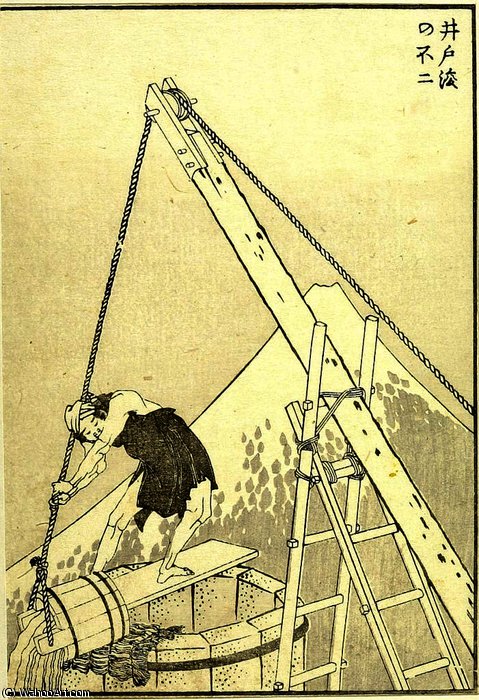
A Labor of Precision: Katsushika Hokusai’s Well-Cleaning Fuji
Katsushika Hokusai's *Well-Cleaning Fuji*, a deceptively simple depiction of rural toil, transcends mere observation to embody the spirit of Edo-period Japan and the artist’s unwavering dedication to capturing the essence of everyday life. More than just a snapshot of manual labor—the painting portrays a solitary man diligently clearing debris from a well—it serves as a poignant reminder of Hokusai's profound understanding of his subject matter and his masterful manipulation of Prussian blue pigment.
- Subject Matter: The scene centers around a farmer engaged in the arduous task of cleaning out a rural water source. This wasn’t simply about practicality; wells were vital to sustenance and community life, representing resilience and connection to the natural world – themes frequently explored by Hokusai throughout his prolific oeuvre.
- Style: Characteristic of Hokusai's distinctive style—often termed “ukiyo-e”—the artwork prioritizes atmospheric perspective. The distant Fuji mountain is rendered in muted tones, subtly receding into the haze, creating a sense of depth and conveying the grandeur of Japan’s landscape.
- Technique: Hokusai employed meticulous detail within this seemingly understated composition. Observe the careful rendering of the rope, pulley system, and bucket—each element contributes to the overall realism and reinforces the narrative quality of the image. Crucially, he utilized Prussian blue pigment – a revolutionary color at the time – imported from Europe. Its intense hue was painstakingly blended to achieve subtle gradations, demonstrating Hokusai’s technical prowess.
Historical Context: Created during Hokusai's later years (approximately 1830-1849), *Well-Cleaning Fuji* reflects a shift in artistic focus toward portraying scenes of ordinary life. Following the success of his monumental *Thirty-Six Views of Mount Fuji*, Hokusai sought to continue exploring themes of nature and human experience, albeit with a quieter, more contemplative tone.
Symbolism: The well itself symbolizes purity and renewal—a visual metaphor for spiritual cleansing. Furthermore, the solitary figure embodies perseverance and dedication – qualities admired in Japanese culture. The inclusion of the ladder suggests aspiration and reaching for something beyond immediate surroundings, mirroring Hokusai’s lifelong pursuit of artistic excellence.
Emotional Impact: Despite its quiet demeanor, *Well-Cleaning Fuji* evokes a powerful sense of serenity and contemplation. The painting invites viewers to appreciate the beauty inherent in labor and the importance of connecting with the natural world—themes that resonate deeply within Hokusai’s artistic vision and continue to captivate audiences today.