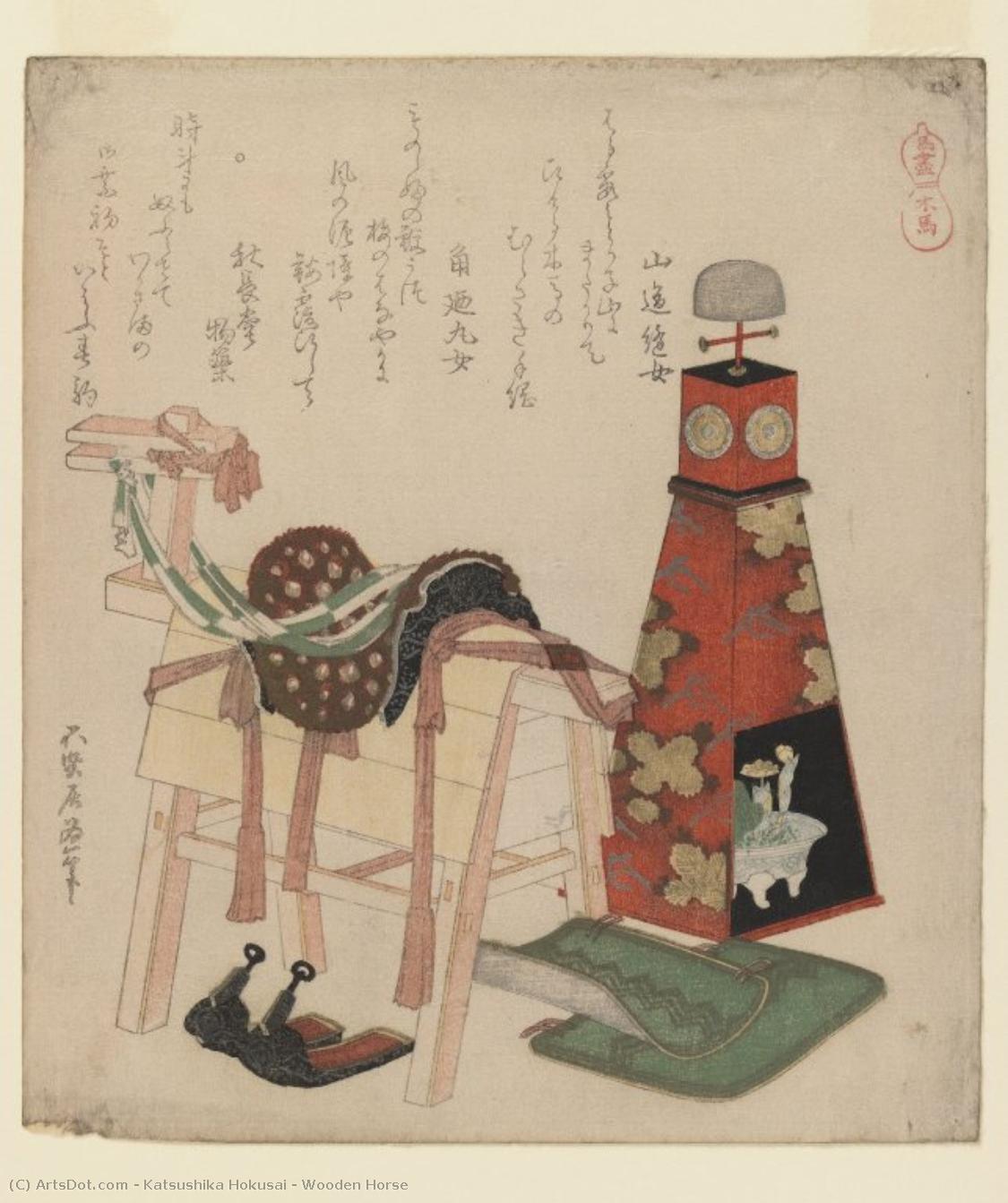
This exquisite woodblock print by Katsushika Hokusai, created around 1822, exemplifies the Ukiyo-e style. Measuring 21 x 18 cm, it’s a masterful depiction of a wooden horse adorned with fabrics resembling a saddle and other riding accessories, alongside decorative pedestal and footwear. Currently residing in the Brooklyn Museum, this artwork offers insight into Japanese cultural artifacts.
Discover Katsushika Hokusai (1760-1849), Japan's ukiyo-e master! Explore 'The Great Wave,' landscapes, manga & woodblock prints. Influenced Impressionism & more!
Brooklyn Museum
(Brooklyn, United States of America)
Explore the Brooklyn Museum, NYC’s 2nd largest art museum! Discover 500,000+ works from Egyptian antiquities to contemporary masters like Rothko & O'Keeffe. Beaux-Arts architecture awaits!
A Moment Frozen in Time: Exploring Katsushika Hokusai’s “Wooden Horse”
Katsushika Hokusai, a titan of Japanese art and arguably the most recognizable figure from the Ukiyo-e movement, didn't merely depict scenes; he captured essence. His magnum opus, "The Great Wave off Kanagawa," cemented his legacy as an icon of Impressionism and continues to inspire artists globally, yet “Wooden Horse,” created around 1822, offers a quieter, equally profound glimpse into the artist’s artistic vision.
- Subject Matter: The artwork presents a meticulously rendered still life tableau featuring a wooden horse—a symbol of strength and resilience—positioned atop a pedestal adorned with opulent floral motifs. Alongside it are carefully placed objects like footwear, a helmet-like item, and a cushioned mat, creating a harmonious composition that speaks to Japanese cultural traditions.
- Style & Technique: Executed in the woodcut print medium (surimono), “Wooden Horse” exemplifies Hokusai’s unparalleled mastery of technique. The artist skillfully utilized hatching and shading—a hallmark of Ukiyo-e—to convey texture and depth, transforming a seemingly simple subject into an emotionally resonant image.
- Historical Context: Produced during the Edo Period (1603–1868), “Wooden Horse” reflects the artistic sensibilities of its time. The Edo Period was characterized by stability and burgeoning urban culture, fostering patronage for art that celebrated beauty and craftsmanship. Hokusai’s work aligns with this aesthetic tradition, demonstrating a dedication to capturing natural forms and textures with remarkable precision.
- Symbolism: Beyond its visual appeal, “Wooden Horse” carries symbolic weight. The horse itself represents fortitude and perseverance—qualities valued in Japanese culture—while the pedestal's floral decorations symbolize prosperity and elegance. These elements intertwine to convey a message of harmony between humanity and nature.
- Emotional Impact: Viewing “Wooden Horse” evokes contemplation and appreciation for Hokusai’s artistic skill. The artwork’s serene atmosphere invites viewers to consider themes of tradition, beauty, and the enduring power of observation—elements that resonate deeply with audiences across cultures.
This exquisite reproduction captures the essence of Hokusai's genius, allowing you to bring a piece of Japanese art history into your home or studio.