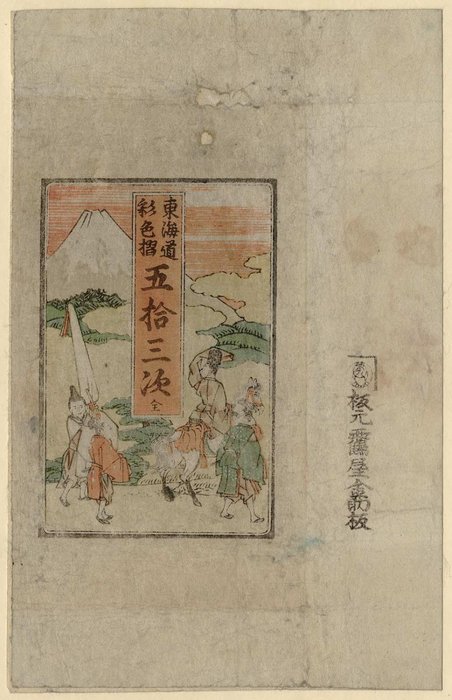
Discover Katsushika Hokusai’s ‘Wrapper For Series The Fifty,’ a stunning Ukiyo-e woodblock print showcasing Mount Fuji & vibrant Japanese culture. Explore its bold style & timeless beauty.
Discover Katsushika Hokusai (1760-1849), Japan's ukiyo-e master! Explore 'The Great Wave,' landscapes, manga & woodblock prints. Influenced Impressionism & more!
A Window Into Edo Japan: Exploring Katsushika Hokusai’s “Wrapper For Series The Fifty”
“Wrapper For Series The Fifty,” attributed to the legendary Katsushika Hokusai (1760-1849), transcends mere visual representation; it embodies the spirit of Edo Japan—a period defined by artistic innovation, social hierarchy, and a profound connection to nature. This striking Ukiyo-e woodblock print captures a fleeting moment from the Tokaido pilgrimage route, offering viewers an unparalleled glimpse into the aesthetic sensibilities of its time.
Composition & Style: Bold Lines and Flattened Planes
The image immediately commands attention with its vertical orientation and dominant presence of Mount Fuji—a symbol revered throughout Japanese culture for its majesty and spiritual significance. Hokusai’s masterful use of bold outlines defines every element, creating a dynamic visual structure that prioritizes clarity and impact. Unlike Western painting traditions focused on realistic depiction, Ukiyo-e employs flattened planes of color, minimizing shading and emphasizing texture—a technique deliberately chosen to convey mood and atmosphere rather than precise detail. The simplified forms contribute to an overall sense of serenity and grandeur, reflecting the Edo period’s fascination with idealized landscapes.
Technique: The Art of Woodblock Printing
The print's beauty lies not only in its visual appeal but also in its intricate production process. Skilled artisans meticulously carve wooden blocks depicting individual elements of the scene—the mountain itself, the figures traversing the path, and architectural structures—before applying ink to these blocks and transferring it onto paper through a series of presses. This painstaking method resulted in prints that possess a distinctive tactile quality – subtle creases and imperfections inherent in handmade paper serve as reminders of its history and authenticity. The careful layering of colors achieved through multiple impressions further enhances the print’s visual richness, demonstrating remarkable artistic precision.
Symbolism: Pilgrimage and Spiritual Reflection
More than just a topographical depiction, “Wrapper For Series The Fifty” carries symbolic weight. The Tokaido pilgrimage route was considered one of Japan's holiest journeys, undertaken by devout Buddhists seeking enlightenment. Hokusai’s portrayal captures the contemplative spirit of these pilgrims as they ascend Mount Fuji—representing aspiration and transcendence—amidst a landscape imbued with natural beauty. The figures themselves are rendered in muted tones, emphasizing their humility and devotion. The artist’s deliberate choice of color palette reinforces this theme, mirroring the subdued hues found in Buddhist temples and fostering an emotional connection between the viewer and the depicted scene.
Legacy & Influence: Beyond Edo Japan
Katsushika Hokusai's influence extends far beyond his lifetime, resonating powerfully with artists across continents. His groundbreaking approach to landscape painting—characterized by bold simplification and expressive color—inspired Impressionist painters like Claude Monet and Edgar Degas, who sought to capture fleeting moments of light and atmosphere in their own works. “Wrapper For Series The Fifty” stands as a testament to Hokusai’s artistic genius and his enduring contribution to the history of art, continuing to captivate audiences with its timeless beauty and profound symbolic depth.