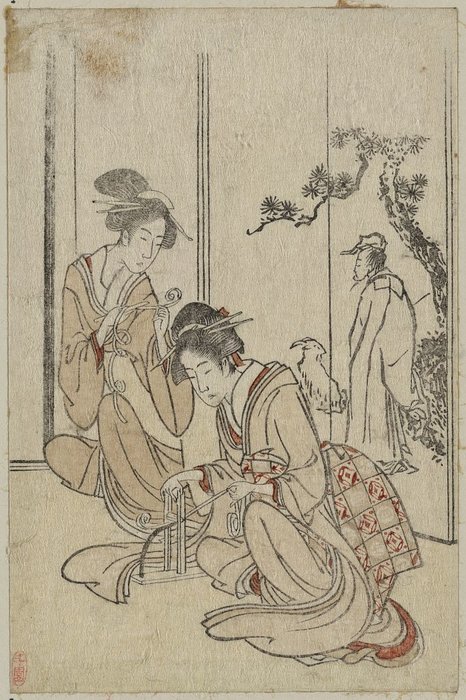
Young Woman Braiding A Cord Before A Screen Depicting The Chinese Sage Huang Shangping

Admire Hokusai’s ‘Young Woman Braiding…’, a captivating ukiyo-e masterpiece depicting a serene scene of Japanese artistry. Explore this exquisite reproduction today!


Katsushika Hokusai (1760 - 1849)

Discover Katsushika Hokusai (1760-1849), Japan's ukiyo-e master! Explore 'The Great Wave,' landscapes, manga & woodblock prints. Influenced Impressionism & more!

A Moment of Quiet Intimacy: Katsushika Hokusai’s ‘Young Woman Braiding A Cord Before A Screen Depicting The Chinese Sage Huang Shangping’

  • Subject and Composition: This *ukiyo-e* woodblock print by the celebrated Japanese artist Katsushika Hokusai depicts a tender domestic scene. Two young women are intimately engaged – one carefully braiding the hair of the other. They sit indoors, positioned before an ornate screen that serves as a focal point, displaying an image of the revered Chinese sage Huang Shangping. The composition is balanced and harmonious, drawing the viewer into this private moment.
  • Style and Technique: Hokusai masterfully employs the techniques characteristic of *ukiyo-e* – “pictures of the floating world.” This style flourished during the Edo period (1603–1868) in Japan, capturing scenes from everyday life, landscapes, and popular culture. The print showcases delicate linework, subtle color gradations achieved through meticulous woodblock carving and printing, and a flattened perspective typical of the genre. The use of color is restrained yet effective, enhancing the mood of tranquility.
  • Historical Context: Created around 1799, this work offers a glimpse into the social customs and intellectual interests of late Edo-period Japan. The inclusion of Huang Shangping – a prominent figure in Confucianism known for his integrity and devotion to learning – suggests an appreciation for Chinese philosophy within Japanese society. *Surimono*, or privately published prints like this one, were often created as New Year’s gifts among educated circles, indicating the intended audience valued refinement and intellectual pursuits.
  • Symbolism and Meaning: The act of braiding hair is rich in symbolism, representing connection, intimacy, and the transmission of knowledge between generations. The screen depicting Huang Shangping isn't merely decorative; it alludes to ideals of virtue, scholarship, and moral conduct. The presence of birds – scattered throughout the scene and near a birdcage – can be interpreted as symbols of freedom, longing, or simply natural beauty. The potted plant adds another layer of symbolism, representing growth and vitality.
  • Emotional Impact & Aesthetic Appeal: *Young Woman Braiding A Cord…* evokes a sense of peaceful contemplation and quiet grace. The scene is imbued with a gentle intimacy that resonates deeply with the viewer. Hokusai’s skillful rendering of form, color, and composition creates an aesthetically pleasing work that transcends its historical context. It's a piece that invites prolonged viewing and offers a moment of respite from the bustle of modern life.
  • For Collectors & Designers: This print is a valuable addition to any collection of Japanese art, particularly *ukiyo-e*. Its refined aesthetic and subtle symbolism make it suitable for a variety of interior design schemes – from traditional Japanese spaces to contemporary settings seeking a touch of understated elegance. A high-quality reproduction would bring the serenity and beauty of this work into any home or office.