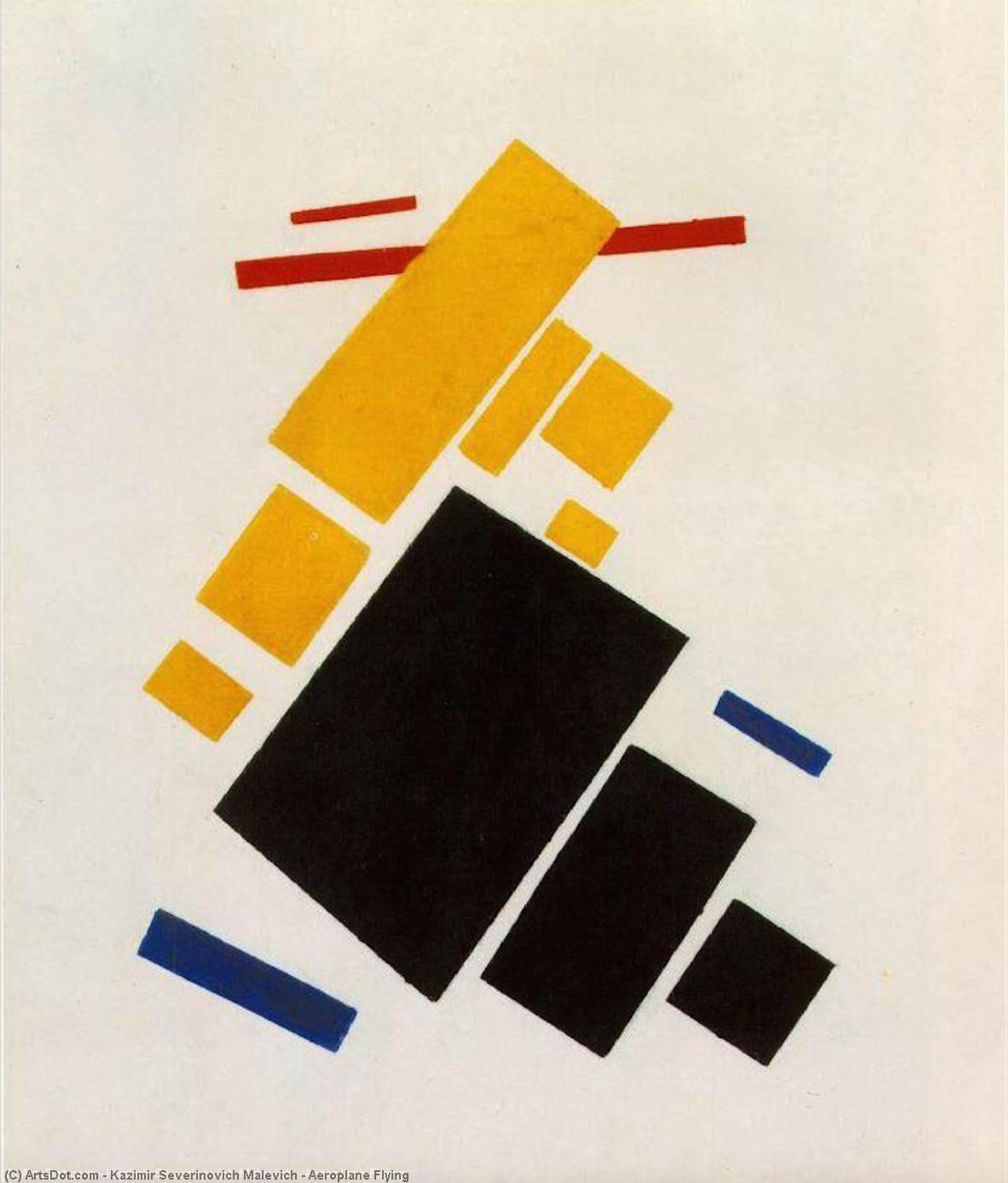
Kazimir Malevich’s Suprematist masterpiece captures an airplane soaring against a vibrant yellow backdrop—a bold geometric abstraction embodying the revolutionary spirit of 1915 and inviting you to explore this iconic piece.
Kazimir Malevich (1878-1935): Ukrainian founder of Suprematism & pioneer of abstract art. Explore iconic works like Black Square, geometric forms, & pure feeling's impact on 20thC art.
A Bold Statement Against Representation: Kazimir Malevich’s “Aeroplane Flying”
Kazimir Malevich's "Aeroplane Flying," painted in 1915, stands as a cornerstone of Suprematism—a revolutionary artistic movement that fundamentally challenged the conventions of Western art. More than just an image of an airplane soaring through the sky, it embodies Malevich’s radical vision for abstract expression, representing a decisive break from traditional perspective and color palettes. This painting isn't merely decorative; it’s a profound exploration of geometric abstraction and its capacity to convey emotion and spiritual significance.
The Suprematist Aesthetic: Beyond Illusion
Malevich’s artistic journey began with explorations in Impressionism, Symbolism, Fauvism, and Cubism—styles that were prevalent during his time and reflected the broader intellectual currents of Europe. However, he swiftly recognized the limitations of these approaches in capturing the essence of experience. Inspired by Russian Constructivism and influenced by Piet Mondrian’s pioneering work, Malevich developed Suprematism – a doctrine proclaiming “pure painting,” rejecting any illusionistic depiction of reality. He argued that art should strive for spiritual liberation through simplification—reducing visual elements to their most basic geometric forms: squares and circles.
Geometric Precision and Symbolic Resonance
“Aeroplane Flying” exemplifies this uncompromising aesthetic perfectly. The dominant black square, positioned prominently against a vibrant yellow background, dominates the composition. This stark contrast isn’t accidental; it symbolizes Malevich's desire to transcend sensory experience and access a realm of pure intellect and feeling. The airplane itself—represented as a simplified geometric shape—becomes an emblem of modernity and progress, albeit viewed through the lens of abstraction. It’s deliberately devoid of detail, mirroring Malevich’s belief that form precedes content, prioritizing visual impact over narrative storytelling.
Historical Context: A Moment of Artistic Transformation
Painted during World War I, “Aeroplane Flying” reflects the anxieties and aspirations of its time. The war fueled a fervent debate about the role of art in society—should it serve to document reality or to elevate the human spirit? Malevich’s Suprematism responded directly to this challenge, asserting that art could achieve transcendence by rejecting representational imagery altogether. It aligns with broader artistic movements seeking new ways to express ideas and emotions beyond traditional conventions.
Emotional Impact: Silence Speaks Volumes
Despite its apparent simplicity, “Aeroplane Flying” possesses a remarkable emotional depth. The bold geometric forms generate a sense of stillness and contemplation—a deliberate antithesis to the turbulent events unfolding in Europe. Malevich’s masterful use of color contributes to this effect; the yellow background radiates warmth and optimism, juxtaposed against the coolness of black, creating a dynamic tension that invites viewers to engage with the artwork on an intuitive level. It's a piece that compels us to consider what is truly essential—the underlying structure of existence itself.