Kazimir Malevich’s ‘Head of Peasant’: A Fragment of Revolutionary Vision
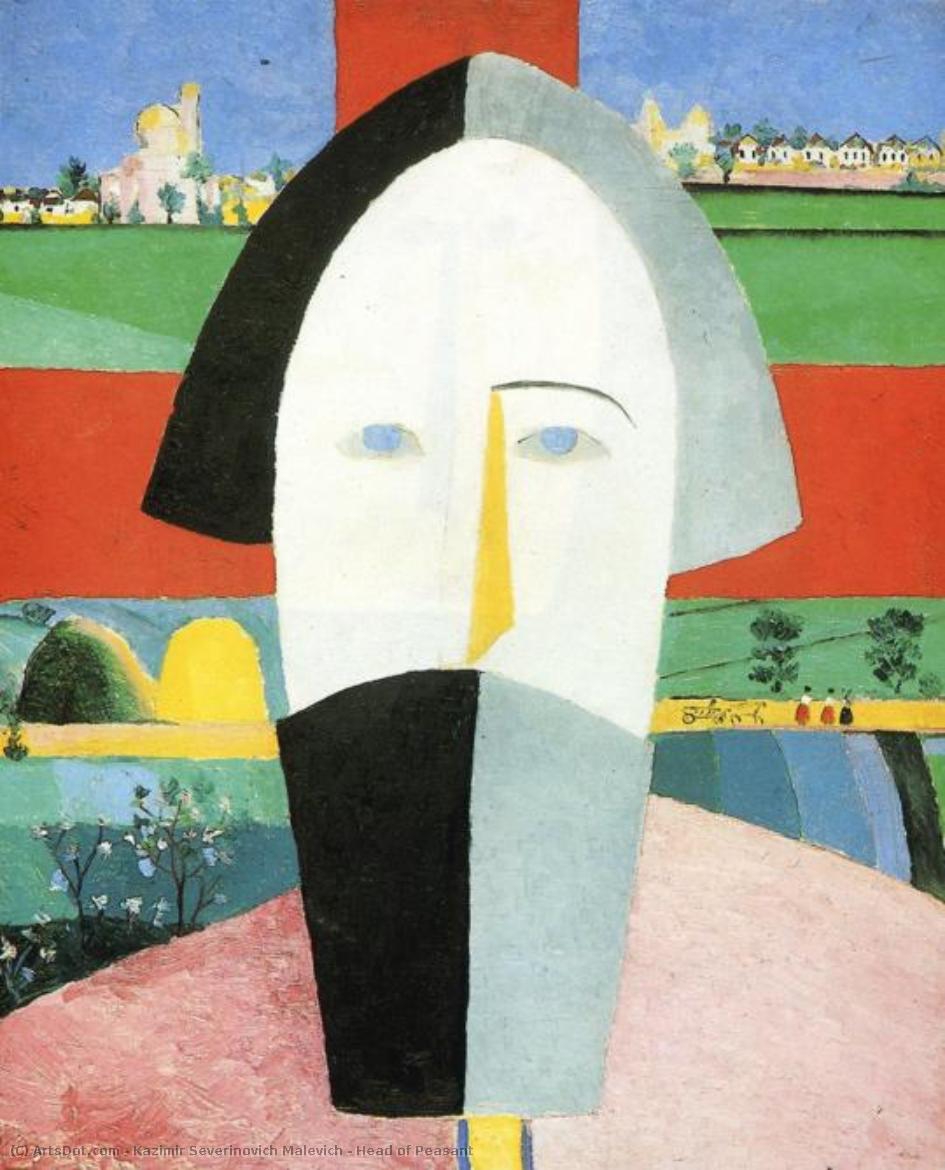
Painted in 1932, Kazimir Malevich's 'Head of Peasant' stands as a potent distillation of the artist’s radical experimentation with form and color. This seemingly simple depiction – a head rendered in stark black and white against a verdant field – is far more than a portrait; it’s a meticulously constructed fragment of a revolutionary artistic vision, born from Malevich’s deep roots in Ukrainian folk art and his relentless pursuit of pure abstraction.
- Subject & Composition: The subject itself, a peasant's head, immediately evokes the rural traditions that shaped Malevich’s early influences. However, the artist deliberately distorts and simplifies the features, stripping away representational detail to arrive at an essence of humanity. The composition is carefully balanced, utilizing the green field not merely as a backdrop but as an active element contributing to the overall tension and dynamism of the piece.
- Color & Technique: Employing a monochrome palette – black and white – Malevich eliminates any illusion of depth or three-dimensionality. This deliberate choice forces the viewer to confront the fundamental elements of shape, line, and texture. The painting’s surface is executed with a precise, almost geometric brushstroke, indicative of Malevich's commitment to rigorously controlled technique.
The Rise of Suprematism: Contextualizing ‘Head of Peasant’
'Head of Peasant' was created during the height of Malevich’s development as a pioneer of Suprematism, an abstract art movement he founded in 1915. Suprematism sought to liberate painting from the constraints of depicting external reality, aiming instead for pure artistic expression through geometric forms and non-objective color. This work reflects the core tenets of Suprematism – reduction to basic elements, a rejection of illusionism, and an emphasis on spiritual or emotional content communicated through abstract form.
Malevich’s journey began with explorations of Impressionism, Symbolism, and Cubism, but he ultimately sought a more radical departure. His pivotal trip to Paris in 1912 exposed him to the avant-garde movements, accelerating his move towards abstraction. The painting embodies this shift, representing a decisive break from traditional representational art.
Symbolic Resonance & Emotional Impact
While ostensibly abstract, ‘Head of Peasant’ is laden with symbolic resonance. The peasant figure represents the enduring connection to rural roots and the fundamental human condition – a theme frequently explored in Malevich's work. The stark contrast between black and white can be interpreted as representing duality: good versus evil, light versus darkness, or perhaps even the tension between tradition and modernity. The two small figures in the background, walking away, add another layer of complexity, suggesting a sense of detachment or the fleeting nature of human experience.
The emotional impact of the painting is one of quiet contemplation and unsettling ambiguity. The distorted form invites viewers to engage with their own perceptions and interpretations, prompting questions about identity, representation, and the very nature of reality. It’s a piece that demands attention, rewarding repeated viewing with new insights.
A Master Reproduction – Bringing Malevich Home
ArtsDot offers meticulously crafted hand-painted reproductions of ‘Head of Peasant’, ensuring that you experience the full power and beauty of this seminal work. Our skilled artisans employ traditional techniques to faithfully recreate Malevich’s original vision, capturing every nuance of color, texture, and composition. This reproduction is more than just a print; it's a tangible connection to one of the most important figures in 20th-century art.