Kazimir Malevich (1878-1935): Ukrainian founder of Suprematism & pioneer of abstract art. Explore iconic works like Black Square, geometric forms, & pure feeling's impact on 20thC art.
A Fragmented Portrait: Kazimir Malevich’s Exploration of Form and Emotion
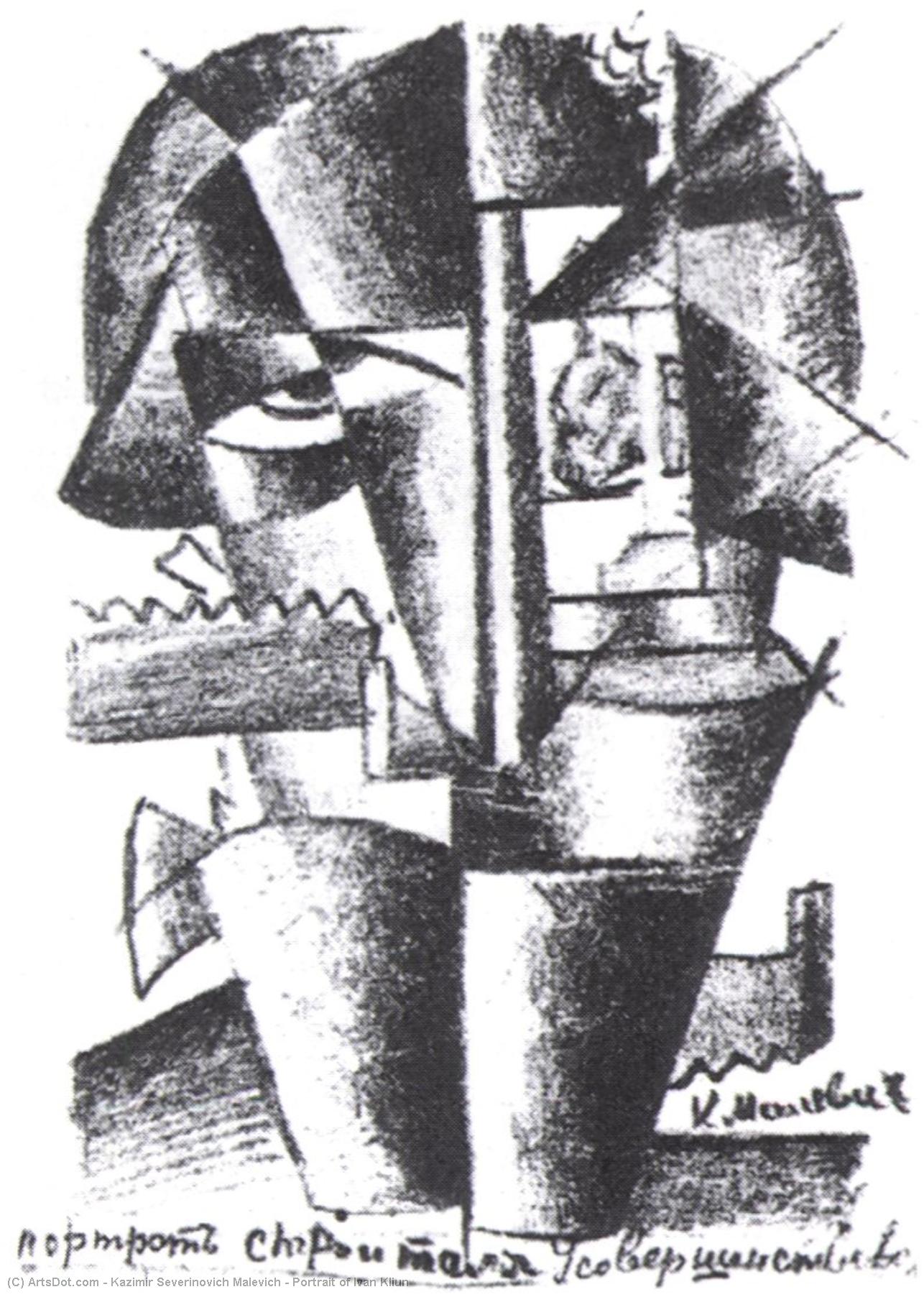
Kazimir Malevich's "Portrait of Ivan Kliun," painted in 1913, stands as a haunting testament to the anxieties and experimental fervor characterizing Cubo-Futurism – a movement that sought to shatter traditional artistic conventions and forge a new visual language. This striking monochrome depiction isn’t merely a likeness; it's an unsettling interrogation of representation itself, reflecting Malevich’s profound engagement with Suprematism’s core tenets.
### Style & Technique: Cubo-Futurist Disruption
The painting exemplifies the stylistic hallmarks of Cubo-Futurism. Rejecting illusionistic depth and perspective—methods prevalent in Impressionism and Post-Impressionism—Malevich employs a fractured geometric approach. Planes intersect at sharp angles, creating an almost violently disjointed surface that disrupts any comfortable sense of visual harmony. The artist utilizes bold brushstrokes to convey texture and dynamism, emphasizing the materiality of pigment rather than striving for photographic accuracy. This deliberate disregard for realism underscores Malevich’s ambition to liberate art from the constraints of depicting observable reality.
### Historical Context: The Avant-Garde Spirit of Its Time
Painted during a period of intense artistic upheaval in Russia—marked by debates over the role of art in society and fueled by revolutionary ideas—"Portrait of Ivan Kliun" speaks to the broader cultural climate of the early 20th century. Cubo-Futurism arose from a confluence of influences, including Futurists’ fascination with speed, technology, and urban life alongside Constructivist concerns about social transformation. Malevich's work aligns itself with this spirit of experimentation, pushing boundaries and questioning established artistic dogma. The portrait captures the zeitgeist of an era grappling with rapid change and seeking new ways to express its vision of the future.
### Symbolism & Emotional Resonance: Beyond Mere Appearance
Despite its austere aesthetic, “Portrait of Ivan Kliun” is laden with symbolic significance. Malevich’s deliberate fragmentation—the incomplete face—suggests a preoccupation with psychological states and the elusive nature of identity. The stark monochrome palette amplifies the emotional impact, conveying feelings of isolation and unease. It's not an idealized depiction; rather, it confronts viewers with a raw vulnerability that transcends superficial beauty. Malevich’s aim wasn’t to portray Ivan Kliun as he appeared but to distill his essence into fundamental geometric forms—a deliberate strategy designed to bypass sensory perception and tap directly into the viewer’s subconscious.
### Legacy & Reproduction: Capturing the Essence of Suprematism
Today, reproductions of “Portrait of Ivan Kliun” offer art enthusiasts a chance to experience Malevich's groundbreaking vision firsthand. ArtsDot.com presents meticulously crafted prints that faithfully recreate the painting's textural qualities and tonal subtleties, allowing collectors and interior designers alike to appreciate its enduring power. By delving into this artwork’s stylistic innovations, historical context, and emotional depth, we gain a deeper understanding of Malevich’s contribution to the history of abstract art and his unwavering commitment to redefining artistic expression.