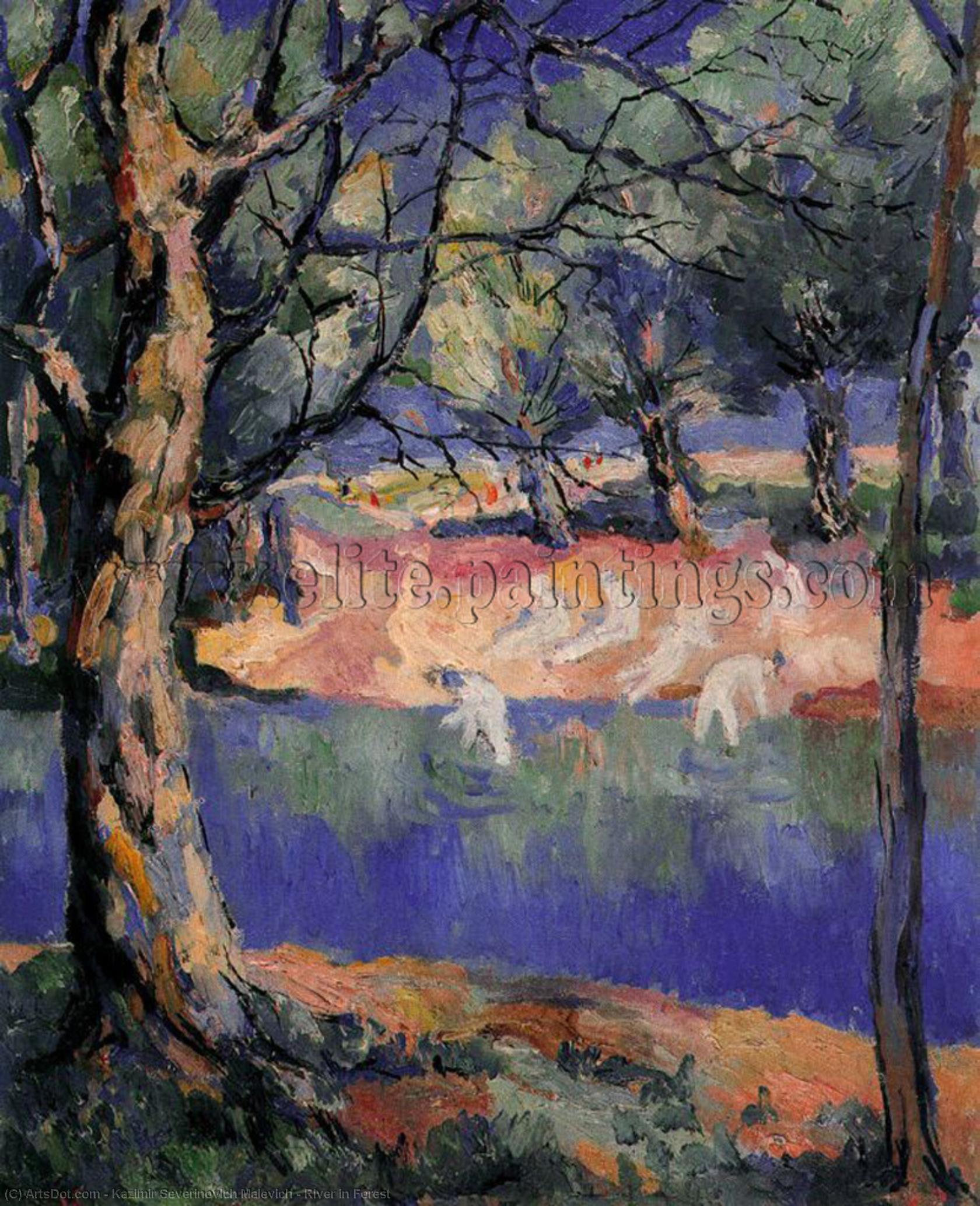
Kazimir Malevich’s mesmerizing ‘River in Forest’ captures the serene beauty of nature through bold abstraction—a cornerstone of Suprematism—demonstrating his pioneering vision and inviting you to experience this iconic artwork.”
Kazimir Malevich (1878-1935): Ukrainian founder of Suprematism & pioneer of abstract art. Explore iconic works like Black Square, geometric forms, & pure feeling's impact on 20thC art.
A Vision of Tranquility: Kazimir Malevich’s “River in Forest”
The painting "River in Forest" by Kazimir Malevich, completed in 1908, stands as a remarkable testament to the burgeoning avant-garde spirit of early 20th century Russia. More than just a depiction of a serene woodland scene, it embodies Malevich’s groundbreaking exploration into pure abstraction—a radical departure from traditional artistic conventions that cemented his place as one of the pioneers of modern art.
Subject Matter and Composition
At first glance, the artwork presents a familiar landscape motif: a river winding through a dense forest. However, Malevich skillfully transforms this pastoral image into something profoundly different. Twelve horses are scattered throughout the water, adding dynamism to the tranquil setting. The trees themselves aren’t rendered in meticulous detail; instead, they adopt a striking blue hue—a deliberate choice that contributes significantly to the painting's atmospheric depth and visual impact. This subtle chromatic manipulation elevates the scene beyond mere observation, inviting contemplation about its underlying symbolism.
Style and Technique: Embracing Suprematism
Malevich’s artistic journey began with explorations of Impressionism, Symbolism, Fauvism, and Cubism—styles that were prevalent during his time and reflected the intellectual ferment of Europe. Yet, he swiftly recognized the limitations of representational art in conveying its deepest truths. This realization propelled him toward Suprematism – Malevich's own revolutionary artistic movement founded in 1915. Suprematism championed pure geometric abstraction, rejecting illusionistic representation altogether. “River in Forest” exemplifies this principle perfectly; it abandons realistic depiction for a simplified visual language dominated by squares and rectangles—a bold assertion of form over content. The artist utilized tempera paint on canvas, achieving a luminous surface finish that captures the ethereal quality of the forest light.
Historical Context: Seeds of Modern Art
The painting emerged during a period of intense artistic experimentation in Russia, coinciding with the rise of movements like Futurism and Constructivism. Malevich’s work responded to these developments by rejecting academic traditions and embracing an uncompromising commitment to abstract expression. It reflects the broader cultural anxieties surrounding the rapid pace of industrialization and urbanization—a desire for artists to grapple with new conceptual frameworks was palpable at the time. The painting's influence can be seen in subsequent generations of artists who sought to liberate art from the constraints of imitation.
Symbolism and Emotional Resonance
The blue hue of the trees isn’t merely decorative; it carries symbolic weight, representing serenity, spirituality, and perhaps even a yearning for transcendence. Malevich deliberately avoids conveying specific emotions directly—instead, he invites viewers to engage in an intuitive experience. The horses symbolize vitality, freedom, and connection with nature – elements that resonate powerfully within the context of Suprematism’s core tenets. Ultimately, “River in Forest” communicates a profound sense of stillness and contemplation, encouraging us to appreciate the beauty of simplicity and the transformative potential of abstract art.