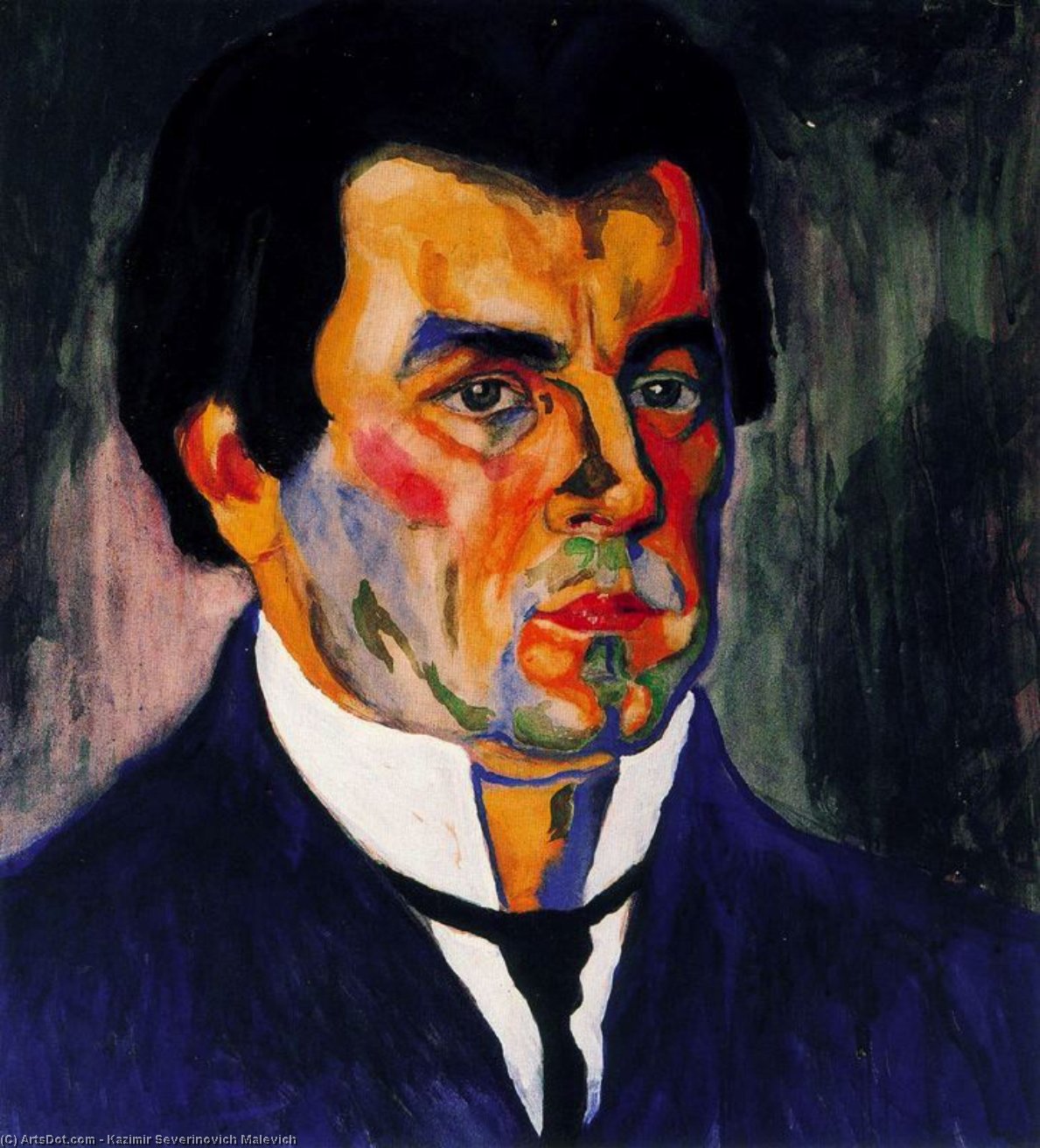
Kazimir Malevich’s iconic Self Portrait embodies Suprematism's radical departure from realism—a stark geometric abstraction featuring a solitary figure against a luminous white background. This groundbreaking 1911 painting captures Malevich’s artistic vision during the Russian avant-garde movement, inviting you to experience its timeless beauty.
Kazimir Malevich (1878-1935): Ukrainian founder of Suprematism & pioneer of abstract art. Explore iconic works like Black Square, geometric forms, & pure feeling's impact on 20thC art.
A Window into Suprematism: Kazimir Malevich’s Self Portrait
Kazimir Malevich's "Self Portrait," painted in 1911, stands as a cornerstone of Russian avant-garde art and a testament to the radical reimagining of artistic expression during its formative years. More than just a depiction of an individual, it embodies the core tenets of Suprematism—a movement spearheaded by Malevich himself—representing a profound shift away from traditional representational painting towards pure geometric abstraction.
The Canvas Speaks Volumes: Style and Technique
The painting’s aesthetic is strikingly simple yet powerfully assertive. Malevich eschewed detailed observation of the human form, opting instead for a stark monochrome palette – predominantly black on white – which immediately establishes its uncompromising commitment to non-figurative art. Geometric shapes dominate the composition; a square positioned centrally anchors the image, while smaller rectangles and triangles subtly frame it. This deliberate reduction in visual elements isn’t merely stylistic choice but a calculated effort to liberate painting from illusionistic representation. Malevich employed oil paint on canvas with meticulous precision, applying thin layers of pigment to achieve remarkable tonal gradations despite the absence of color. The resulting surface possesses an almost sculptural quality, inviting contemplation and emphasizing the materiality of the artwork itself.
Roots in Tradition, Reaching for Revolution
Malevich’s artistic journey began with explorations of Impressionism, Symbolism, Fauvism, and Cubism—styles prevalent at the time that reflected Europe's intellectual ferment. However, his formative encounter with Parisian avant-garde artists profoundly impacted his thinking. He recognized the limitations of these movements in capturing the essence of human experience and sought a more fundamental approach to artistic creation. Influenced by Russian Constructivism and Piet Mondrian’s pioneering explorations into geometric abstraction, Malevich developed Suprematism as a reaction against perceived bourgeois sentimentality and academic conventions.
Symbolism Beyond Sight: Exploring Conceptual Depth
The absence of recognizable imagery in “Self Portrait” isn't merely decorative; it carries significant symbolic weight. Malevich aimed to transcend the visual realm altogether, asserting that art should communicate ideas directly—a concept central to Suprematism’s philosophical underpinning. The square represents stability and order, mirroring Malevich’s desire for a new artistic language rooted in rational principles. Simultaneously, it symbolizes the cosmos itself – reflecting Malevich's belief that art could express universal truths beyond subjective perception. The monochrome palette reinforces this notion of purity and eliminates distractions, forcing viewers to confront the underlying conceptual framework rather than merely appreciating visual beauty.
A Legacy of Bold Innovation
“Self Portrait” remains an enduring emblem of artistic rebellion and a beacon for those pursuing radical innovation. Its influence extends far beyond Suprematism, inspiring subsequent generations of artists to challenge conventions and explore new frontiers of creative expression. Reproductions of this iconic artwork offer collectors and interior designers alike the opportunity to experience Malevich’s groundbreaking vision—a timeless testament to the transformative power of abstraction and its ability to communicate profound ideas with unwavering conviction.