A Gateway to Pure Feeling: Exploring Malevich’s Suprematism
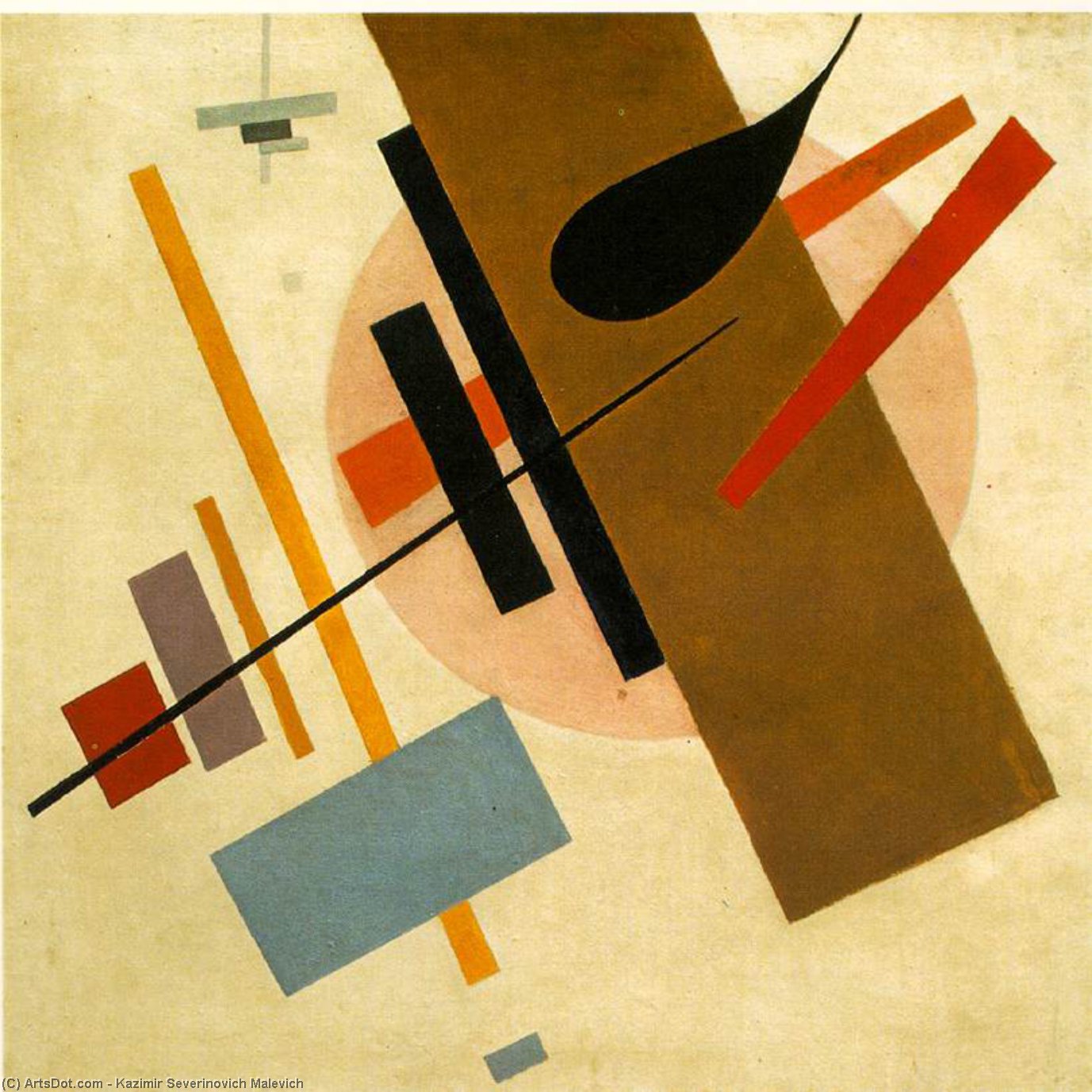
Kazimir Malevich's *Suprematism Fine Arts Museum, Krasnodar* (1917) isn't simply a painting; it is a foundational statement of abstract art. Emerging from the tumultuous backdrop of revolutionary Russia, this work embodies the core tenets of Suprematism – an artistic movement dedicated to pure geometric form and spiritual resonance. It represents a radical departure from representational art, seeking instead to evoke feeling through color and shape alone.
Deconstructing Reality: Style & Technique
The composition is deceptively simple yet profoundly impactful. A dynamic arrangement of geometric shapes – primarily circles and triangles – floats against a pale background. The dominant feature is a large black circle, acting as an anchor amidst a constellation of smaller forms in vibrant shades of red, blue, and yellow. Malevich’s technique emphasizes flatness; there's no illusion of depth or perspective. Lines are crisp and precise, defining the shapes with unwavering clarity. This deliberate lack of texture and dimensionality reinforces the painting’s focus on pure form, rejecting traditional artistic concerns like realism or imitation. The use of contrasting colors isn’t descriptive but emotive – each hue contributing to a sense of dynamic energy and spiritual weight.
Historical Context: A Revolution in Art
Born from Malevich's rejection of both representational art and the burgeoning Cubism of the time, Suprematism sought to liberate art from the constraints of the visible world. He believed that true artistic expression lay not in depicting objects, but in conveying pure feeling through abstract forms. 1917 – the year this painting was created – was a pivotal moment in Russian history, marked by revolution and upheaval. This context is crucial; Malevich saw Suprematism as an art for a new world, a visual language that mirrored the radical social and political changes unfolding around him. It’s important to note its relationship with Neoplasticism (De Stijl), though Malevich pushed abstraction even further, prioritizing feeling over the strict rationality of De Stijl's compositions.
Symbolism & Interpretation: Beyond the Visible
While seemingly devoid of recognizable imagery, *Suprematism Fine Arts Museum, Krasnodar* is rich in symbolic meaning. The circle, a recurring motif in Malevich’s work, represents wholeness, infinity, and spiritual liberation. The triangle introduces an element of dynamism and aspiration. The arrangement of these shapes isn't arbitrary; it's carefully orchestrated to create a sense of balance and harmony, reflecting Malevich’s belief in the underlying order of the universe. He aimed to access a “supreme reality” – a realm beyond the material world – through pure artistic form.
The painting invites viewers to contemplate not *what* is depicted, but *how* it feels.
Emotional Impact & Lasting Legacy
This artwork evokes a sense of calm contemplation alongside an underlying energy. The stark simplicity and bold colors create a powerful visual impact, prompting introspection and inviting the viewer to engage with the work on a deeply personal level. Malevich’s influence extends far beyond the early 20th century. His ideas paved the way for Minimalism, Conceptual Art, and countless other abstract movements. Artists like Wassily Kandinsky, Silvia Idili, and Ivan Ferreira Serpa all demonstrate the enduring legacy of Suprematism in their own explorations of color, form, and abstraction.
Key Characteristics
- Movement: Suprematism
- Style: Abstract Geometric Painting
- Medium: Oil on Canvas (presumed)
- Key Elements: Circles, Triangles, Primary Colors, Flatness
- Emotional Tone: Contemplative, Energetic, Spiritual
This painting is more than just a visual experience; it’s an invitation to explore the boundaries of perception and the power of pure artistic expression. A reproduction of *Suprematism Fine Arts Museum, Krasnodar* can bring this revolutionary energy into any space, serving as a striking focal point and a testament to the enduring legacy of Kazimir Malevich.