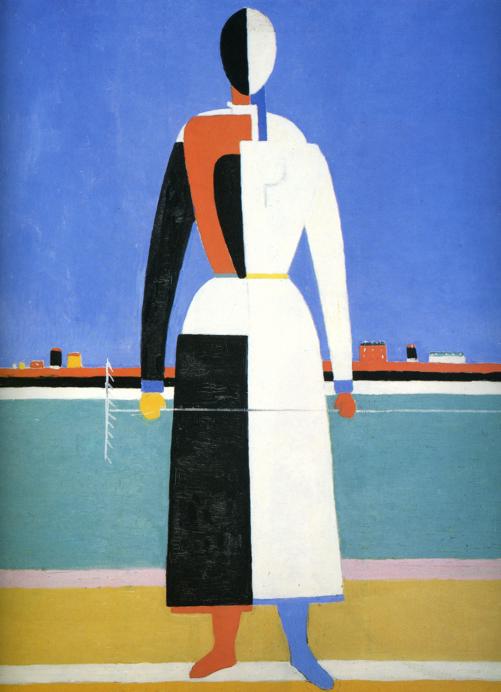
A Moment of Quiet Contemplation: Kazimir Malevich’s “Woman with Rake”
Kazimir Malevich's "Woman with Rake," painted in 1932, offers a poignant glimpse into the artist's evolving aesthetic during a pivotal moment in art history. This oil-on-canvas work, measuring 100 x 75 cm, transcends simple portraiture, embodying a complex interplay of influences and foreshadowing Malevich’s groundbreaking embrace of abstract expressionism. The painting depicts a solitary woman standing on a windswept beach, her back turned to the viewer as she holds a rake – an object seemingly out of place in this serene setting, yet imbued with symbolic weight.
The Artist and His Context
- Kazimir Malevich (1878-1935): A Ukrainian artist considered one of the pioneers of abstract art.
- Born in Kyiv Oblast, Ukraine: His early life was deeply rooted in the traditions of rural Ukraine, a formative influence on his artistic sensibility.
- Avant-Garde Influences: Malevich’s journey began with explorations of Impressionism, Symbolism, Fauvism, and Cubism, mirroring the vibrant experimentation occurring across Europe at the time. His pivotal trip to Paris in 1912 exposed him to the radical ideas circulating within the international art scene.
A Study in Contrasts – Style and Technique
The painting’s execution reveals Malevich's developing mastery of oil on canvas. The application is characterized by a deliberate, almost tactile quality, with visible brushstrokes that contribute to the work’s textural richness. The color palette—a striking combination of black, white, and blue—creates a powerful sense of contrast, emphasizing the woman’s form against the expansive sky. The use of light and shadow subtly defines her posture and the surrounding landscape, adding depth and realism despite the ultimately non-representational nature of the piece.
Symbolism and Emotional Resonance
"Woman with Rake" is more than just a depiction of a woman on a beach; it’s a meditation on solitude, contemplation, and perhaps even the search for meaning. The rake itself—a tool used to gather and organize—can be interpreted as a symbol of Malevich's own quest to distill art down to its essential elements. The woman’s back turned suggests introspection, inviting the viewer to share in her silent reflection. The vastness of the sky and the empty beach amplify this sense of isolation and encourage viewers to contemplate their place within the universe.
A Legacy of Innovation
Painted in 1932, “Woman with Rake” represents a crucial transitional phase in Malevich’s artistic development. It foreshadows his later radical shift towards pure abstraction, culminating in his iconic "Black Square," which remains one of the most influential works in modern art. This reproduction offers an opportunity to own a piece of art history—a testament to Malevich's visionary spirit and his enduring impact on the trajectory of 20th-century art.