A Symphony of Geometry: The Visionary Abstraction of László Moholy-Nagy
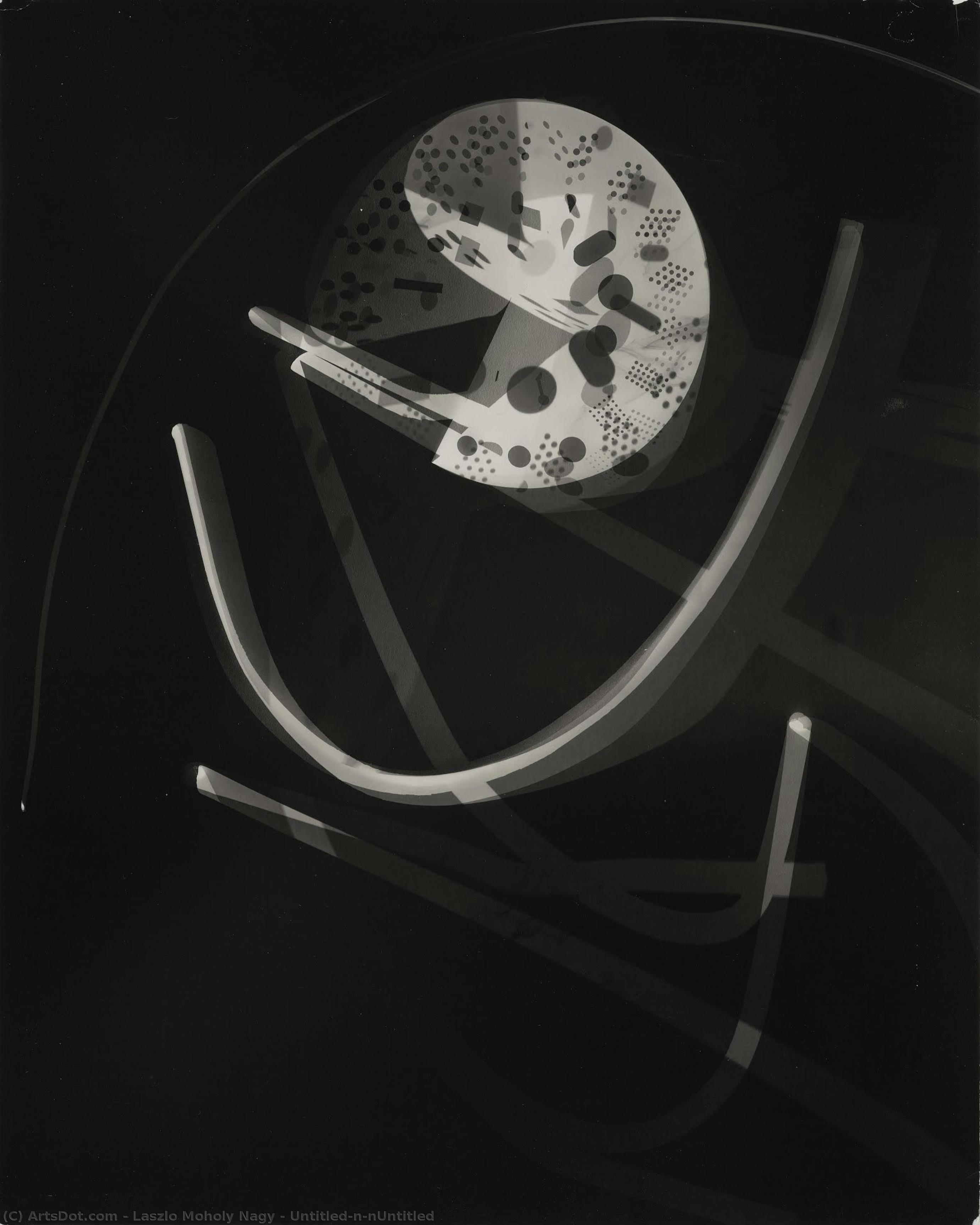
In the quiet, monochromatic depths of László Moholy-Nagy’s 1939 masterpiece, “Untitled,” one finds a profound dialogue between order and energy. This work is not merely an arrangement of shapes; it is a rhythmic composition that captures the very heartbeat of the Constructivist movement. At its core, the painting presents a commanding central circle, a celestial focal point around which smaller, orbiting forms dance in a delicate, cosmic ballet. A bold diagonal line slices through the canvas, acting as a dynamic catalyst that disrupts any sense of static stillness, injecting a surge of kinetic vitality into the composition. This interplay of intersecting lines and concentric circles creates a sense of spatial ambiguity, inviting the viewer to lose themselves in a world where gravity is replaced by pure geometric logic.
The brilliance of this piece lies in its chromatic minimalism. By eschewing the distraction of vibrant color, Moholy-Nagy directs our gaze toward the subtle nuances of light, shadow, and texture. The palette is a sophisticated study in grayscale, where varying shades of black, white, and silver create a sense of depth and atmospheric weight. This monochromatic approach allows the structural elements—the sharp edges of the lines and the soft curves of the circles—to resonate with greater clarity. For the discerning collector or interior designer, this restraint offers an unparalleled versatility; the artwork possesses a timeless elegance that can anchor a modern minimalist gallery or provide a sophisticated, intellectual focal point within a contemporary living space.
The Bauhaus Legacy and the Spirit of Modernity
To understand “Untitled,” one must look to the radical spirit of the Bauhaus school, where Moholy-Nagy served as a pivotal figure. This artwork embodies the era's revolutionary pursuit of integrating fine art with industrial design and technological progress. The painting reflects a period when artists sought to strip away the ornamental excesses of the past to find truth in fundamental forms. Every line and shape feels intentional, echoing the precision of an architect or the clarity of a typographer. There is an inherent sense of industrial optimism within these shapes—a belief that through rational organization and geometric harmony, one could reflect the structured beauty of the modern, machine-driven age.
Beyond its historical significance, the emotional impact of the work is deeply evocative. While the subject matter is purely abstract, it stirs a sense of profound equilibrium and cosmic order. The repetition of circular motifs can be seen as a symbol of continuity and the cyclical nature of existence, while the intersecting lines suggest the complex connections that bind our world together. For those seeking to bring a piece of art history into their homes, this reproduction offers more than just decoration; it provides an invitation to contemplate the intersection of human intellect and mathematical beauty. It is a work that does not demand attention through noise, but commands it through a silent, powerful, and enduring grace.