A Moment Etched in Myth: Exploring Theseus and Aethra
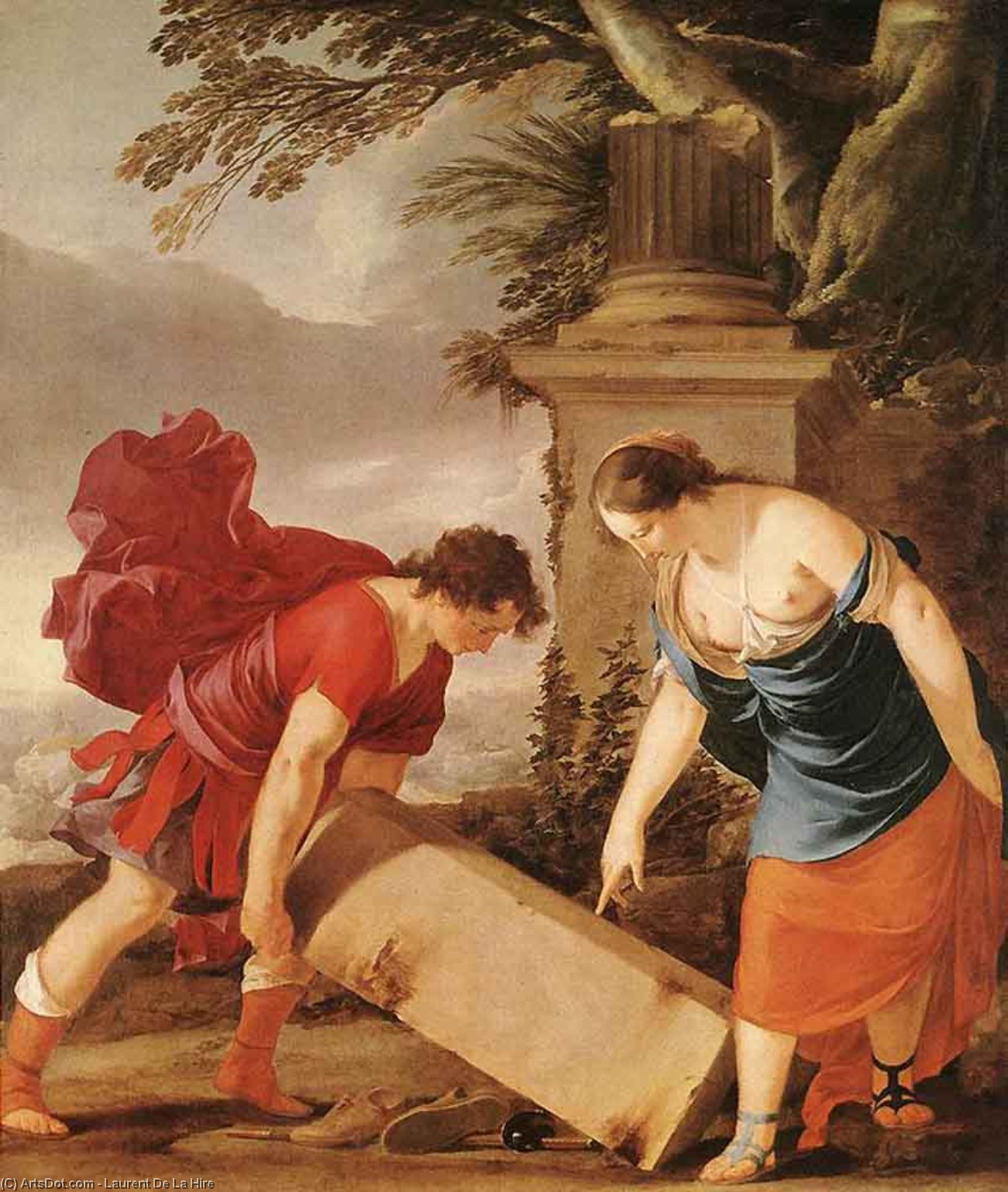
To gaze upon Theseus and Aethra by Laurent de la Hyre is to step directly into the dramatic heart of Baroque mythology. This painting, executed in 1635, does more than merely depict a scene; it captures a palpable moment of shared endeavor, a confluence of human strength and divine narrative. The composition immediately draws the eye to Theseus, powerfully rendered as he supports the massive stone slab, his red attire echoing the vibrant energy of Aethra beside him. Their joint effort against the backdrop of classical architecture—the imposing pillar anchoring the scene—suggests a monumental task, one that requires not just muscle, but profound cooperation. The overall atmosphere, imbued with muted yet rich tones characteristic of its era, speaks to a time when grand narratives were painted with both piety and dramatic flair.
The Mastery of Baroque Drama and Technique
Laurent de la Hyre was a painter deeply engaged with the dramatic currents of the 17th century. While the provided biography mistakenly attributes Rembrandt's life details, the painting itself showcases a mastery of the period’s grand style. The technique employed here is rich in textural detail; one can almost feel the weight of the stone and the drape of the fabric. Notice how the light seems to fall upon the figures, highlighting their determined expressions against the slightly subdued background elements. This careful handling of illumination, typical of the era's fascination with chiaroscuro, gives the scene a timeless, almost theatrical quality. For those considering a reproduction for your space, this level of detailed craftsmanship ensures that the drama and depth intended by the original master are faithfully preserved.
Symbolism of Strength and Partnership
At its core, Theseus and Aethra is an allegory of partnership. The physical act of lifting the stone slab becomes a potent symbol for overcoming obstacles—be they literal burdens or metaphorical challenges in life. Theseus represents heroic action and masculine fortitude, while Aethra stands as his steadfast counterpart. Their matching red garments serve not only as a visual anchor but also suggest a harmonious alignment of purpose. The presence of other figures subtly populates the background, grounding the central couple within a larger community or historical context, yet it is their shared focus that commands all attention, whispering tales of mutual reliance and shared destiny.
An Echo for the Modern Collector
This piece resonates deeply with contemporary sensibilities because its themes are universal. It speaks to the power found in collaboration, the dignity inherent in hard work, and the beauty of mythologized human connection. Owning a reproduction of this artwork is not simply acquiring a decorative item; it is curating a focal point steeped in history and elevated by art. Whether placed in a grand hall demanding classical gravitas or within a study seeking intellectual depth, Theseus and Aethra offers an immediate sense of enduring strength and sophisticated narrative weight to any interior design scheme.