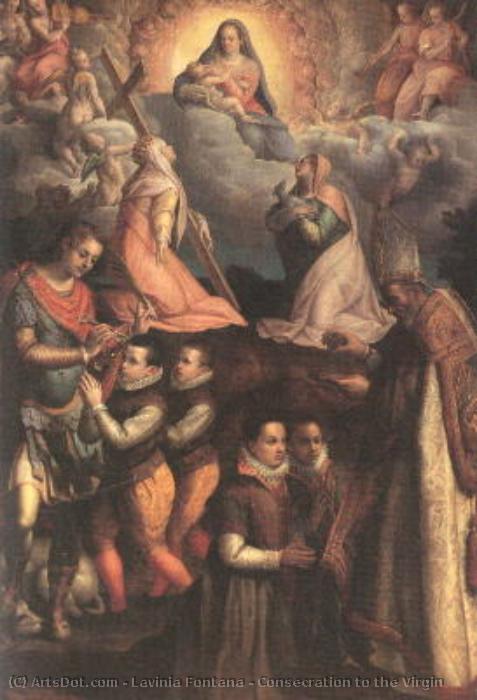
Lavinia Fontana’s “Consecration to the Virgin” – A Baroque Tapestry of Faith and Family
Lavinia Fontana's "Consecration to the Virgin," painted in 1599, isn’t merely a religious depiction; it’s a meticulously crafted tableau vivant, brimming with layered symbolism and reflecting the burgeoning artistic currents of late Mannerism. Housed within the Musée des Beaux-Arts in Marseille, originally commissioned for the Gnetti family chapel in Bologna's Santa Maria dei Servi church, this monumental work offers a profound glimpse into the life and vision of one of Europe’s first professional female artists.
The painting immediately commands attention with its dynamic composition – a carefully orchestrated pyramid leading the eye upwards towards the central figure of the Virgin Mary. This structure isn't simply decorative; it mirrors the hierarchical order of the Catholic faith, emphasizing Mary’s elevated status as the intercessor between humanity and God. Below her, a throng of figures—saints, donors, and attendants—are arranged in tiers of reverence, each gesture and expression contributing to the overall sense of devout devotion. The scene is divided into distinct zones: the ethereal, cloud-filled heavens above, and the earthly ceremony unfolding below, creating a powerful visual dialogue between the divine and the human realm.
A Symphony of Color and Light – Baroque Techniques
Fontana’s masterful command of color and light is instantly apparent. The palette leans heavily into warm tones—rich reds, opulent golds, deep browns, and creamy whites—creating a sense of warmth and majesty. However, it's the dramatic use of *chiaroscuro* – the stark contrast between light and shadow – that truly elevates the work. A brilliant light source illuminates the Virgin Mary and her immediate circle, casting the figures below in varying degrees of shadow, enhancing depth and creating an almost theatrical atmosphere. This technique wasn’t simply for visual effect; it was a deliberate strategy to draw attention to key elements within the composition and evoke a sense of drama and spiritual intensity.
The brushwork itself is remarkably detailed, yet subtly blended, contributing to a smooth, polished surface. Noticeable impasto – thick application of paint – adds textural richness to areas like drapery and certain facial features, lending a tactile quality to the scene. The artist’s skillful layering of glazes further intensifies the colors and creates an illusion of depth, as if peering into a richly illuminated space.
Symbolism Woven into Every Detail
“Consecration to the Virgin” is saturated with symbolic meaning. The central placement of Mary, holding the infant Jesus, immediately establishes her role as the Queen of Heaven and the embodiment of divine grace. The cross held by a figure on the left acts as a visual anchor, symbolizing Christ’s sacrifice and reinforcing the painting's religious narrative. The presence of various saints—including Saint Sebastian, identifiable by his arrows—and donors further enriches the composition with layers of spiritual significance. Even seemingly minor details, such as the musical instruments played by figures in the background, carry symbolic weight, representing the praise and adoration offered to God.
Furthermore, the inclusion of young children within the scene is particularly noteworthy. These figures, often depicted as donors or attendants, represent the future generation being nurtured under Mary’s protection. This reinforces the theme of familial piety and highlights the importance of faith passed down through generations. The clothing worn by these children also holds symbolic meaning, reflecting their social status and roles within the community.
A Pioneer's Legacy – Fontana and the Renaissance Woman
Lavinia Fontana’s “Consecration to the Virgin” stands as a testament to her remarkable achievements as an artist in a period dominated by male figures. Her success as a professional painter, supported by her husband who served as her agent, was unprecedented for a woman of her time. The painting itself reflects her artistic sensibilities – a blend of Mannerist elegance and Baroque dynamism—and demonstrates her ability to master complex compositional techniques and create works of profound emotional impact. Fontana’s story is one of resilience, talent, and unwavering determination, solidifying her place as a pivotal figure in the history of Western art.