Lavinia Fontana’s ‘Venus and Cupid’: A Renaissance Pioneer's Bold Vision
Lavinia Fontana (1552–1614) stands as an extraordinary figure in the annals of art history—a testament to female creativity during a period overwhelmingly dominated by male artists. Her story isn’t merely one of talent nurtured within a family steeped in artistic tradition; it's a chronicle of defiance, determination, and an unwavering ability to secure recognition in a field where societal expectations actively hindered women’s advancement. Born into Bologna’s intellectual elite, Fontana benefited from her father’s patronage—Prospero Fontana—a respected painter who recognized and fostered Lavinia’s innate artistic inclinations. This familial foundation proved crucial, granting her access to the skills and connections necessary to embark on her professional journey at a time when formal art education for women was virtually nonexistent. Early works like “Monkey Child” (1575), though now lost to time, signaled the emergence of a singular talent—a rapid grasp of artistic principles that would propel her career forward.
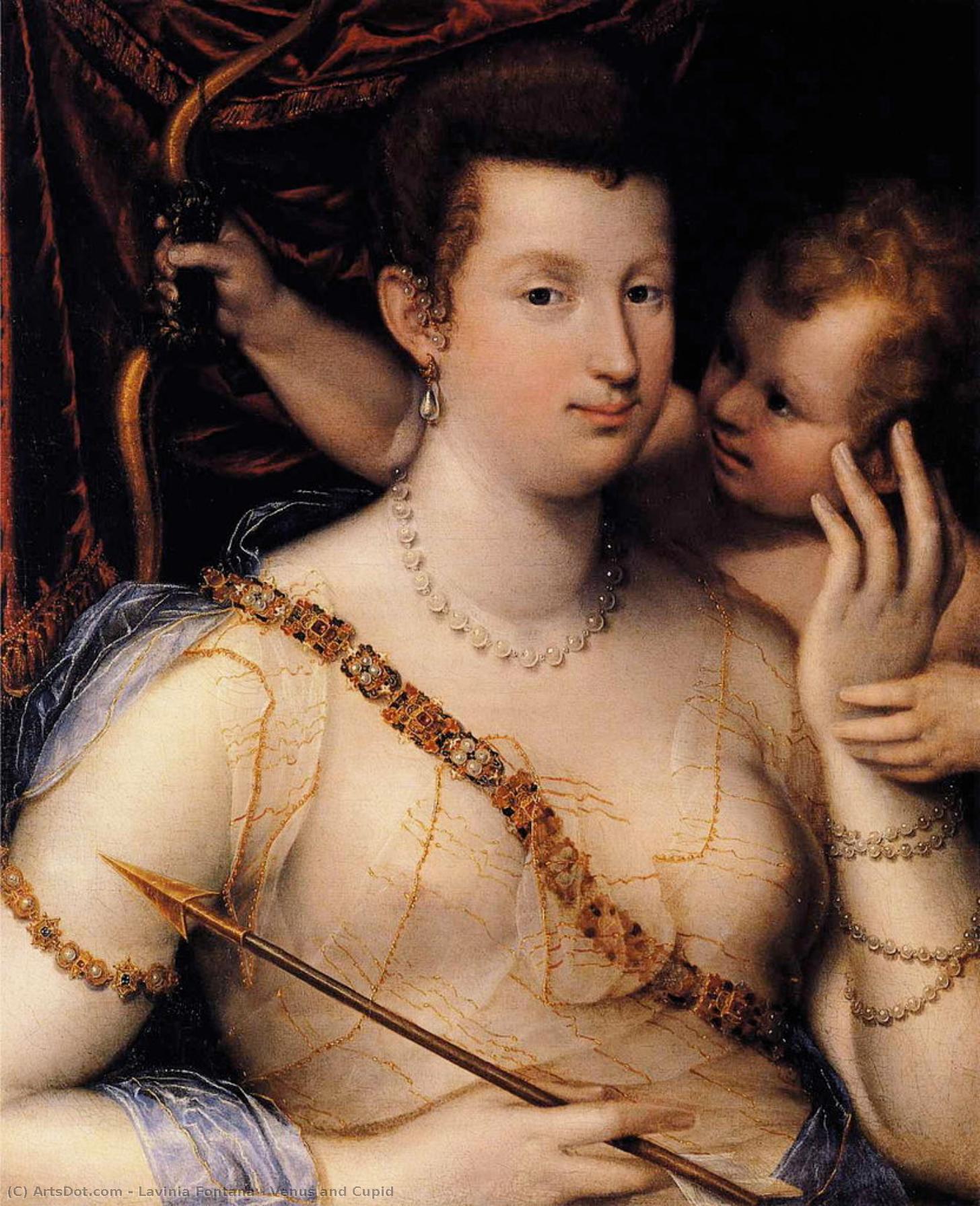
- Subject Matter: The artwork depicts Venus and Cupid, figures central to classical mythology representing beauty and desire respectively. Lavinia Fontana skillfully captures this iconic pairing in a portrait format, elevating it beyond mere representation to convey profound emotional depth.
- Style: ‘Venus and Cupid’ exemplifies Mannerism—a stylistic movement that flourished in Italy during the late Renaissance. Characterized by elongated figures, stylized poses, and dramatic lighting, Mannerism rejected the idealized harmony of High Renaissance art, favoring instead a heightened sense of emotion and psychological complexity. Fontana's approach aligns perfectly with these aesthetic ideals.
- Technique: Lavinia Fontana employed meticulous oil painting—a technique renowned for its ability to achieve luminous colors and subtle tonal variations. Layers upon layers of pigment were applied with painstaking precision, creating textures that mimic the richness of fabric and jewelry. The artist’s masterful blending ensured smooth transitions between hues, enhancing the overall visual impact of the composition.
- Historical Context: Fontana's work emerged during a period marked by religious fervor and artistic innovation—the Counter-Reformation. Artists like Fontana sought to reaffirm Catholic dogma through art, utilizing symbolism and allegory to communicate moral lessons. Her decision to portray Venus and Cupid as a portrait was particularly significant, reflecting the societal desire for idealized beauty and demonstrating her commitment to upholding artistic standards.
- Symbolism: The inclusion of Cupid—representing love—and Venus—symbolizing feminine grace and allure—is laden with symbolic meaning. Fontana’s depiction underscores the importance of passion and beauty in human experience, inviting contemplation on themes of desire, devotion, and spiritual aspiration.
Detailed Analysis: Composition and Color Palette
Fontana's compositional choices contribute significantly to the artwork’s emotional resonance. The central figure—Venus—dominates the frame, her gaze directed outwards with an expression of serene dignity. Cupid is positioned delicately against her torso, symbolizing intimacy and nurturing care. Lines are strategically utilized to delineate the folds of Venus’s drapery and jewelry, emphasizing texture and creating a sense of depth. Furthermore, Fontana skillfully employs a warm color palette—browns, golds, reds, and creams—to evoke an atmosphere of opulent grandeur and spiritual contemplation. These hues imbue the painting with warmth and luminosity, enhancing its visual appeal and reinforcing its symbolic significance.
The Legacy of Lavinia Fontana
Lavinia Fontana’s achievement as a female artist transcends mere artistic skill; it represents a courageous assertion of intellectual freedom and professional ambition in an era defined by restrictive social conventions. Her pioneering spirit paved the way for future generations of women artists, challenging preconceived notions about gender roles and demonstrating that creativity knows no boundaries. Fontana's enduring influence can be seen in her meticulous technique, her masterful portrayal of human emotion, and her unwavering dedication to upholding artistic excellence—a legacy that continues to inspire admiration and scholarship today.