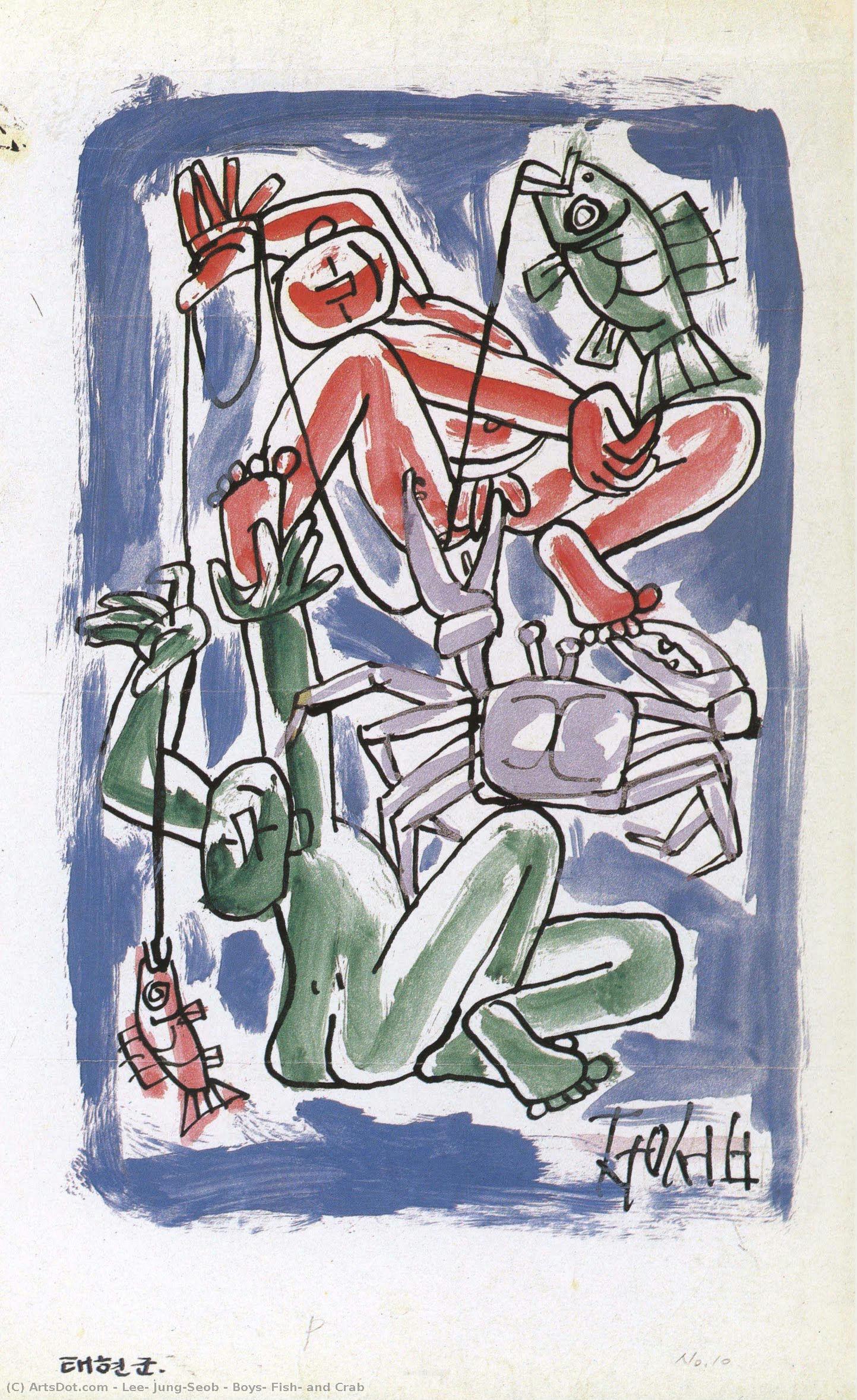
A Glimpse into a Korean Soul: Lee Jung-Seob’s “Boys, Fish, and Crab”
Lee Jung-seob's "Boys, Fish, and Crab" isn’t merely a painting; it’s a poignant window into the heart of 1950s Korea. Painted during a period of immense upheaval – the Korean War tearing apart the peninsula – this watercolor captures a fleeting moment of simple beauty amidst profound hardship. The scene unfolds with an almost dreamlike quality, inviting us to contemplate the resilience of human connection and the enduring spirit of childhood in the face of national tragedy. The painting’s power lies not just in its subject matter but in Lee Jung-seob's masterful use of color and light, creating a sense of intimacy and quiet observation that draws the viewer into this intimate tableau.

The Artist’s World: Lee Jung-Seob – A Korean Pioneer
Born in Pyeongannamdo in 1916, Lee Jung-seob emerged as a pivotal figure in the development of modern Korean art. His early life, shaped by the Japanese colonial period and later scarred by the devastation of the Korean War, profoundly influenced his artistic vision. Lee’s journey began with formal training in Japan, where he embraced elements of Fauvism – characterized by bold colors and expressive brushstrokes – before returning to Korea to establish his own distinct style. He was deeply rooted in traditional Korean aesthetics, particularly the evocative imagery of Goguryeo tomb murals, which served as a constant source of inspiration. Lee’s work is often associated with themes of family, nature, and the everyday lives of Koreans, rendered with a remarkable sensitivity and emotional depth.
His legacy extends beyond his individual paintings; he played a crucial role in fostering Korean modernism, exhibiting alongside other prominent artists and contributing to the development of a national artistic identity. The National Museum of Korea proudly displays several of his key works, including “Family and Pigeon,” “Boys, Fish, and Crab,” and “Two Boys and Deer,” offering visitors a comprehensive understanding of his artistic evolution.
A Symphony of Color and Technique
“Boys, Fish, and Crab” is executed in watercolor, a medium that perfectly captures the painting’s ethereal quality. Lee Jung-seob's technique is characterized by loose, expressive brushstrokes and a delicate layering of colors—a hallmark of his style. The palette is dominated by muted blues and greens, evoking the tranquil waters surrounding the scene, while touches of warm ochre and red bring warmth to the figures and create a sense of intimacy. The artist’s masterful use of light creates a soft, diffused glow, lending the painting an almost dreamlike atmosphere. Notice how he captures the reflections on the water's surface, adding depth and realism to the composition.
Symbolism and Emotional Resonance
Beyond its aesthetic beauty, “Boys, Fish, and Crab” is rich in symbolism. The children playing with fish and crabs represent innocence, joy, and a connection to nature—elements that were particularly valued during a time of national crisis. The painting can be interpreted as a meditation on the enduring power of childhood amidst adversity, suggesting that even in the darkest times, beauty and hope can still be found. It’s a quiet testament to the resilience of the human spirit and a poignant reminder of the importance of preserving moments of simple pleasure.
The painting's historical context—created during the tumultuous years of the Korean War—adds another layer of significance, transforming it into a powerful symbol of Korea’s struggle for survival. It is a work that invites contemplation and offers a glimpse into the soul of a nation.