A Tender Glimpse into the Past: The Soul of Persian Baby
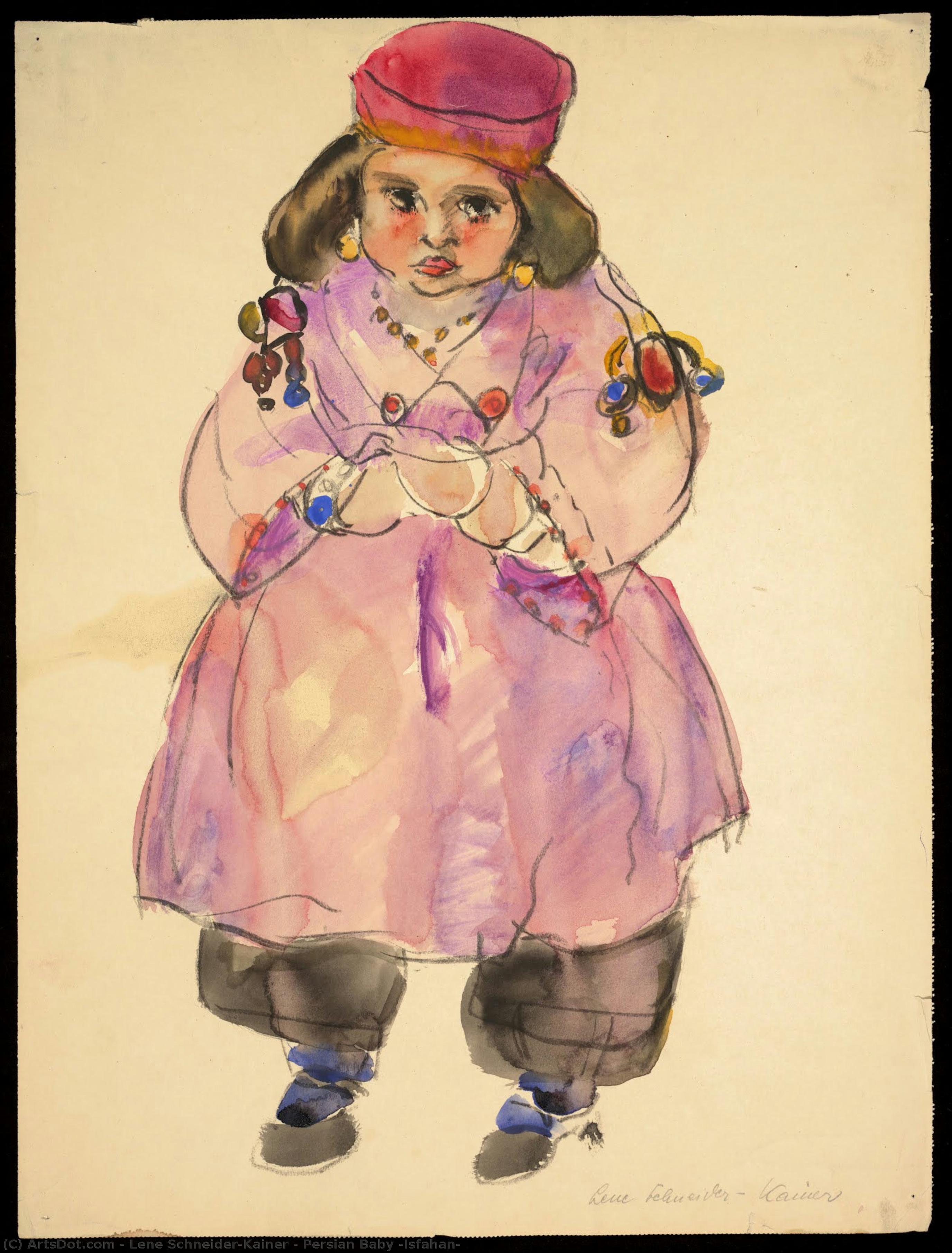
In the delicate, translucent layers of Persian Baby (Isfahan), we encounter a moment of profound stillness captured by the hand of Lene Schneider-Kainer. This exquisite watercolor, dating from 1971, serves as a poignant window into a bygone era, presenting a young girl lost in her own quiet world. Clad in a vibrant pink dress and crowned with a striking red hat, the subject becomes a focal point of warmth against an ethereal, minimalist white background. The painting does more than merely depict a child; it captures a sense of nostalgic innocence, where every brushstroke seems to whisper stories of a childhood shaped by tradition and grace.
The technique employed here is a masterclass in the watercolor medium. Schneider-Kainer utilizes the fluidity of the pigment to create soft, bleeding edges that lend the piece its dreamlike, vintage quality. There is a rhythmic balance between the saturated hues of the girl's attire—the deep reds and soft pinks—and the subtle, light-filled negative space surrounding her. This contrast ensures that the viewer's eye is immediately drawn to the fine details: the delicate glint of a necklace, the gentle downward tilt of her gaze, and the way the light seems to permeate the very fabric of her clothing. It is a work that celebrates the luminosity of color and the power of simplicity.
A Legacy of Cultural Encounter and Artistic Resilience
To understand the emotional weight of this piece, one must look toward the life of its creator. Lene Schneider-Kainer was an artist whose very existence was a testament to resilience. Born in the artistic heart of Vienna, her journey took her through the great cultural hubs of Europe—Munich, Amsterdam, and Berlin—before her life was irrevocably altered by the historical upheavals of the 20th century. This painting, created toward the end of her long and storied life, reflects a matured perspective on beauty and memory. The title's reference to Isfahan suggests a deep-seated connection to the richness of Persian culture, hinting at the themes of travel and cultural encounter that defined her oeuvre.
For the discerning collector or interior designer, Persian Baby offers much more than mere decoration; it offers an emotional anchor. The piece possesses a timeless elegance that allows it to integrate seamlessly into diverse settings, from a contemporary gallery-style living room to a classic, curated study. Its soft palette and evocative subject matter provide a sense of tranquility and historical depth, making it an ideal centerpiece for those looking to infuse their space with a narrative of grace, heritage, and the enduring beauty of the human spirit.