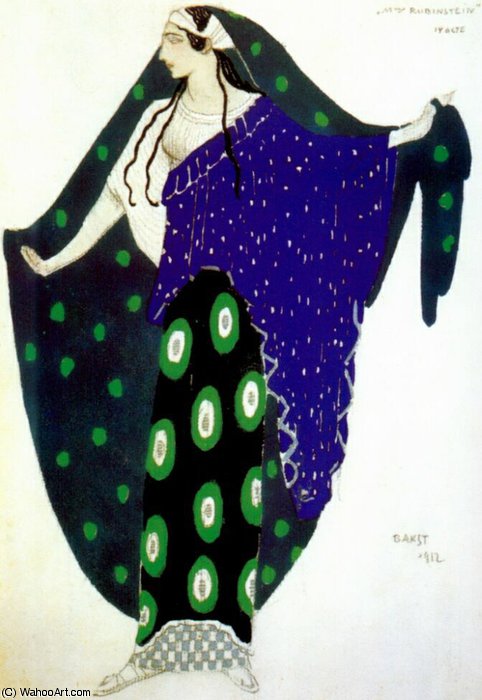
A Vision of Theatrical Grace: "Helene de Sparte, Ida Rubinstein in Act IV" by Leon Bakst
This captivating painting, “Helene de Sparte, Ida Rubinstein in Act IV,” created by the renowned Russian artist Léon Bakst in 1912, offers a glimpse into the opulent and revolutionary world of early 20th-century ballet. It's more than just a portrait; it’s a vibrant study of movement, costume design, and theatrical expression, capturing a pivotal moment within a groundbreaking performance.
Subject & Style: A Ballet Russe Icon
The artwork depicts Ida Rubinstein, a celebrated Russian ballerina, portraying Helene de Sparte in Act IV of the ballet "Helene." Bakst was a key figure in the Ballets Russes, a theatrical company founded by Sergei Diaghilev that dramatically reshaped the landscape of dance and visual arts. The style is distinctly Art Nouveau, characterized by its flowing lines, decorative motifs, and an emphasis on beauty and sensuality. Bakst’s work here showcases his mastery in translating costume design into a compelling painting, highlighting Rubinstein's dramatic presence and the theatricality of the scene.
Technique & Composition: Color and Movement
Bakst employed oil paints with a fluid and expressive technique. Notice the vibrant use of color – the striking blue dress adorned with green polka dots immediately draws the eye. The composition is dynamic, with Rubinstein’s arms outstretched in a gesture that suggests both performance and emotion. The background figures are intentionally blurred, directing focus onto the central figure and enhancing the sense of movement and drama.
- Color Palette: Predominantly blues and greens create a harmonious yet striking visual effect.
- Brushwork: Loose and expressive brushstrokes contribute to the painting's overall dynamism.
- Lighting: The lighting is dramatic, highlighting Rubinstein’s form and creating depth within the scene.
Historical Context & Symbolism: A Revolution in Ballet
The Ballets Russes was revolutionary for its time. It integrated music by leading composers like Claude Debussy and Igor Stravinsky, set designs by artists such as Bakst himself, and choreography that broke away from traditional ballet conventions. Bakst’s costume designs were particularly influential, moving away from the restrictive Victorian styles towards more flowing and exotic forms inspired by Eastern cultures. The painting itself symbolizes this shift – a departure from tradition and an embrace of modernity and artistic freedom. Rubinstein's portrayal of Helene de Sparte was known for its intensity and emotional depth, qualities that Bakst successfully captures in his artwork.
Emotional Impact & Appeal: A Timeless Expression
“Helene de Sparte, Ida Rubinstein in Act IV” evokes a sense of theatrical grandeur and artistic innovation. The painting’s vibrant colors, dynamic composition, and historical significance combine to create a work that is both visually stunning and intellectually stimulating. It appeals to art lovers interested in the Art Nouveau movement, ballet history, and the intersection of visual arts and performance. For collectors, it represents a rare opportunity to own a piece by a pivotal figure in the Ballets Russes. Interior designers will appreciate its ability to add a touch of elegance, drama, and historical charm to any space.