A Fragment of Genius: Decoding Leonardo da Vinci’s Codex Madrid II, f.23r
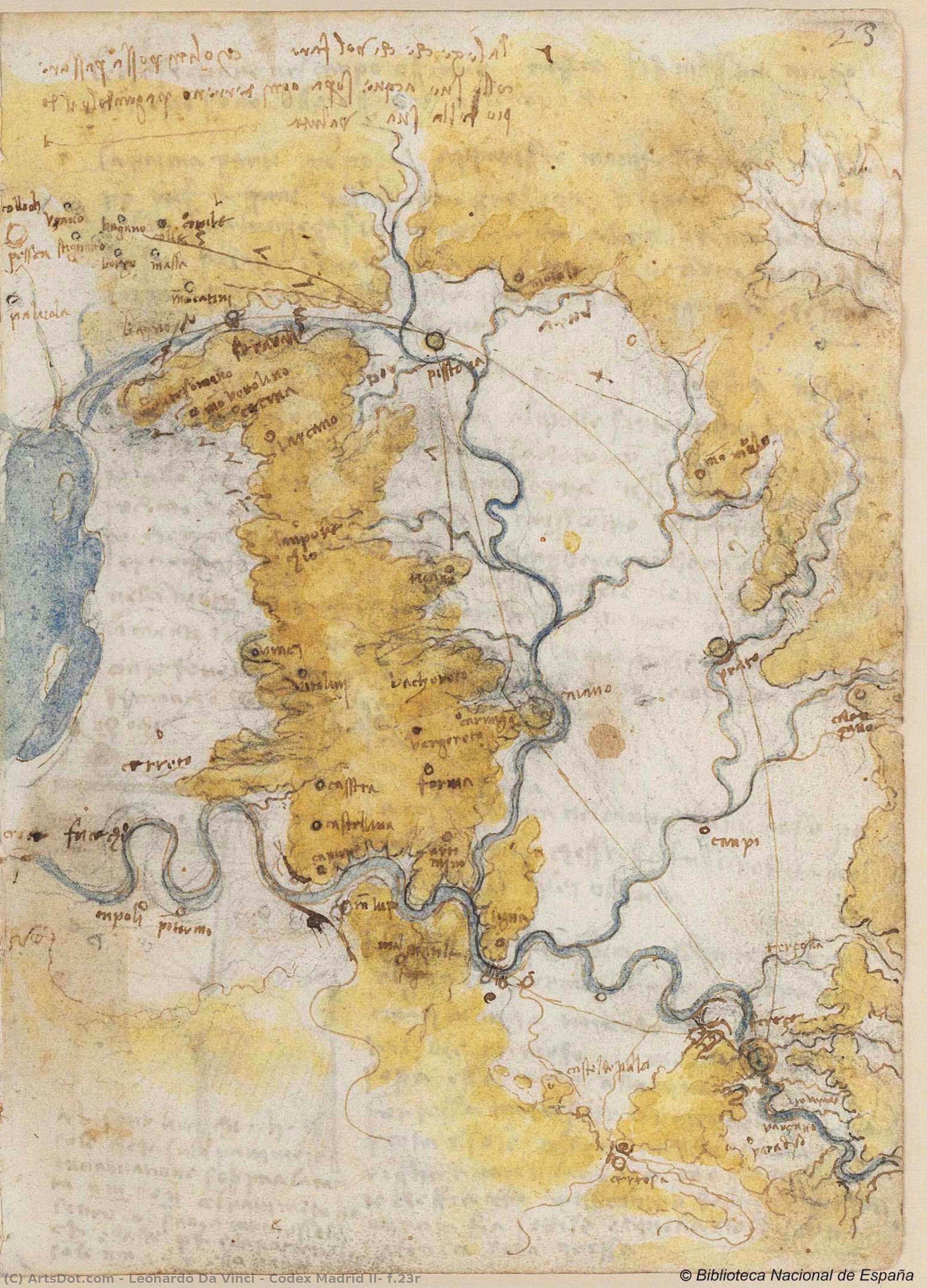
The Codex Madrid II, folio 23 recto, stands as a singular testament to Leonardo da Vinci's multifaceted intellect—a map rendered not merely as geographical representation but as an embodiment of scientific inquiry and artistic ambition. Produced sometime in the early sixteenth century, this unassuming parchment holds within it layers of meaning that continue to fascinate historians and art connoisseurs alike. It’s more than just a depiction of Tuscany; it's a window into Da Vinci’s mind at work, grappling with concepts of fortification, statics, and geometry alongside the monumental task of designing a horse sculpture intended as a memorial to Francesco Sforza.
- Subject Matter: The map meticulously charts the landscape surrounding Milan—a region vital to the Duchy’s strategic position during the tumultuous period of Renaissance Italy. Rivers like Arno and Po dominate the composition, guiding the viewer's eye across rolling hills and identifiable towns – Firenze (Florence), Pavia, Lucca – each bearing names that speak to the political realities of the era.
- Style & Technique: Da Vinci’s approach defies simple categorization. While rooted in traditional cartographic conventions—the use of hatching to represent elevation—the drawing possesses an unparalleled level of detail and expressive linework. Observe how subtle variations in line thickness convey texture and contour, capturing the ruggedness of the mountains and the fluidity of the waterways with remarkable accuracy.
Symbolism Beyond Geography: The Horse Sculpture Project
The Codex Madrid II isn’t merely a topographical study; it's inextricably linked to Da Vinci’s ambitious project to sculpt a colossal equestrian statue honoring Francesco Sforza. This monumental undertaking represented not just artistic prestige but also a profound engagement with humanist ideals—the celebration of human achievement and the pursuit of knowledge. The map itself serves as a conceptual springboard for this endeavor, prompting consideration of scale, proportion, and the relationship between man and nature.
Historical Context: Renaissance Innovation
Da Vinci’s Codex Madrid II exemplifies the spirit of the High Renaissance—a period characterized by an unprecedented flourishing of artistic creativity fueled by renewed interest in classical learning. Artists like Da Vinci sought to emulate the grandeur of antiquity, striving for perfection in form and technique while simultaneously pushing boundaries of scientific understanding. The map reflects this intellectual ferment, demonstrating Da Vinci’s conviction that art and science could illuminate each other.
Emotional Resonance: Capturing Beauty & Purpose
Ultimately, Codex Madrid II transcends its formal description as a map; it embodies Da Vinci's unwavering dedication to both artistic excellence and intellectual curiosity. The meticulous detail—the careful rendering of rivers and mountains—communicates not only factual information but also an underlying sense of wonder and reverence for the natural world. It’s a reminder that true genius lies in transforming observation into inspiration, translating scientific principles into visual beauty, and creating works that endure as symbols of human aspiration.