Introduction to the Artist
Leonardo da Vinci was a renowned Italian polymath, known for his exceptional skills as a painter, sculptor, architect, musician, scientist, mathematician, engineer, inventor, anatomist, geologist, cartographer, botanist, and writer. His works include some of the most famous paintings in history, such as
The Last Supper and
Mona Lisa.
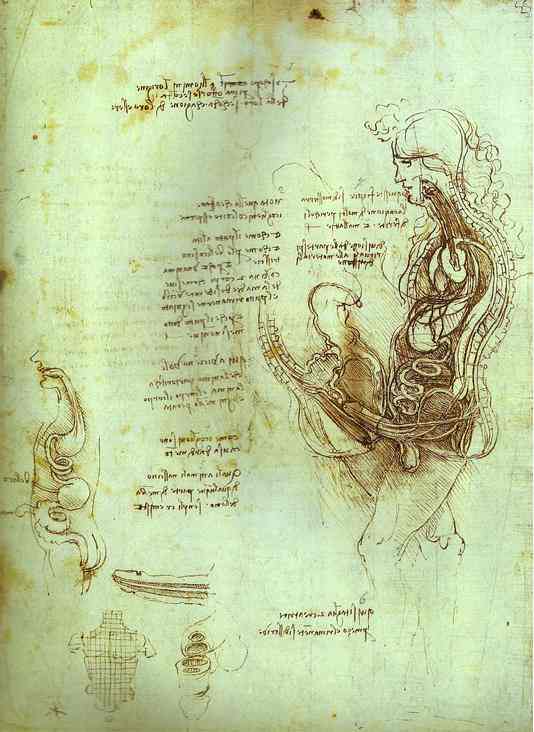
The Painting: Coition of Hemisected Man and Woman
The
Coition of Hemisected Man and Woman is an anatomical study that depicts the male and female reproductive systems in cross-section. Created in 1492, this work showcases
Leonardo da Vinci's fascination with human anatomy and his exceptional skills as an artist and scientist.
Style: High Renaissance
The
High Renaissance period was characterized by a renewed interest in classical learning, humanism, and the arts. Artists of this period sought to create works that were harmonious, balanced, and idealized, often drawing inspiration from ancient Greek and Roman art. The
Coition of Hemisected Man and Woman is a prime example of the
High Renaissance style, with its precise anatomical details and classical composition.
Analysis of the Artwork
The
Coition of Hemisected Man and Woman is a remarkable work that showcases
Leonardo da Vinci's exceptional skills as an artist and scientist. The cross-sectional view of the male and female reproductive systems is both scientifically accurate and aesthetically pleasing, with precise lines and shading that create a sense of depth and volume. This artwork can be found on
https://ArtsDot.com, where you can also find other masterpieces by
Leonardo da Vinci, such as
The Neck and Shoulder of a Man and
Head of a Woman.
The Coition of Hemisected Man and Woman is a testament to
Leonardo da Vinci's boundless curiosity and innovative spirit. As an artist, scientist, and inventor, he continues to inspire and fascinate art lovers around the world.
You can also visit the
Royal Library page on ArtsDot to learn more about other artworks by
Leonardo da Vinci, such as
Head of a Woman.