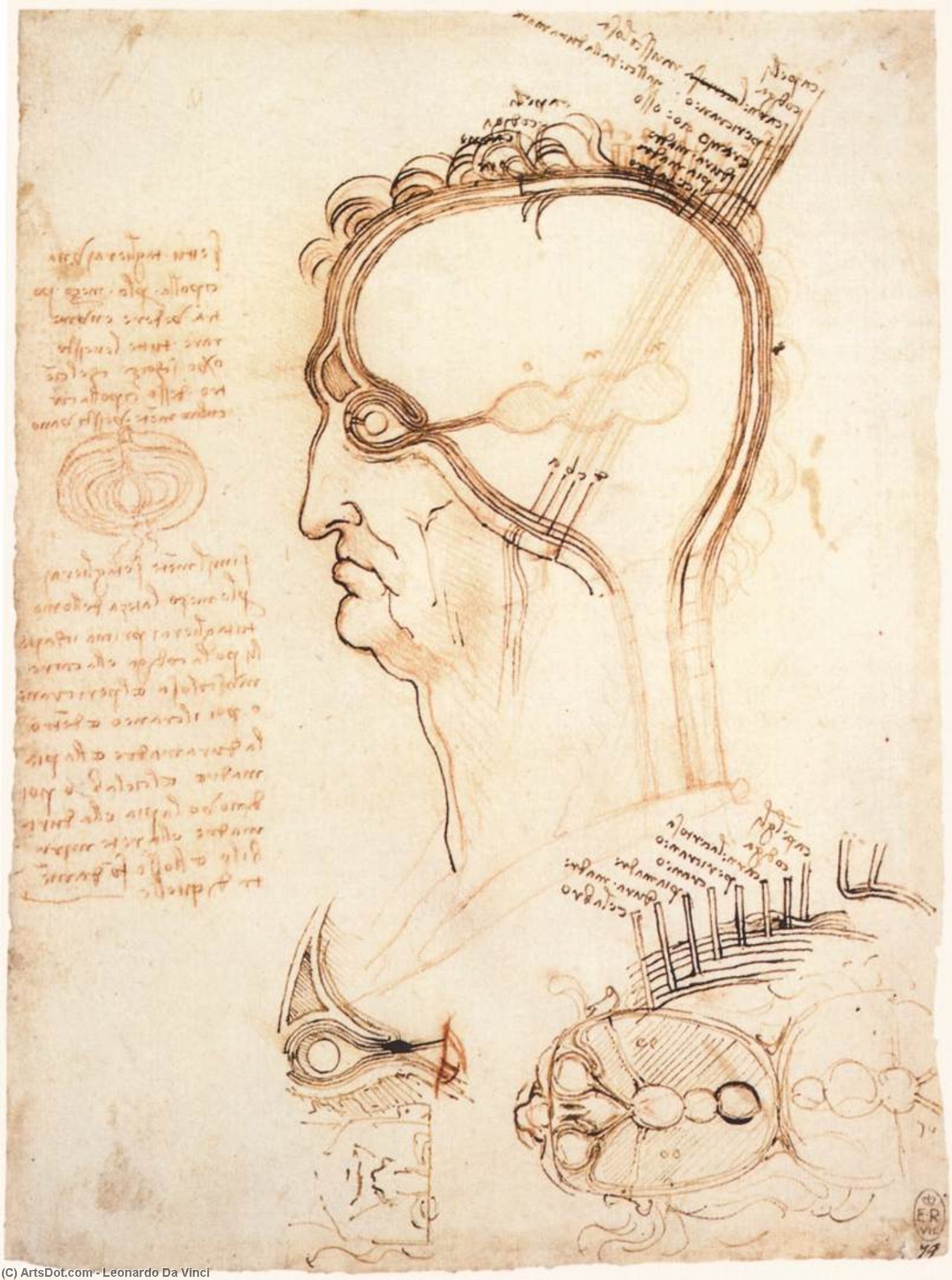
Comparison of Scalp Skin and Onion by Leonardo da Vinci
- Title: Comparison of scalp skin and onion
- Artist: Leonardo da Vinci
- Date: 1489
- Current Location: Royal Library (Windsor, United Kingdom)
Artistic and Anatomical Significance
Leonardo da Vinci, a quintessential figure of the Renaissance, was renowned not only for his artistic brilliance but also for his profound scientific curiosity. This drawing, titled "Comparison of scalp skin and onion," exemplifies this dual nature. Created in 1489 during the Early Renaissance period, it showcases Da Vinci's meticulous study of human anatomy through a unique comparative approach. The artwork juxtaposes detailed depictions of layers of scalp skin with those of an onion, revealing striking similarities in their structure. This comparison wasn’t merely observational; it was a deliberate attempt to understand underlying biological principles and demonstrate the interconnectedness of seemingly disparate natural forms.
Technique and Medium
Da Vinci employed chalk ink on paper to create this detailed study. The choice of chalk ink allowed for nuanced tonal variations, enabling him to capture the subtle textures and intricate layers present in both the scalp skin and the onion. His masterful use of line work—thin, precise strokes—creates a remarkable sense of depth and volume. The medium facilitated his ability to make accurate drawings, which were essential for his anatomical investigations. The aged parchment paper adds to the drawing's historical character and lends it an antique quality.
Historical Context and Influence
During the Renaissance, there was a renewed interest in classical learning and observation of the natural world. Da Vinci’s anatomical studies were groundbreaking for their time, challenging traditional understandings of the human body. This particular drawing reflects this spirit of inquiry, demonstrating his methodical approach to understanding structure and function. His detailed drawings laid crucial foundations for modern medical science by providing unprecedented visual documentation of human anatomy. The work is a testament to the burgeoning scientific revolution that was taking place alongside artistic innovation.
Symbolism and Emotional Impact
While seemingly straightforward in its subject matter, "Comparison of scalp skin and onion" carries deeper symbolic weight. Da Vinci’s comparison suggests an underlying philosophy—that nature operates according to universal principles, and that even the most complex biological structures can be understood through careful observation and analogy. The drawing evokes a sense of wonder at the intricate beauty of both human anatomy and the natural world. It is not overtly emotional in its presentation; rather, it inspires awe through its precision and intellectual rigor. The work invites viewers to contemplate the interconnectedness of life and the power of scientific inquiry.