A Vision of Flight: Decoding Leonardo da Vinci’s Helicopter Design
This remarkable drawing, created around 1500 by the quintessential Renaissance man,
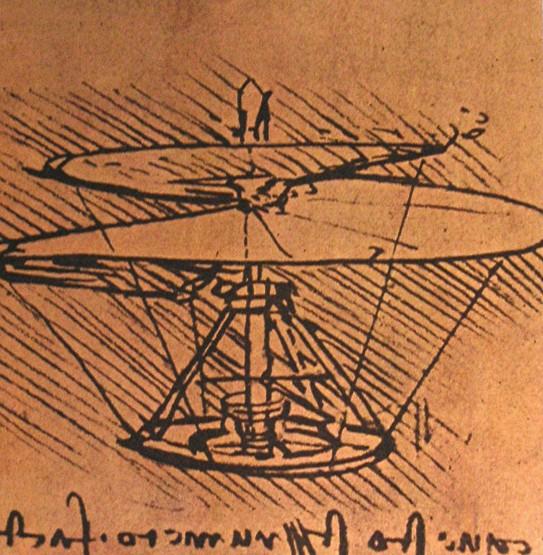
Leonardo da Vinci, isn't merely a sketch; it’s a window into a mind centuries ahead of its time. The “Design for a Helicopter” represents one of history’s earliest conceptualizations of vertical flight, showcasing Da Vinci’s profound understanding of mechanics and his boundless imagination.
The Genesis of an Idea: Historical Context
Born from the fervent spirit of the Italian Renaissance – a period defined by intellectual curiosity and artistic innovation – this design emerged during Da Vinci's first Milanese period while in service to Ludovico Sforza. The late 15th and early 16th centuries witnessed an increasing fascination with flight, fueled by observations of birds and a desire to overcome earthly limitations. While practical implementation was impossible given the technological constraints of the era, Da Vinci’s work laid crucial theoretical groundwork for future aviation pioneers. It's important to remember that this wasn’t born from a need for transportation but rather an exploration of what *could be*, driven by scientific inquiry and artistic vision.
Deconstructing the Design: Style & Technique
Executed with meticulous detail in pen and ink, the drawing exemplifies Da Vinci's mastery of technical illustration. The style is precise and analytical, characteristic of his engineering studies. He employed hatching and cross-hatching to create depth and texture, rendering the complex mechanism with remarkable clarity. Two large helical “airscrews” (what we would now call rotors) are connected by a central shaft, intended to be rotated by human power – a testament to Da Vinci’s belief in harnessing human energy for mechanical advantage. The inclusion of three figures observing or interacting with the device emphasizes its human scale and potential application.
Beyond Mechanics: Symbolism & Interpretation
While fundamentally an engineering study, the “Design for a Helicopter” carries symbolic weight. It embodies humanity’s age-old aspiration to transcend earthly boundaries – to soar like birds and conquer the skies. The very act of designing such a machine represents a rejection of limitations and a celebration of human ingenuity. Da Vinci's relentless pursuit of knowledge across diverse fields—art, science, anatomy, engineering—is encapsulated in this single drawing. It’s not just about *how* it might fly; it’s about the audacity to even *imagine* flight.
Emotional Resonance & Lasting Legacy
Looking at this design today evokes a sense of wonder and admiration for Da Vinci's visionary genius. The drawing isn’t simply a historical artifact; it’s an inspiring testament to the power of imagination, observation, and relentless experimentation. It reminds us that even seemingly impossible dreams can be born from careful study and creative thinking. The design continues to captivate artists, engineers, and dreamers alike, serving as a potent symbol of innovation and the enduring human spirit.
Key Takeaways
- Artist: Leonardo da Vinci (1452-1519)
- Date: Circa 1500
- Medium: Pen and Ink on Paper
- Style: Renaissance Technical Illustration
- Significance: Early conceptualization of vertical flight; a testament to Da Vinci’s inventive genius.
This artwork is more than just a drawing; it's an invitation to explore the boundless possibilities of human creativity and innovation. A reproduction of this piece would be a striking addition to any collection, inspiring contemplation and sparking conversation for years to come.