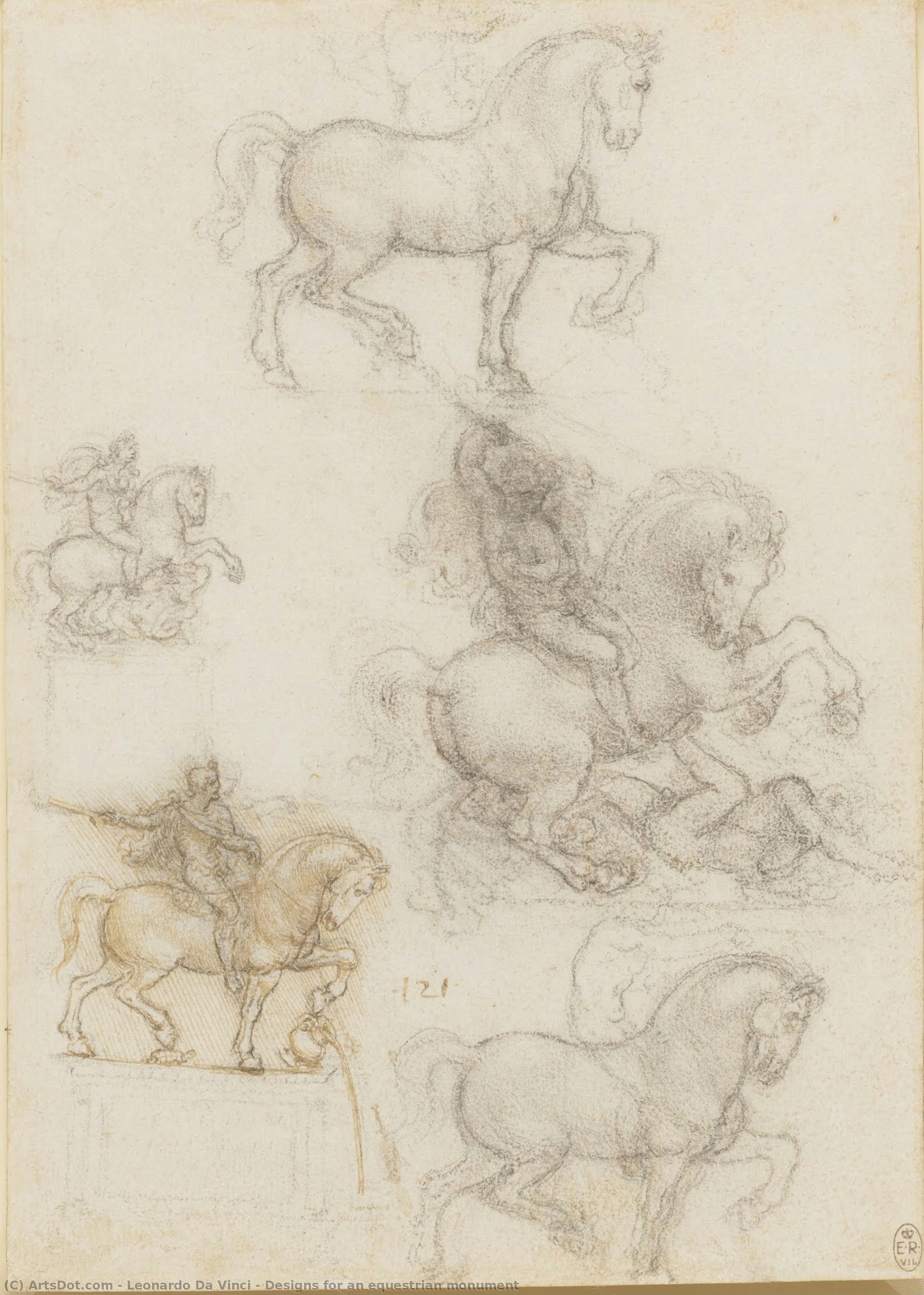
Designs for an Equestrian Monument: A Glimpse into Leonardo's Vision
This captivating sheet of studies offers a rare window into the creative process of Leonardo da Vinci, one of history’s most celebrated polymaths. Dated 1517, these preparatory sketches depict multiple perspectives of a horse and rider, meticulously rendered in charcoal on paper. The artwork, measuring 22 x 16 cm, showcases Da Vinci's profound understanding of anatomy, movement, and the challenges inherent in realizing a monumental equestrian sculpture.
Subject and Composition: Dynamic Studies in Motion
The subject matter revolves entirely around the depiction of horses – powerful symbols of strength, nobility, and freedom. The sheet presents five distinct studies, each exploring different poses and viewpoints. Two sketches portray the horse rearing dramatically, capturing a moment of explosive energy. The remaining three depict the horse pacing, showcasing a more controlled yet equally dynamic movement. Da Vinci’s approach is fragmented; each study occupies its own space on the page, creating a sense of dynamism and exploration rather than a finished composition. This reflects the preparatory nature of the work – a series of investigations into form and motion.
Technique and Style: The Master's Hand
Da Vinci’s technique is characterized by meticulous observation and precise rendering. Using charcoal, he skillfully employs shading to define musculature and create a sense of volume. The lines are predominantly dark grey, varying in thickness and intensity to convey depth and texture. While the sketches lack color, the nuanced use of light and shadow brings the horses to life. The style is unmistakably Leonardo’s – reflecting his deep engagement with anatomical studies and his relentless pursuit of capturing natural movement with unparalleled accuracy. This work exemplifies Da Vinci's mastery of sfumato, even in a preparatory sketch, creating soft transitions between light and dark.
Historical Context: A Monumental Ambition
These drawings are part of a larger project – designs for an equestrian monument intended to commemorate Francesco Sforza, Duke of Milan. Da Vinci worked on this ambitious commission intermittently throughout his career, beginning in the late 15th century. While the full-scale bronze sculpture was never completed during Da Vinci’s lifetime due to political and economic factors (particularly the loss of bronze for cannons), these studies provide invaluable insight into his artistic vision and engineering challenges. The project highlights Leonardo's role not only as an artist but also as an engineer, grappling with the technical complexities of casting such a large-scale sculpture.
Emotional Impact and Legacy: A Testament to Genius
Despite being preparatory sketches, these drawings possess a remarkable emotional power. They convey a sense of awe at the strength and beauty of the horse, while also hinting at the ambition and grandeur of the intended monument. The dynamism captured in each study evokes feelings of energy, movement, and even a touch of drama. These designs stand as a testament to Leonardo da Vinci’s genius – his ability to observe, analyze, and represent the natural world with unparalleled skill and artistry. They offer a unique opportunity to connect with the creative process of one of history's greatest minds.
Further Exploration