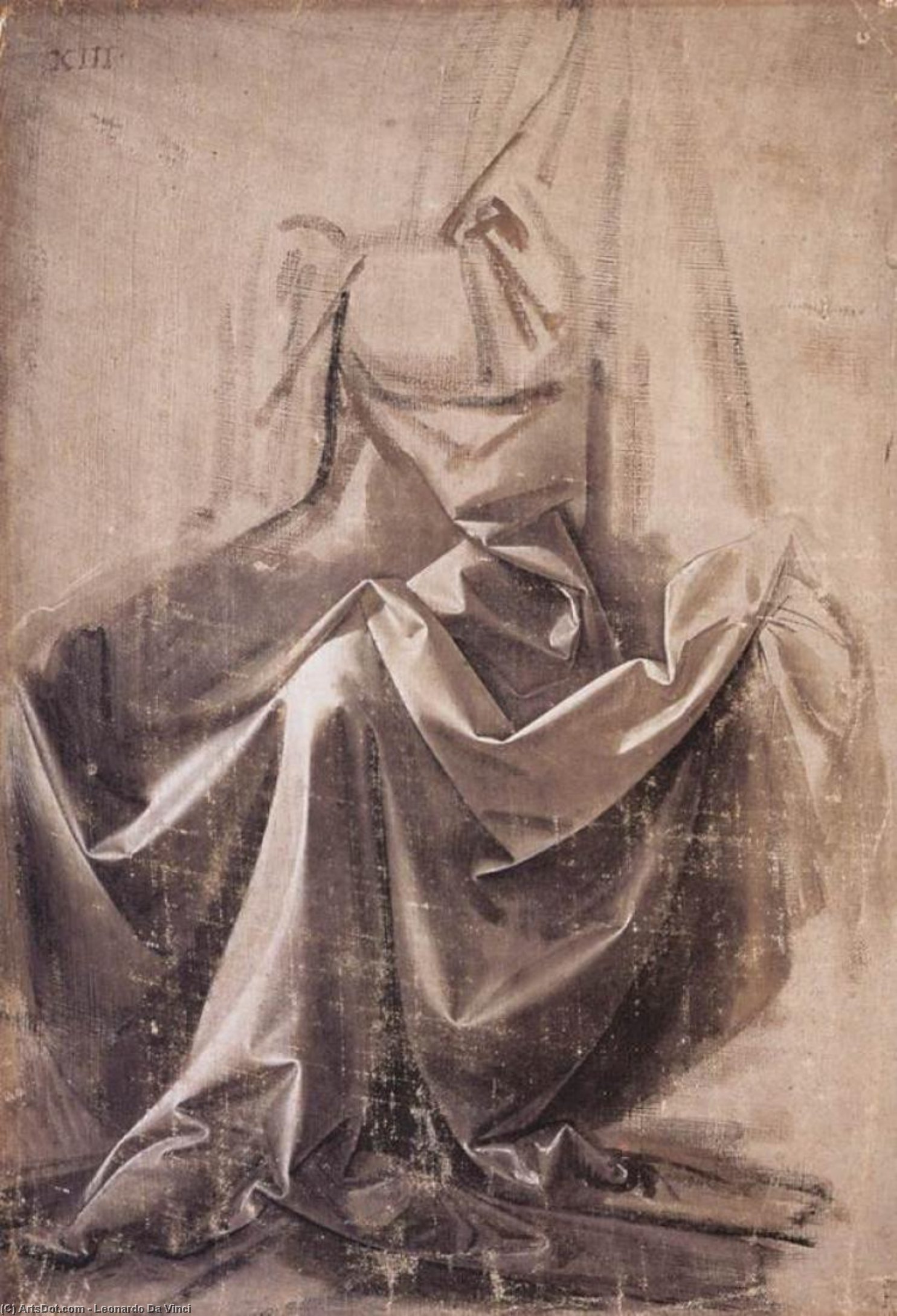
Drapery for a Seated Figure: A Study in Renaissance Mastery
Leonardo da Vinci, one of the most renowned artists of the Renaissance, created numerous iconic works that continue to captivate art enthusiasts worldwide. Among his notable pieces is Drapery for a Seated Figure, a painting that showcases his exceptional skill in capturing the intricacies of fabric and human form.
Artistic Technique and Composition
The painting, measuring 319 x 218 cm, features a woman seated on a chair with her back turned to the viewer. The focal point of the composition is the drapery that elegantly flows over her shoulders, creating an aura of sophistication and grace. Da Vinci's use of brushwork in this piece is remarkable, as he skillfully depicts the folds and textures of the fabric. The woman occupies most of the frame from left to right, with the chair she sits on clearly visible. The drapery is a key element that adds depth and interest to the composition, demonstrating Da Vinci's mastery over capturing the play of light on different materials.
Historical Context and Museum
Drapery for a Seated Figure is housed in the Musée du Louvre, Paris, France. The Musée du Louvre, one of the world's largest and most visited art museums, was originally built as a royal palace in the late 12th century. It wasn’t until the French Revolution that it was transformed into a public museum. Today, the Musée du Louvre houses an extensive collection of artworks from around the world, including masterpieces by artists such as Peter Paul Rubens, Michelangelo Buonarroti, and Raphael (Raffaello Sanzio Da Urbino). For instance, you can find Peter Paul Rubens' Landscape with a Watering Place and Michelangelo Buonarroti's Study of Two Women, One with Child (verso) within the museum’s collection.
Artistic Significance
Leonardo Da Vinci was a true Renaissance man - an artist, inventor, engineer, and scientist. His works often blended art and science, as seen in Drapery for a Seated Figure. This painting is not only a testament to his artistic prowess but also reflects his deep understanding of human anatomy and the behavior of light on different surfaces. For those interested in exploring more of Da Vinci's work, Study for the Madonna with the Fruit Bowl is another notable piece housed at the Musée du Louvre.
The Enduring Appeal
“Drapery for a Seated Figure” transcends its status as a preparatory study, becoming a captivating work in its own right. The meticulous attention to detail, the subtle play of light and shadow, and the sheer elegance of the draped fabric create an image that is both visually stunning and intellectually stimulating. It exemplifies Da Vinci’s relentless pursuit of perfection and his profound understanding of the natural world. Owning a reproduction of this masterpiece allows you to bring a touch of Renaissance genius into your home or office, sparking conversation and inspiring contemplation.