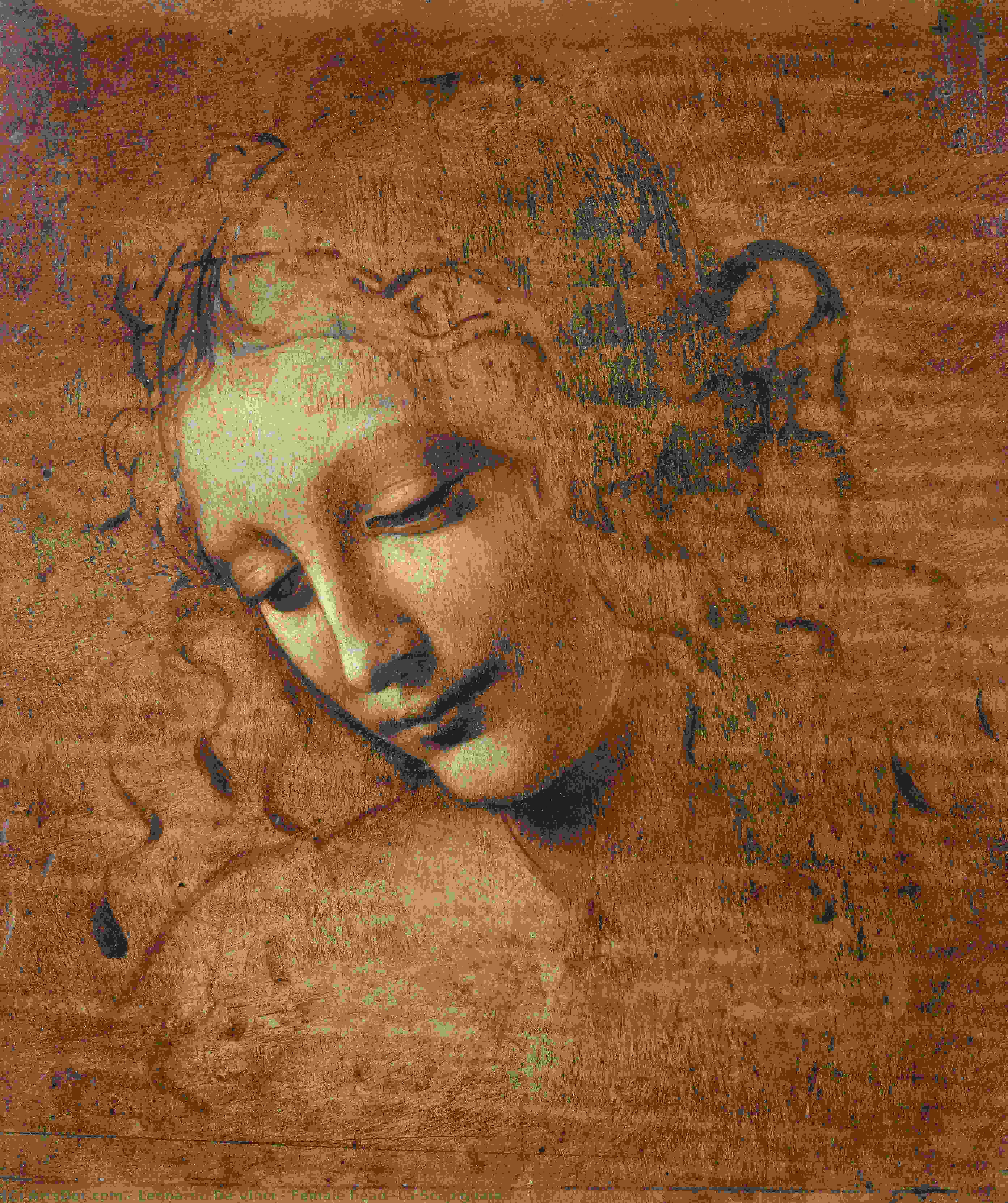
Female Head (La Scapigliata): An Enigma of Leonardo’s Genius
Leonardo da Vinci's Female Head (La Scapigliata), housed in the Galleria Nazionale di Parma, Italy, stands as a poignant testament to the artist’s unparalleled ability to distill emotion into visual form. Completed between 1506 and 1508 – a period marked by intense experimentation and artistic exploration – this unfinished portrait transcends mere representation; it embodies a profound contemplation of femininity and invites endless interpretations.
- Subject Matter: The painting depicts the head of a woman, rendered with remarkable sensitivity. Her gaze downward, combined with subtle facial expressions, conveys an aura of introspection and quiet melancholy – characteristics that resonate deeply within the viewer’s psyche.
- Artistic Technique: Da Vinci employed his signature sfumato technique—a masterful blending of light and shadow—to create a hazy effect around the woman's face. This ethereal quality lends depth to her features, blurring boundaries between reality and imagination, and capturing the elusive beauty of human emotion.
- Material & Medium: Executed in oil pigment on poplar wood panel, La Scapigliata exemplifies Da Vinci’s meticulous attention to detail and his scientific approach to art. The use of umber and white lead contributes to the painting's luminosity and tonal richness.
Attribution & Controversy: A Debate Among Scholars
The attribution of Female Head (La Scapigliata) to Leonardo da Vinci has fueled scholarly debate for decades. While most historians confidently accept Da Vinci’s authorship, alternative theories suggest that it may have been created by one of his pupils—a proposition supported by stylistic similarities observed in other works from the same era.
The painting's style aligns seamlessly with Da Vinci’s broader oeuvre, notably The Virgin of the Rocks and The Last Supper, bolstering confidence in its provenance. However, ongoing research continues to scrutinize evidence, prompting a nuanced understanding of artistic influence and creative collaboration within Leonardo’s workshop.
Historical Significance & Context
Mentioned in historical records dating back to 1627, La Scapigliata initially resided within the Gonzaga family's collection—a symbol of aristocratic patronage during the Renaissance. Its subsequent inclusion in the Parmesan collection solidified its place as a cornerstone of Leonardo’s artistic legacy and ensured its preservation for posterity.
The painting has graced numerous prominent Leonardo da Vinci exhibitions, cementing its reputation as an exemplar of Renaissance artistry. It serves as a captivating window into the intellectual climate of the time—a period characterized by humanist ideals and a fervent fascination with human anatomy and psychology.
Symbolism & Emotional Impact
Female Head (La Scapigliata) transcends mere visual representation, inviting viewers to ponder themes of vulnerability, contemplation, and inner beauty. The woman’s downward gaze symbolizes humility and receptiveness—qualities that resonate powerfully with the viewer's own emotional landscape.
Da Vinci’s masterful manipulation of light and shadow elevates La Scapigliata beyond a portrait; it becomes an embodiment of artistic genius and a timeless meditation on the human condition. Its enigmatic expression continues to inspire artists and scholars alike, ensuring its enduring fascination for generations to come.