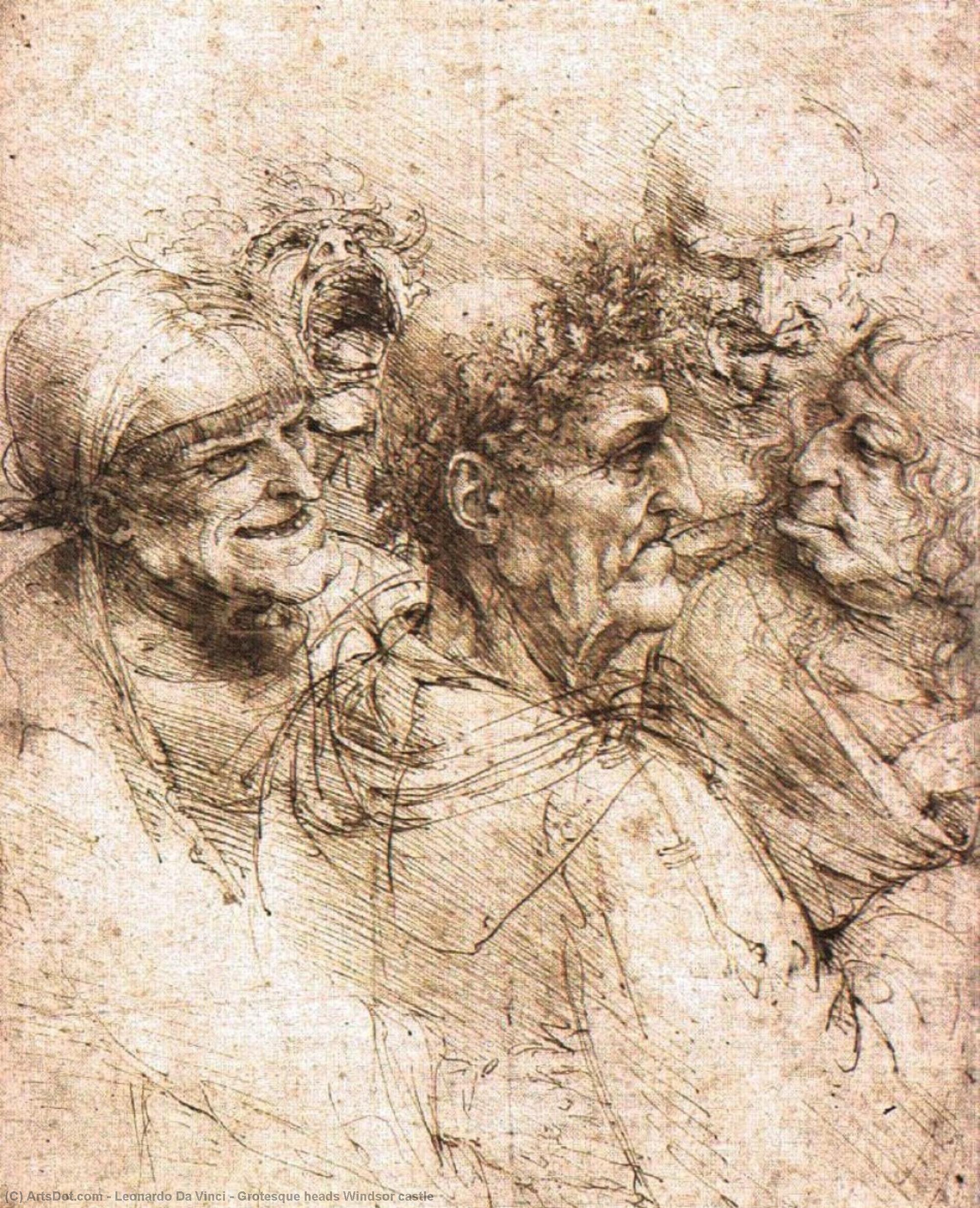
A Window into Leonardo’s Mind: The Grotesque Heads
These captivating sketches, known as the *Grotesque Heads*, offer a rare and intimate glimpse into the artistic process of Leonardo da Vinci around 1490. Executed primarily in charcoal or graphite, these are not finished works intended for display, but rather exploratory studies – a visual brainstorming session revealing Da Vinci’s relentless curiosity about the human form and expression. The series resides within the esteemed Royal Collection at Windsor Castle, testament to their enduring historical and artistic significance.
Master of Observation: Style & Technique
The *Grotesque Heads* are remarkable for their raw realism. Da Vinci eschews idealized beauty in favor of capturing a spectrum of character – faces contorted by age, emotion, or perhaps even imagined ailments. His masterful use of *sfumato*, the subtle blending of tones, creates an almost ethereal quality despite the often-unflattering depictions. Lines are incredibly precise, defining wrinkles, hair strands, and facial features with astonishing detail. The tightly clustered composition emphasizes immediacy, as if these faces were rapidly sketched from life or memory. This is not about creating flattering portraits; it’s about anatomical study and understanding the mechanics of expression.
Historical Context: Beyond the Renaissance Portrait
Born in 1452, Leonardo da Vinci was a true polymath – artist, scientist, inventor, anatomist. He lived during the High Renaissance, a period marked by renewed interest in classical learning and human potential. However, Da Vinci’s approach often transcended conventional artistic boundaries. While his contemporaries focused on idealized representations, he delved into the complexities of the human body and psyche. These sketches likely served as preparatory studies for larger works, potentially related to *The Adoration of the Magi*, but they stand alone as compelling explorations in their own right. They demonstrate a departure from traditional portraiture, prioritizing observation over idealization.
Decoding the Faces: Symbolism & Interpretation
The term “grotesque” itself is revealing. In Renaissance art, *grotteschi* referred to decorative motifs inspired by ancient Roman frescoes found in caves (grotte). These often featured fantastical creatures and distorted figures. While Da Vinci’s heads are not fantastical, they share a similar sense of the unconventional and unsettling. The exaggerated features and intense expressions invite speculation about their meaning. Are these studies of illness? Representations of specific individuals? Or purely exercises in exploring the range of human emotion? Perhaps they represent types – the old man, the weary traveler, the mischievous rogue – embodying universal aspects of the human condition.
Emotional Resonance: A Powerful Impact
The *Grotesque Heads* evoke a complex emotional response. They are not conventionally “beautiful,” yet they possess a haunting power. The intensity of the expressions—sorrow, pain, amusement, resignation—draws the viewer in, prompting empathy and contemplation. These sketches remind us that beauty is not limited to perfection; it can also be found in imperfection, vulnerability, and the raw honesty of human experience. They challenge our preconceived notions of what art *should* be and invite us to confront the full spectrum of human emotion.
- Discover More: Explore our collection of Leonardo da Vinci reproductions, including these compelling sketches.
- Further Exploration: Delve deeper into the emotional impact of art styles and their ability to evoke different feelings.
- Consider how these unique studies might add a thought-provoking element to your interior design scheme – a conversation starter that speaks volumes about your appreciation for artistic innovation and human complexity.