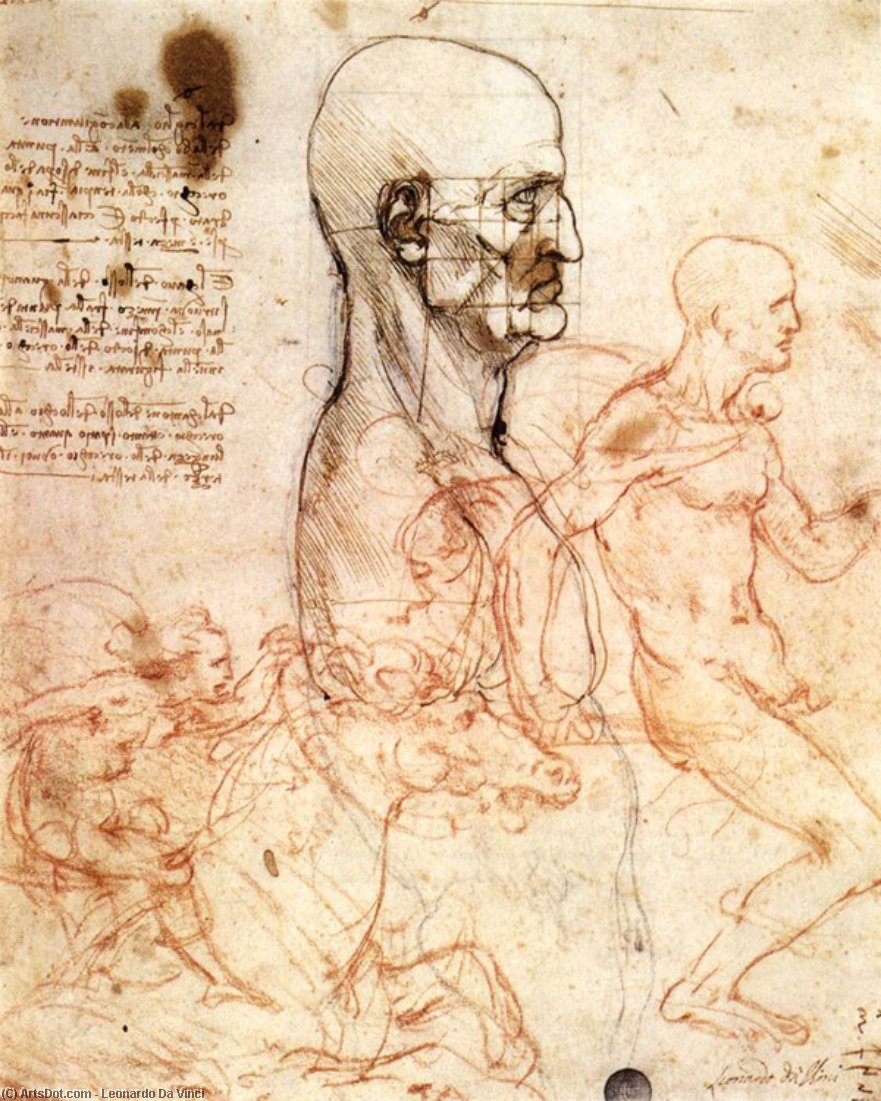
Leonardo da Vinci’s "Head Measured, and Horsemen" (1497) is a captivating chalk & ink study of a man measuring his head against a horseman sketch. Explore Renaissance humanism, anatomical detail, and Da Vinci's visionary process.
Explore Leonardo da Vinci (1452-1519): Renaissance genius behind Mona Lisa & The Last Supper! Discover his sfumato technique, anatomical studies & groundbreaking inventions.
Explore Venetian art's evolution at the Gallerie dell’Accademia! Discover masterpieces by Bellini, Titian & Canaletto in Venice’s historic Scuola della Carità. A stunning journey through 500 years of artistic brilliance.
A Portrait of Contemplation: Leonardo da Vinci’s “Head Measured, and Horsemen”
Leonardo da Vinci's "Head Measured, and Horsemen," created in 1497 during his Florentine apprenticeship with Andrea del Verrocchio, transcends mere representation; it embodies the very essence of Renaissance humanism. This unassuming chalk and ink drawing on paper offers a profound glimpse into Da Vinci’s artistic process and intellectual curiosity—a fascination that extended far beyond the canvas to encompass anatomy, engineering, and scientific observation. The artwork itself is deceptively simple in its composition, yet brimming with subtle nuances that speak volumes about the artist's intentions.
Subject Matter and Composition
At first glance, the piece depicts a man’s head, meticulously measured—a practice commonplace during anatomical studies of the time—against a backdrop featuring a sketched horseman. This juxtaposition isn’t accidental. Da Vinci was deeply invested in understanding the human form, striving to capture its musculature and skeletal structure with unprecedented accuracy. The downward gaze of the subject is particularly noteworthy; it conveys an air of introspection, suggesting he's wrestling with internal thoughts—perhaps pondering the complexities of observation itself. The inclusion of the horseman sketch serves as a counterpoint, hinting at Da Vinci’s broader interests in capturing movement and dynamism alongside stillness and contemplation. It’s a masterful blend of focused attention and expansive vision.
Technique and Artistic Style
Da Vinci's technique is characterized by remarkable precision and sensitivity. The chalk provides a tonal range that allows for subtle gradations of light and shadow, enhancing the sense of depth and realism—a hallmark of High Renaissance art. The ink lines delineate contours with clarity, emphasizing anatomical detail while maintaining an understated elegance. Unlike more flamboyant Mannerist styles prevalent during the period, “Head Measured, and Horsemen” prioritizes restraint and intellectual rigor. It exemplifies Da Vinci’s belief that beauty resided not merely in surface appearance but also in underlying structure and conceptual understanding. The drawing's muted palette contributes to its contemplative mood, inviting viewers to engage with the artwork on an emotional level.
Historical Context: Cinquecento Florence
“Head Measured, and Horsemen” resides firmly within the Cinquecento—the flourishing artistic milieu of Florence between 1500 and 1599. This era witnessed a resurgence of classical ideals alongside groundbreaking innovations in art and science. Artists like Michelangelo and Raphael were pushing boundaries, exploring monumental sculpture and dramatic narratives respectively. Da Vinci’s work reflects this spirit of experimentation and intellectual ambition—a desire to elevate artistic expression through scientific observation and anatomical knowledge. The drawing served as an invaluable tool for Verrocchio's studio, aiding in the study of human anatomy and informing sculptural endeavors.
Symbolism and Emotional Resonance
Beyond its technical mastery, “Head Measured, and Horsemen” carries symbolic weight. The measurement itself represents a quest for understanding—a desire to dissect and comprehend the intricacies of the human body. Simultaneously, it speaks to the artist’s preoccupation with capturing the elusive essence of human emotion. The horseman symbolizes movement and vitality, contrasting sharply with the stillness of the head, creating a dynamic tension that underscores Da Vinci's belief in the interconnectedness of mind and body. Ultimately, the drawing evokes feelings of quiet contemplation and intellectual curiosity—a legacy that continues to inspire artists and collectors alike.
Reproductions for Inspiration
A high-quality reproduction of “Head Measured, and Horsemen” offers a captivating glimpse into Da Vinci’s artistic genius and provides an exceptional addition to any interior design scheme. ArtsDot.com presents meticulously crafted reproductions using archival inks on premium canvas—capturing the subtle tonal nuances and textural qualities of the original artwork with breathtaking accuracy. Explore this timeless masterpiece and discover how its contemplative beauty can enrich your space.