Born in Vicenza in 1452, Leonardo da Vinci was a true polymath whose intellect spanned painting, sculpture, engineering, architecture, botany, geology, anatomy, and more. His apprenticeship under Andrea del Verrocchio instilled in him a dedication to realism and scientific inquiry—principles that would permeate his entire oeuvre.
Leonardo da Vinci’s Head of a Man: A Study in Psychological Portraiture
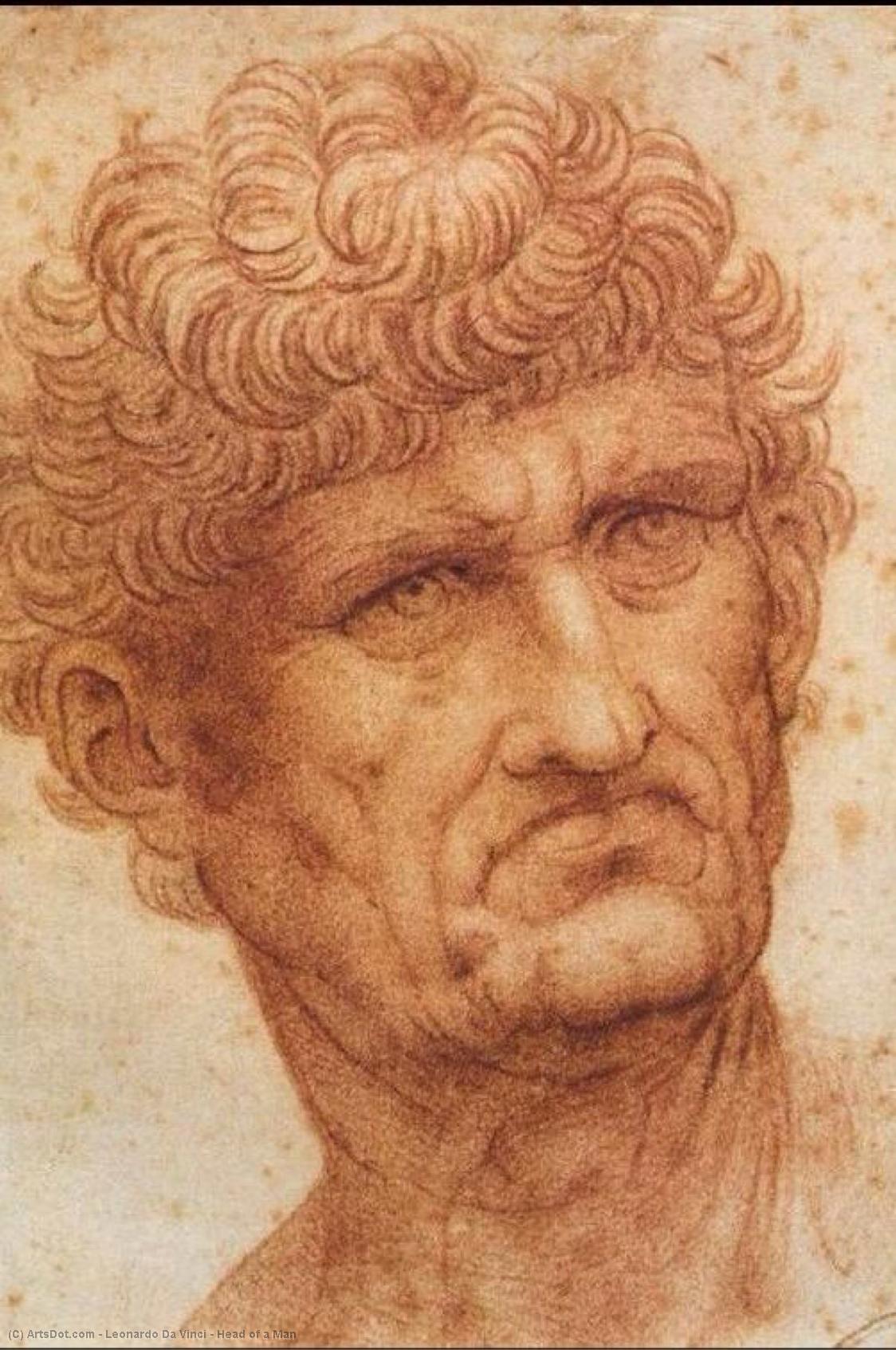
Leonardo da Vinci, arguably the pinnacle of Renaissance genius, continues to fascinate audiences centuries after his death. Among his prolific output—paintings like Mona Lisa and The Last Supper—the ‘Head of a Man,’ executed around 1503 and currently residing at the Gallerie dell’Accademia in Venice, stands as a singularly poignant exploration of human emotion and artistic innovation.
The Artistic Genius of Leonardo da Vinci
Leonardo da Vinci wasn't merely an artist; he was a polymath—a scientist, engineer, anatomist, inventor—whose boundless curiosity fueled his creative endeavors. This multifaceted intellect is vividly apparent in the ‘Head of a Man,’ where Da Vinci’s mastery of capturing psychological depth through facial expressions shines through. The subject’s gaze – intense, unwavering, and subtly defiant – speaks volumes about inner turmoil and contemplation. His meticulously rendered features exemplify Da Vinci's profound understanding of human anatomy and his dedication to achieving unparalleled realism.
Technique and Composition
- Medium: Chalk Leonardo skillfully employed chalk, a medium prized for its ability to produce delicate tonal variations and textural nuances. This choice allowed Da Vinci to convey subtle shifts in mood and atmosphere with remarkable precision.
- Chiaroscuro Mastery The artist’s masterful manipulation of chiaroscuro—the dramatic interplay between light and dark—deepens the portrait's emotional impact. Shadows envelop the background, drawing the viewer’s eye directly to the subject’s face, where the illumination highlights his expressive features and reinforces the sense of inner conflict.
- Blurred Background Da Vinci deliberately blurred the backdrop, prioritizing focus on the head itself. This compositional decision serves as a powerful tool for conveying psychological state—a deliberate distancing from external distractions emphasizes the internal drama unfolding within the subject’s gaze.
Artistic Significance: Anatomy and Expression
The ‘Head of a Man’ represents a crucial step in Da Vinci's ongoing investigation into human anatomy and facial expressions—studies that would inform his later masterpieces. These anatomical sketches weren’t simply exercises in scientific observation; they were driven by an artistic desire to represent the human form with breathtaking accuracy and emotional resonance. The drawing underscores Da Vinci’s ability to distill complex psychological concepts into visual form, cementing its place as a cornerstone of Renaissance art history.
Relevance in Modern Art Appreciation
Today, the ‘Head of a Man’ continues to inspire artists and scholars alike. It exemplifies Da Vinci's groundbreaking techniques—particularly his pioneering use of chiaroscuro—and demonstrates his enduring contribution to Western artistic tradition. Furthermore, it serves as a reminder that art can transcend time, capturing universal human emotions and prompting contemplation about the complexities of the human psyche.
Conclusion
Leonardo da Vinci’s ‘Head of a Man’ remains an unforgettable testament to artistic brilliance—a portrait not merely of flesh and bone but of spirit and emotion. As part of Da Vinci's vast oeuvre, it embodies the Renaissance ideal of humanist inquiry and continues to captivate viewers with its profound psychological insight.