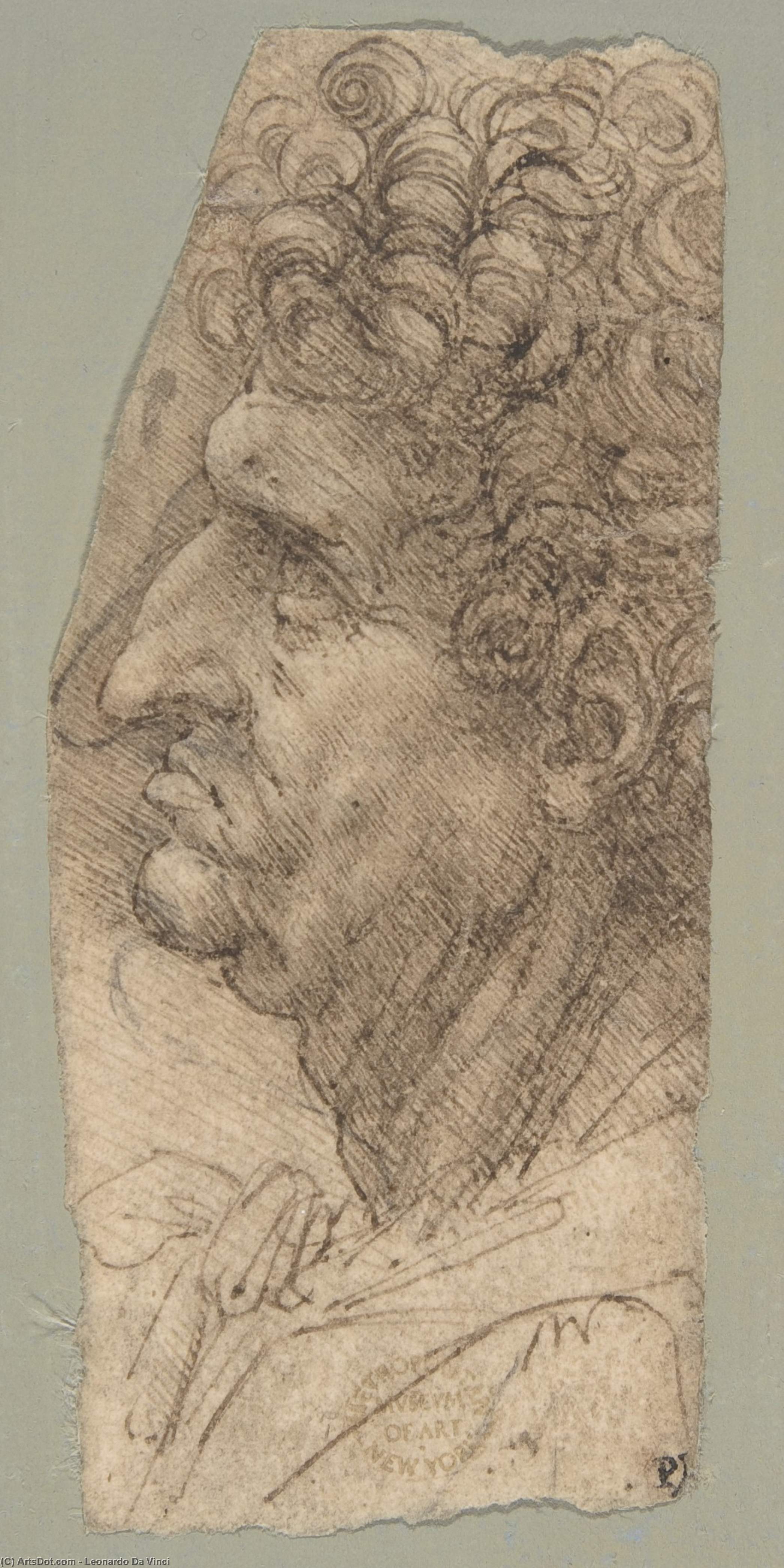
Head of a Man Facing to the Left: A Glimpse into Leonardo's Genius
Leonardo da Vinci’s "Head of a Man Facing to the Left," created around 1490, is more than just a drawing; it's a profound exploration of human anatomy and emotion captured with unparalleled skill. Housed in the Metropolitan Museum of Art in New York City, this pen-and-ink masterpiece (measuring 120 x 50 cm) offers a rare window into the mind of one of history’s greatest polymaths.
Style and Technique: The Mastery of Line
The drawing exemplifies Leonardo's meticulous approach to art, blending scientific observation with artistic expression. Executed primarily in pen, the work showcases his mastery of line – how subtle variations in pressure and density can convey form, texture, and even mood. Rather than relying on shading or color, Leonardo uses intricate hatching and cross-hatching techniques to create depth and volume. The subject's beard is rendered with remarkable detail, each hair meticulously drawn to suggest a sense of realism and tactile quality. This focus on line demonstrates the High Renaissance emphasis on clarity, precision, and idealized forms.
Historical Context: The High Renaissance and Anatomical Studies
Created during the High Renaissance (roughly 1490-1527), a period celebrated for its artistic innovation and humanist ideals, this drawing reflects the era's fascination with classical antiquity and scientific inquiry. Leonardo was deeply immersed in anatomical studies, dissecting cadavers to understand the human body’s structure. "Head of a Man Facing to the Left" is not merely a portrait but also an exercise in anatomical accuracy. The precise rendering of facial muscles, bone structure, and even subtle details like the veins in the neck reveals Leonardo's dedication to scientific observation informing his artistic practice. This period saw artists moving away from purely religious themes towards more secular subjects, exploring human potential and individuality.
Symbolism and Emotional Impact: A Study in Contemplation
The subject’s downward gaze and slightly furrowed brow suggest a state of contemplation or introspection. While not a formal portrait of a specific individual, the man's expression conveys a sense of quiet dignity and perhaps even melancholy. The drawing invites viewers to ponder his thoughts and emotions, creating an intimate connection between observer and subject. The lack of background further focuses attention on the face, amplifying its expressive power. Leonardo’s ability to capture such nuanced emotion with simple lines is a testament to his artistic genius. It's a study in human psychology as much as it is a study in anatomy.
A Timeless Masterpiece: Why This Drawing Resonates Today
"Head of a Man Facing to the Left" remains an enduring symbol of Leonardo da Vinci’s brilliance and the High Renaissance. Its technical virtuosity, scientific rigor, and emotional depth continue to captivate audiences centuries later. Whether you are an art enthusiast, collector, or interior designer seeking inspiration for your space, this drawing offers a glimpse into the mind of a true visionary – a testament to the power of observation, intellect, and artistic skill.