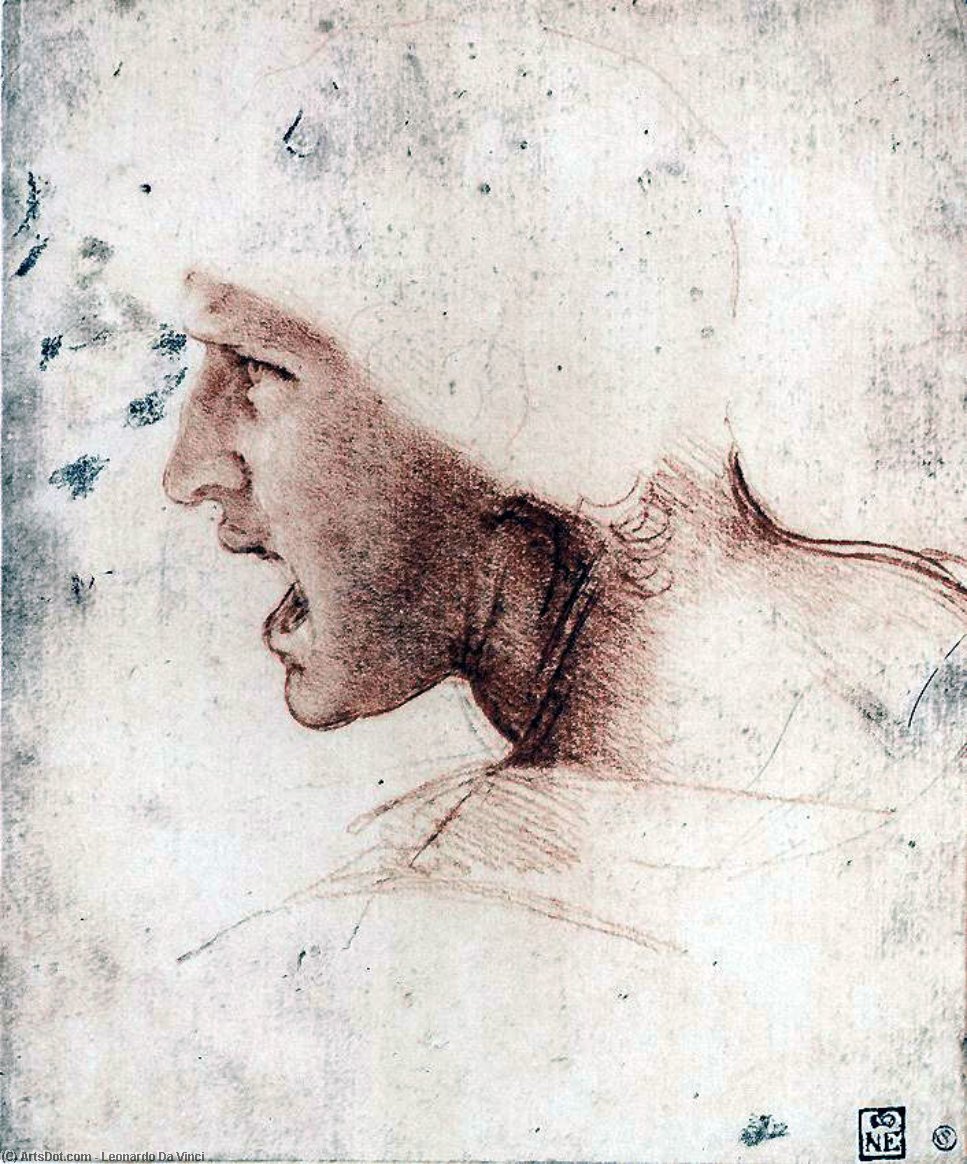
A Study in Psychological Intensity
In the vast, storied canon of the High Renaissance, few sketches possess the raw, visceral energy found in Leonardo da Vinci’s 'Head of a Warrior', often affectionately known as 'The Red Head'. Created around 1504, this masterful chalk drawing is far more than a mere anatomical study; it is a profound window into the turbulent psyche of a man caught in the throes of conflict. As one gazes upon the subject, the immediate sensation is one of breathless urgency. The warrior’s mouth is captured mid-shout, a silent roar that seems to vibrate through the paper, inviting the viewer to witness a moment of extreme emotional or physical exertion. This is not the serene, idealized beauty often associated with Da Vinci's later works, but rather a daring exploration of human vulnerability and ferocity.
The brilliance of this piece lies in Leonardo’s unparalleled ability to manipulate light and shadow through the delicate medium of chalk. With a surgeon's precision and an artist's soul, he employs masterful tonal gradations to sculpt the contours of the face, giving the flesh a palpable, three-dimensional presence. The background remains intentionally blurred and indistinct, a technique that serves to isolate the subject and thrust his expressive features into sharp relief. This focus is further heightened by the striking, evocative crimson of the warrior's beard—a deliberate splash of color that symbolizes passion, courage, and the inherent aggression of the battlefield. Every stroke of the chalk contributes to a sense of movement, as if the very air around the helmeted figure is thick with the dust and tension of combat.
Historical Resonance and Symbolic Depth
To understand 'The Red Head' is to understand the humanist spirit of the early 16th century. During his time in Florence, Leonardo was deeply immersed in a culture that sought to reconcile scientific inquiry with the profound mysteries of human emotion. This drawing reflects that duality perfectly; while it showcases his meticulous anatomical knowledge—the way muscles tension around the jaw and eyes—it simultaneously explores the intangible realms of fear and determination. The helmeted figure serves as a symbol of the era's preoccupation with the human form under pressure, mirroring the broader societal shifts and the literal battles being fought across the Italian peninsula.
For the discerning collector or interior designer, this artwork offers a unique opportunity to introduce a sense of dramatic narrative and intellectual depth into a space. A high-quality reproduction of this piece does not merely decorate a wall; it commands attention, acting as a focal point that sparks conversation and contemplation. The interplay between the rugged texture of the chalk and the intense subject matter makes it an ideal centerpiece for sophisticated environments—be it a private study, a contemporary gallery, or a curated living space. It brings with it the legacy of a polymath whose vision transcended the boundaries of art, offering a timeless connection to the very essence of human struggle and triumph.