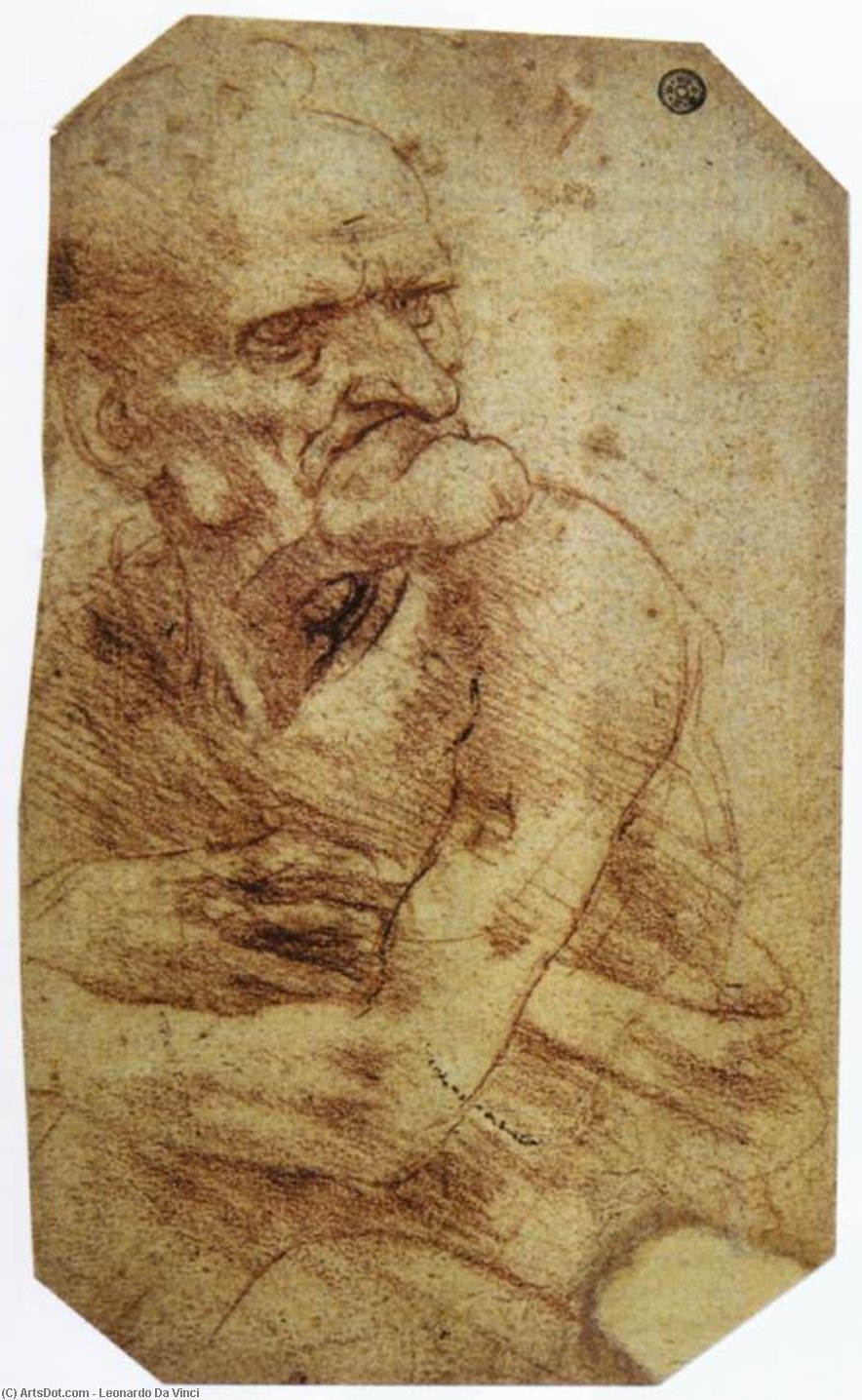
Exquisite Leonardo da Vinci 'Head of an Old Man' (1487). A detailed pen drawing showcasing Renaissance artistry & human emotion. Admire this masterpiece at the Gallerie dell’Accademia.
Explore Leonardo da Vinci (1452-1519): Renaissance genius behind Mona Lisa & The Last Supper! Discover his sfumato technique, anatomical studies & groundbreaking inventions.
Explore Venetian art's evolution at the Gallerie dell’Accademia! Discover masterpieces by Bellini, Titian & Canaletto in Venice’s historic Scuola della Carità. A stunning journey through 500 years of artistic brilliance.
A Window into Renaissance Thought: Leonardo da Vinci’s *Head of an Old Man*
This exquisite pen and ink drawing, created in 1487, offers a profoundly intimate glimpse into the artistic and scientific mind of Leonardo da Vinci. More than just a portrait, *Head of an Old Man* is a masterful study of human anatomy, emotion, and the very essence of aging. The subject, rendered with meticulous detail, is depicted in profile, his gaze directed downwards as if lost in contemplation. The simplicity of the composition – focusing solely on the head and shoulders against a largely undefined background – intensifies the viewer’s connection to the man's inner world.
Masterful Technique & Artistic Style
Da Vinci’s unparalleled skill is immediately apparent in his use of pen and ink. He employs an extraordinary range of hatching and cross-hatching techniques, building up tone and volume with remarkable subtlety. This isn’t merely *drawing*; it's a sculptural rendering achieved through line work. The delicate gradations create the illusion of three-dimensionality, highlighting the wrinkles etched by time upon the man’s face, the contours of his nose, and the subtle play of light and shadow. The style is quintessentially High Renaissance – characterized by realism, anatomical accuracy, and a profound understanding of human form. It's a testament to Da Vinci’s dedication to observation and his ability to translate what he saw into breathtaking artistry.
Historical Context & Anatomical Exploration
Created during Da Vinci’s early career in Florence, *Head of an Old Man* is believed to be one of many anatomical studies undertaken by the artist. The late 15th century was a period of burgeoning scientific inquiry, and Da Vinci was at its forefront. He dissected human bodies – often secretly – to understand the underlying structures that dictated form and movement. This drawing isn’t simply about *representing* an old man; it's about understanding *how* he aged, how muscles and bone structure change over a lifetime. This pursuit of knowledge informed not only his art but also his inventions and engineering designs. The work foreshadows the anatomical precision that would become a hallmark of his later masterpieces, like those found in his notebooks.
Symbolism & Emotional Resonance
While seemingly straightforward, *Head of an Old Man* carries layers of symbolic weight. The aged subject embodies wisdom, experience, and the passage of time – themes central to Renaissance humanism. The downward gaze suggests introspection, perhaps even melancholy, inviting viewers to contemplate their own mortality. There’s a quiet dignity in the man's expression, a sense of having lived a full life. The drawing transcends mere physical representation; it captures a psychological state, an emotional depth that resonates across centuries. It is this ability to convey universal human experiences that makes Da Vinci’s work so enduringly powerful and appealing for collectors and interior design enthusiasts alike seeking pieces with profound meaning.